• About

Cinezine Kane

Cinezine Kane

Category Archives: Uncategorized

Cinequest review: MINE 9

08 Friday Mar 2019

Posted by cinepam in Reviews, Uncategorized

≈ Leave a comment

Tags

Cinequest, Drew Starkey, Eddie Mensore, Mine 9, Terry Serpico

Mine 9

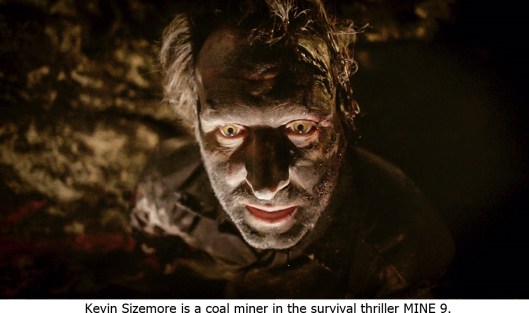
Real coal miners appear on the screen during the closing credits of writer/director Eddie Mensore’s sophomore feature Mine 9, which makes its world premiere March 8 at the Cinequest Film & Creativity Festival in Silicon Valley. They talk about their work and how it is a family tradition and how long a workday is and how many years they’ve been going down in the pit. Mensore pays respect to these men in this way, even as the story he has just spun is chilling and leaves the viewer with a question: Why in the world would anyone do this kind of work?

Set in a bucolic Appalachian community and against an evocative soundtrack of country, folk, and blues songs – a few originals, mostly traditional – performed by Atlanta musician Max Godfrey, Mine 9 neatly sets up the circumstances facing a group of miners. They know conditions aren’t safe, but they don’t really have much of a choice except to descend two miles down into the earth and go back to work. Economic conditions are so harsh in the region that the choice comes down to risking one’s life for the sake of a job or starve. All except 18-year-old Ryan (Drew Starkey), joining the family business as he starts his first day of work, have families to feed.

Mensore paints a vivid picture. From the grime that encrusts the men from head to foot to the claustrophobic conditions of working in the pit, this is pitiless, backbreaking work. And that’s before the methane explosion that leaves them with caved in walls and scant oxygen. Given that the concerns expressed by Zeke (Terry Serpico), the miners de facto leader, have been utterly ignored by management, can they even expect rescue or are they truly on their own?

Mine 9 delivers on its premise as a thriller. Mensore’s storytelling is economical as he sets up a situation in which survival is always in question. Characters are only lightly sketched, but terrific performances by Serpico, Starkey, and the rest of the cast give the tale emotional weight. Mine 9 isn’t a horror movie, precisely, but it might as well be. It is certainly horrifying. –Pam Grady


Share this:

  • Click to share on Facebook (Opens in new window) Facebook
  • Click to share on X (Opens in new window) X
  • Click to email a link to a friend (Opens in new window) Email
  • Click to print (Opens in new window) Print
  • Click to share on LinkedIn (Opens in new window) LinkedIn
  • Click to share on Tumblr (Opens in new window) Tumblr
  • Click to share on Reddit (Opens in new window) Reddit
  • Click to share on Pinterest (Opens in new window) Pinterest
Like Loading...

Orchard drops THE HUMMINGBIRD PROJECT trailer

18 Friday Jan 2019

Posted by cinepam in News, Uncategorized

≈ Leave a comment

Tags

Alexander Skarsgård, Jesse Eisenberg, Salma Hayak, The Hummingbird Project

One of the more unusual thrillers to come down the pike in recent years, The Hummingbird Project revolves around the construction of a high-speed fiber optics cable to facilitate high-frequency stock trades where every millisecond counts. The project pits cousins Vincent (Jesse Eisenberg) and Anton (an almost unrecognizable Alexander Skarsgård) against their high-flying trader ex-boss Eva (Salma Hayak) who is determined to put a stop to the upstarts’ attempt to usurp her business. The Orchard release debuts in March.

Share this:

  • Click to share on Facebook (Opens in new window) Facebook
  • Click to share on X (Opens in new window) X
  • Click to email a link to a friend (Opens in new window) Email
  • Click to print (Opens in new window) Print
  • Click to share on LinkedIn (Opens in new window) LinkedIn
  • Click to share on Tumblr (Opens in new window) Tumblr
  • Click to share on Reddit (Opens in new window) Reddit
  • Click to share on Pinterest (Opens in new window) Pinterest
Like Loading...

Q&A: Pawel Pawlikowski on Poland and COLD WAR

17 Thursday Jan 2019

Posted by cinepam in Interviews, Uncategorized

≈ Leave a comment

Tags

Cold War, Ida, Joanna Kulig, Pawel Pawlikowski, Tomasz Kot

cold war_1

Pawel Pawlikowski was born in Poland, but moved to England with his mother when he was a teenager. After studying literature and philosophy at Oxford, he established his career as filmmaker, first with documentaries before turning to fiction with such films as Last Resort (2000) and My Summer of Love (2003). But then he traveled back to his native country to make his 2013 Academy Award-winning drama Ida about a 1960s era novitiate who receives life-changing news about her identity. In making the movie, Pawlikowski realized he was home. Now, he has made a new feature, Cold War, about the tumultuous relationship between a singer (Joanna Kulig) and a jazz musician (Tomasz Kot) who fall in love in Stalinist, post-World War II Poland. Pawlikowski won the directing award at the 2018 Cannes Film Festival. The film is on the shortlist for the foreign-language Academy Award; won five European Film Awards, including best European film; and received four BAFTA nominations, among other honors. In October, Pawlikowski was feted with a tribute at the Mill Valley Film Festival. It was during that visit to the San Francisco Bay Area that this conversation took place.

Q: You spent most of your career in the West. What brought you back to Poland?

Pawel Pawlikowski: Many things. I reached a certain age, I suppose, where I needed to change something. My kids grew up and left home. My wife died. I didn’t originally plan to move back to Poland, but when I started preparing Ida, I just started feeling very at home there. A friend, Agnieszka Holland, lent me her flat in Warsaw, very near to where I used to live. I felt very at home. It was very peculiar. Driving around Poland looking for locations, I recognized landscapes from my childhood. I suddenly felt like this is where I feel most at home. It has something to do with age. Half of one’s life, one tries to escape from somewhere and the other half, wants to get back somewhere. Poland just feels like home. It’s like finding a pair of slippers that feel very comfy. Of course, I chose a very interesting time politically—a couple of years later after the election [of Poland’s right-wing President Andrzej Duda], it doesn’t look so cozy.

When I dreamt of something, it always tended to be some corner of Warsaw. It’s also a city I feel very sentimental and affectionate about, partly because we grew up among ruins. Not literally ruins, I’m exaggerating, but I was born 13 years after the war and there were still bullet holes in the walls of my house. With every step, you find history. Here’s where 300 people were executed during the Warsaw Uprising. Here is the entrance to the sewer, just outside my flat now, the entrance to the sewer through which the insurgents were escaping to another area and here is the Ghetto. It was flattened and it’s completely different. It’s haunted. Warsaw is a haunted city. It’s not a tourist attraction, but if you have imagination, it’s the most fascinating city in the world. I actually love it very much.

Q: Since you’ve been back, the two films you’ve made Ida and now Cold War take place during the Communist era. Does that time have a particular pull for you?

PP: There are several reasons, I suppose. It’s a world in which you can tell stories where digital technology is not important and where everything you do has huge consequences. It seems like people, whatever they do, there’s something kind of fatal about it. You can look across a table or look across a room and see somebody fall in love.  Where moral problems are focused. I think in today’s world it’s very difficult to find that. Some directors do it very well, like Ruben Östlund [Force Majeure, The Square] who makes fantastic films about today with moral issues. But that [earlier era] is where I feel more confident and more attracted to, as well. I like a world that is less cluttered with images, information, sounds, where everything becomes quite expressive and you can really look properly. I find today there’s too much stuff that washes over you. For me. It’s a midlife crisis thing.

Q: Cold War is dedicated to your parents and was inspired by your parents, but the story is not about them. Talk about that inspiration and how it led to the tale of this couple.

PP: My parents had a very tempestuous marriage. Clearly, in the back of my head, I’ve had their story hovering over me for a long time. When they were still alive, it was just a source of amusement and irritation, horror, because when I was 13, they divorced. They were fighting all the time. And then I met their partners and it wasn’t great for a teenage son. I was the only son, so it was very intense. Then it became almost comical in a way in the way they couldn’t get on when they met again in the West. Then they died in total harmony, but after 40 years of [passionate conflict]. They were too tired to fight. When they died in 1989, just before the Berlin Wall came down, just before the Cold War ended, I had this feeling that I’d been the witness to an amazing love story. It didn’t look like a love story most of the time, but it actually was.

That was somewhere in the back of my head when I was inventing other stories, but I always kind of went back to this jewel, two characters who are equally strong and who don’t give in, who spend a lot of time apart from each other and fantasize each other. They build each other up and then something happens that destroys that idea of themselves. That was always the matrix of all love stories, in a way. Ten years ago, I thought, “This would be a really good story to tell.” Not because I need to tell it, but it’s a good story. It’s a very difficult story to tell, because it’s so messy, but what’s good about is you have these strong, contradictory characters who are never quite good enough or bad enough, who live in historical times, which is always really important, the way history forces their hand. Occasionally, I tried to write it up, but I was always too close to the real thing. Dramatically, it was not that interesting.  Ida gave me the confidence to tell things synthetically, elliptically. I didn’t have to be literal and explain everything.  Around then, I also thought that music would be an important element, which would change things, take it away from my parents, who were not musicians. Music brings them together, keeps them together, and then kind of illustrates all the ups and downs and the changes in their relationship.

Q: The music from that era is so evocative, the jazz from that era, even album cover designs.

PP: Exactly, and there wasn’t such a glut of stuff. Everything was meaningful. Also, jazz was banned in Stalinist Poland, so if you played jazz, it meant something. You weren’t just playing jazz because you liked it, as one of many things you could do. Also, folk music was interesting. I started with genuine folk music. I found all these performers around Poland to perform these songs. Then you see them transformed into this folk ensemble with this orchestra. When something big like that comes about, of course, politics steps in and coopts it. That’s inspired by a real story of a folk ensemble that got coopted.  The Communist regime decided that folk music was the music of the people as opposed to bourgeois, decadent jazz. Art wasn’t something that just happened; it was all pretty state controlled. The official doctrine of the Stalinist period in art was social realism. The formula for that was that the music should be popular in form and socialist in content. So, this folk ensemble that started innocently becomes the official art of the state. Then, in the West, the same number becomes a bebop number, a melody they dance to.

Music is always not just something people do. It has meaning. It has a kind of resonance. In terms of the film, the narrative, it tells you where we are and when we are. And then “Rock Around the Clock” crops up in ’57. Also, at that point, I didn’t think about it, but when I watched the film in Cannes, yeah, it’s true, because there is a 10-year difference between Zula and Viktor, and “Rock Around the Clock” he doesn’t react to at all. He just keeps talking to that other guy, whereas for her, the devil enters her and she goes off on this drunken solo dance. So, you can see the difference between them. This is a wedge between them that is generational, too. There was a 10-year gap between my father and my mother and she was much more crazy. So, yes, music is always both historical and psychological. You can use it in so many ways. It’s great that they are both musicians, so you can play with that.

Q: Both Ida and Cold War are in black and white and eschew widescreen for the narrower Academy ratio. What was your thinking behind those choices?

PP: With Ida, it was one thing. With Cold War, it’s another. Ida, I wanted to remove it from reality slightly, which is in color. Also, it was partially inspired by my family album, my photo album, which was all in black and white. Here, in Cold War, I started out thinking I was going to make a color film and then I just couldn’t find the right colors. Colors that would feel lively enough, Poland was very gray at that time. In a way, making it in black and white was a way of making it more colorful, more punchy and constrasty. If I was actually quite truthful to the colors of the time, they would have been really murky and monotonous. To invent some new colors or some different colors would have been fake. I thought black and white was more truthful. If the film had been set in the States, I would have used color, because in the States you had saturated colors in the ‘50s. I would’ve been thinking about that world, Hopper’s paintings, photographs. –Pam Grady
Share this:

  • Click to share on Facebook (Opens in new window) Facebook
  • Click to share on X (Opens in new window) X
  • Click to email a link to a friend (Opens in new window) Email
  • Click to print (Opens in new window) Print
  • Click to share on LinkedIn (Opens in new window) LinkedIn
  • Click to share on Tumblr (Opens in new window) Tumblr
  • Click to share on Reddit (Opens in new window) Reddit
  • Click to share on Pinterest (Opens in new window) Pinterest
Like Loading...

Famous photo begets lazy movie in ELVIS & NIXON

22 Friday Apr 2016

Posted by cinepam in Reviews, Uncategorized

≈ Leave a comment

Tags

Colin Hanks, Elvis & Nixon, Kevin Spacey, Michael Shannon

Elvis and Nixon_edWhen future Watergate conspirator Egil Krogh is the most sympathetic character in a movie about the legendary 1970 meeting between then President Richard Nixon and the King of Rock ‘n’ Roll Elvis Presley, you have a movie that’s dead on arrival. That’s the case with Elvis & Nixon. Neither Michael Shannon (Elvis) nor Kevin Spacey (Nixon)—two of the greatest actors of the present era—emotionally connect with their characters to give more than a shallow impression (and not much of one at than in Shannon’s case) of the men they portray. Not that they have much to work with in this sorry comedy’s lame, lazy script.

The photograph memorializing the Yuletide get together between the leader of the free world and the pioneering rock star is an enduring image, but there is no record of the meeting that Presley asked for hoping to join the war against drugs as a specially appointed law enforcement officer, leaving filmmakers free to fill in the blanks. Elvis & Nixon is not the first time the tales been told. Allan Arkush (Rock ‘n’ Roll High School) made Elvis Meets Nixon for Showtime in 1997, framing the story as a hybrid between mockumentary and straight narrative with Elvis in the throes of a kind midlife crisis that sends him on a solo excursion to Los Angeles’ Sunset Strip before jetting off to Washington and his date with a hilariously out-of-touch Nixon. The new version spends a lot more time in that meeting with Elvis constantly breaking protocol and yet somehow winning over an initially hostile Nixon.

Spacey nails Nixon’s voice and mannerisms but still comes across as little more than a caricature. (In contrast, watch Anthony Hopkins in Oliver Stone’s Nixon, Frank Langella in Frost/Nixon, or even Dan Hedaya in Dick.) But the big disappointment is Shannon who plays a character named Elvis Presley who does not remotely resemble the man named Elvis Presley. The gaunt actor would be a stretch in any case, but Shannon also can’t replicate the voice or the physical grace and he crucially never conveys the man’s charisma and he just plain looks uncomfortable in Presley garish wardrobe.

The most interesting aspect of Elvis & Nixon is the way both men are portrayed in relation to their handlers. Part of the Memphis Mafia, Jerry Schilling (Alex Pettyfer) and Sonny (Johnny Knoxville, in a sea of bad wigs, he’s stuck with the worst) have their hands full with man-child Elvis, spoiled, impetus, demanding their loyalty and attention to the detriment of their own lives. (In one subplot, Schilling is desperate to get back to Los Angeles in time to meet his girlfriend’s parents.) Nixon aides Krogh (the always reliable Colin Hanks, playing the character as a blend of political opportunist and fanboy) and Dwight Chapin (Evan Peters) similarly manage their boss, here portrayed as a crank more interested in napping than affairs of state. As powerful as they are, both Elvis and Nixon are infants in need of constant minding. Director Liza Johnson and the film’s three screenwriters only skate the surface of these relationships, another missed opportunity.

Maybe the lesson in all this if you don’t have any real affection or feel for the story you’re trying to tell, perhaps it’s not a story you ought to be telling. There is little heart in Elvis & Nixon, and what little there is curiously belongs to Egil Krogh. But that’s all due to Hanks, the one actor who finds a way to transcend the thin material. It might be possible to make a funny, entertaining movie out of the president and Presley’s short conference (Elvis Meets Nixon comes close), but Elvis & Nixon isn’t it.—Pam Grady

Share this:

  • Click to share on Facebook (Opens in new window) Facebook
  • Click to share on X (Opens in new window) X
  • Click to email a link to a friend (Opens in new window) Email
  • Click to print (Opens in new window) Print
  • Click to share on LinkedIn (Opens in new window) LinkedIn
  • Click to share on Tumblr (Opens in new window) Tumblr
  • Click to share on Reddit (Opens in new window) Reddit
  • Click to share on Pinterest (Opens in new window) Pinterest
Like Loading...

Magical moments at SFIFF 2016

18 Monday Apr 2016

Posted by cinepam in Uncategorized

≈ Leave a comment

garyedf's avatar

by Pam Grady

The Coen family has taken over the Bay Area in the first half of 2016. First, Frances McDormand, wife of Joel Coen, played to sold out houses with her turn as Lady Macbeth in Berkeley Rep’s production of Shakespeare’s Scottish play. Now, her husband and his brother Ethan are a star attraction alongside Peter Becker and Jonathan Turell of Janus/Criterion when the San Francisco International Film Festival awards its Mel Novikoff Award to Janus Films and The Criterion Collection on Saturday, April 30, at the Castro Theatre. The siblings’ first feature Blood Simple, the tense, bewitching neo-noir in which McDormand made her debut as barkeep Dan Hedaya’s cheating spouse, screens as well in what is sure to be a magical afternoon.

View original post 1,019 more words

Share this:

  • Click to share on Facebook (Opens in new window) Facebook
  • Click to share on X (Opens in new window) X
  • Click to email a link to a friend (Opens in new window) Email
  • Click to print (Opens in new window) Print
  • Click to share on LinkedIn (Opens in new window) LinkedIn
  • Click to share on Tumblr (Opens in new window) Tumblr
  • Click to share on Reddit (Opens in new window) Reddit
  • Click to share on Pinterest (Opens in new window) Pinterest
Like Loading...

The Hitchcock Films in Truffaut’s Life

14 Monday Dec 2015

Posted by cinepam in Uncategorized

≈ Leave a comment

My interview with Kent Jones about his fabulous doc HITCHCOCK/TRUFFAUT.

Kenn Fong's avatar

The Director of Programming at the New York Film Festival has made his third movie about the movies. Kent Jones offers personal memories about growing up with Truffaut and Hitchcock as his guides. Pam Grady then interviews the maker of Hitchcock/Truffaut.

View original post 4,219 more words

Share this:

  • Click to share on Facebook (Opens in new window) Facebook
  • Click to share on X (Opens in new window) X
  • Click to email a link to a friend (Opens in new window) Email
  • Click to print (Opens in new window) Print
  • Click to share on LinkedIn (Opens in new window) LinkedIn
  • Click to share on Tumblr (Opens in new window) Tumblr
  • Click to share on Reddit (Opens in new window) Reddit
  • Click to share on Pinterest (Opens in new window) Pinterest
Like Loading...

Review: A misbegotten WINTER’S TALE

14 Friday Feb 2014

Posted by cinepam in Uncategorized

≈ Leave a comment

DSC_0873.dngIt is such a pity that Colin Farrell’s character in Winter’s Tale isn’t named Wilbur and that the white horse that adopts him and becomes his protector doesn’t talk. Akiva Goldsman’s magnificently wrongheaded adaptation of Mark Helprin’s 1983 novel is so unintentionally funny that it might have worked as a big-screen remake of TV’s Mr. Ed. As the magical and moving drama that it is supposed to be, it is a misconceived failure.

Farrell is Peter Lake, an orphan and burglar in early 20th-century New York, who falls on the wrong side of demonic crime boss Pearly Soames (Russell Crowe) at about the same time he meets beautiful consumptive Beverly Penn (Jessica Brown Findlay). Soames is upset that Lake quit working for him and that “he started having ideas … Ideas can do more good than harm.” Soames is also somebody one doesn’t quit on and so he has Peter – and by extension, Beverly – in his cross-hairs. In Peter’s favor is the white horse with the otherworldly properties that acts as a kind of guardian angel, keeping Peter a gallop away from Soames and his goons.

Peter’s friend Humpstone John (Graham Greene) informs him that there is a miracle inside of everyone and that is the theme that overrides a story that jumps 100 years in the future. Peter, Pearly and another character or two haven’t aged a bit, but Beverly’s little sister Willa is now played by 89-year-old Eva Marie Saint. (Goldsman doesn’t adjust for the three decades since Helprin’s book came out, so perhaps the film’s biggest miracle is that Willa would be something like 110 years old and yet she’s still robust enough to run the family business.) When Peter meets food writer Virginia Gamely (Jennifer Connolly) and her young daughter Abby (Ripley Sobo) – like Beverly so long ago, redheaded and ill – there is a sense of destiny and of history possibly repeating itself.

The elements in place here – a romance made complicated by one lover’s illness and the target on the other’s back, a man fated to walk the earth until he achieves his purpose, a vengeful boss with a deadly secret, a sick child, a protective steed, miracles, the stars as a repository of souls (seriously) – churn together to form a kind of ridiculous stew. It is a handsome stew, Caleb Deschanel’s cinematography is gorgeous and production designer Naomi Shohan’s recreation of pre-World War I New York is exquisite, but it is ridiculous nonetheless in both plot and dialogue. Of course, things could always be worse. Winter’s Tale could have been merely deadly dull, badly executed melodrama. Instead, it’s inadvertent comedy.

The film further suffers from one piece of jaw-droppingly bad casting in Will Smith as “The Judge,” aka Lucifer. As God’s fallen angel, the congenial Smith does not compute. Certainly, the devil can be charming, but he should have some bite and that is something Smith lacks.

The other actors fare better, especially Farrell, who skates through on his considerable charm. But his charisma can only carry the movie so far. In absence of a better script and a stronger story, a movie being sold as a poignant Valentine’s Day romance instead evokes laughter and memories of a certain talking equine. – Pam Grady

Share this:

  • Click to share on Facebook (Opens in new window) Facebook
  • Click to share on X (Opens in new window) X
  • Click to email a link to a friend (Opens in new window) Email
  • Click to print (Opens in new window) Print
  • Click to share on LinkedIn (Opens in new window) LinkedIn
  • Click to share on Tumblr (Opens in new window) Tumblr
  • Click to share on Reddit (Opens in new window) Reddit
  • Click to share on Pinterest (Opens in new window) Pinterest
Like Loading...

TIFF 2013: The first and LAST OF ROBIN HOOD

13 Friday Sep 2013

Posted by cinepam in News, Uncategorized

≈ Leave a comment

Tags

Errol Flynn, Kevin Kline, Richard Glatzer, The Last of Robin Hood, TIFF, Toronto International Film Festival, Wash Westmoreland

In The Last of Robin Hood, Kevin Kline at last steps into the role he seemed destined for ever since he played The Pirates of Penzance‘s dashing Pirate King on both stage and screen back in the 1980s: that of Errol Flynn. Richard Glatzer and Wash Westmoreland’s (The Fluffer, Quinceañera) lush biopic that captures Flynn’s last days as he romances teenager Beverly Aadland (Dakota Fanning) made its Toronto International Film Festival premiere on Friday, September 6, with Kline in attendance.

During the post-screening Q&A, Kline said that he had offers to play Flynn throughout his career. He always turned them down, not finding the scripts or the character very interesting until he received (by accident) Glatzer and Westmoreland’s screenplay and was intrigued by this portrait of Flynn at the end of his life, seeking rejuvenation in the arms of a much younger woman as his career and health fade.

That, at least, is the 65-year-old actor’s story, post-Pirates of Penzance/Big Chill stardom. Picking and choosing his roles was not always in Kline’s power. As Washmoreland revealed at the Q&A, Kline did step into Flynn’s shoes once when he was a young man in this 1978 Schlitz beer ad. The future Pirate King is already a dashing swashbuckler in this spot. Resist it though he might for most of his career, Kline – back in the ’70 and now in 2013 – was simply born to play Flynn. – Pam Grady


Share this:

  • Click to share on Facebook (Opens in new window) Facebook
  • Click to share on X (Opens in new window) X
  • Click to email a link to a friend (Opens in new window) Email
  • Click to print (Opens in new window) Print
  • Click to share on LinkedIn (Opens in new window) LinkedIn
  • Click to share on Tumblr (Opens in new window) Tumblr
  • Click to share on Reddit (Opens in new window) Reddit
  • Click to share on Pinterest (Opens in new window) Pinterest
Like Loading...

Twisted BRAINSTORM highlights Not Necessarily Noir II

04 Friday Nov 2011

Posted by cinepam in Reviews, Uncategorized

≈ 1 Comment

Tags

Anne Francis, Brainstorm, Dana Andrews, Elliot Lavine, Jeffrey Hunter, Johnny Legend, Roxie Theater, William Conrad

If there is a lesson to be learned from William Conrad’s Brainstorm, screening on Saturday, November 5 at the San Francisco’s Roxie Theater as part of the Elliot Lavine-programmed Not Necessarily Noir II, it’s this: If you spy an unconscious beautiful woman locked in her car, and that car is parked on railroad tracks with a train approaching, don’t think about saving her life. Save your own and run far, far away. Rocket scientist Jim Grayam (Jeffrey Hunter) saves the pretty lady and pays a high price for his good deed in this twisted crime drama from 1965.

The woman Jim rescues is Lorrie Benson (Anne Francis) and she is the unhappy wife of Jim’s wealthy, jealous, and uber-vindicative boss Cort Benson (Dana Andrews). Greystone Mansion, the Beverly Hills estate that became a real-life crime scene in 1928 when oil heir Ned Doheny and his friend and assistant Hugh Plunkett died in a murder-suicide serves Brainstorm as the Benson’s home. The location with its dark history is appropriate as Jim – against his better judgment – falls for Lorrie. Her husband reacts with a frame job meant to portray the high-strung scientist as a a man losing his mind, which only inspires Jim to hatch an even more diabolical plot of his own. As Jim explains it to Lorrie and to comely psychiatrist Dr. Elizabeth Larstadt (Viveca Lindfors) he’s being crazy like a fox. But is he or is he a simply a deeply disturbed lunatic with a genius mind and homicidal tendencies?

As an actor, Conrad made his film debut in noir, portraying a gunsel in Robert Siodmak’s The Killers (1946) and he is probably most famous for his roles on TV’s Cannon and Jake and the Fatman. His directing career consisted mainly of episodic television and a handful of features. Brainstorm is the last of these and he retired from the field on a gloriously maniacal note. He sets a mood from that first scene of Lorrie in a deep sleep in the passenger seat of her car, catching a few winks while waiting for oblivion. Her world is off-kilter and so, soon enough, is Jim’s. That feeling only grows along with Jim’s paranoia as mad love pushes him beyond all reason. Hunter, who played Jesus in King of Kings, is better here playing an altogether different kind of martyr, sacrificing himself at the altar of his own madness.

There are other treats in store during the five-day Not Necessarily Noir II festival, including a double bill of Donald Siegel’s terrific 1964 remake of The Killers and Clint Eastwood’s tense, twisted 1971 directorial debut Play Misty for Me; a Joan Crawford double feature of Nicholas Ray’s flamboyant Western Johnny Guitar and the little-scene (and unavailable on DVD) 1955 melodrama Woman on the Beach; and an Edward D. Wood, Jr. triple bill hosted by Johnny Legend that will also include “Johnny Legend Presents WOODworld,” a special, 45-minute tribute to the grand master of irresistible schlock. – Pam Grady

Not Necessarily Noir II run Friday, November 4 through Tuesday, November 8 at San Francisco’s Roxie Theater. For further info, visit http://www.roxie.com.

Share this:

  • Click to share on Facebook (Opens in new window) Facebook
  • Click to share on X (Opens in new window) X
  • Click to email a link to a friend (Opens in new window) Email
  • Click to print (Opens in new window) Print
  • Click to share on LinkedIn (Opens in new window) LinkedIn
  • Click to share on Tumblr (Opens in new window) Tumblr
  • Click to share on Reddit (Opens in new window) Reddit
  • Click to share on Pinterest (Opens in new window) Pinterest
Like Loading...

Vigilante Vigilante: Playing Tag with the Buffers

11 Thursday Aug 2011

Posted by cinepam in Interviews, Uncategorized

≈ Leave a comment

Tags

Max Good, Nathan Wollman, Roxie Theater, Vigilante Vigilante

Max Good has been making graffiti for more than 15 years. He’s been aware of the “buffers” – self-appointed protectors of walls and posts who come by after the artist has gone and covers up his work, often with splashes of gray or black paint that creates a kind of graffiti of its own – from the start. When he lived in New York, he had a buffer of his own , a kind of stalker who specifically targeted Good’s stickers. He tried to stake him out, but never caught him. Then three years ago, Good moved back to Berkeley and became aware of a buffer known as the Silver Buff.

“I decided I was going to stake him out and find him, no longer how long it took,” says Good.

This time, though, to relieve the boredom of the stake out, Good who has several shorts to his credit, decided to make a film. Like his other work, it would be a short. Producing it would be Nathan Wollman, with whom he’d previously collaborated on a 2006 short Ungonquieños. But as their investigation grew, so did the film, evolving into a full-fledged feature Vigilante Vigilante.

“The process of trying to discover the identity of the Silver Buff was actually a pretty mystical process,” says Wollman. “Our imaginations got carried away so much. There were all these things we thought might have been going on or could be happening. It almost reminded me of being a little kid and playing with toys and imagining what the characters were.”

The film grew to encompass commentators on graffiti, both pro and con, graffiti artists, and other vigilantes, including Joe Connelly, a motor-mouth Los Angeleno who claims that he actually like graffiti even as he works assiduously to remove it, and Fred Radtke, an intense former Marine who patrols New Orleans and is so offended by street art that he’s actually gotten in trouble for covering up sanctioned work. But the focus remains on the Silver Buff with Good and Wollman becoming characters in the film as they hunt for and eventually confront the vigilante, a man named Jim Sharp who turns out to live in the Berkeley hills, nowhere near the area he patrols daily with his can of silver spray paint.

“He’s taken ownership over the central part of Berkeley. He sees this as his territory and he is going to police it,” says Good. “Telegraph, which is home to the Free Speech Movement and which is supposed to be a funky, populist area where people are communicating – there’s events and there’s liveliness. He comes down every morning and strips every single pole of every poster and stops the flow of communication. It’s actually pretty damaging.”

“What’s going on there is his own fantasy vision of what it is that his city should look like and it’s not a very fair vision,” adds Wollman.

To Good, Sharp and his fellow buffers are control freaks, who – while claiming that what they are doing is enforcing law and order — essentially place themselves above the law. While decrying graffiti artists for their temerity in leaving their tags on walls, they essentially behave the same way. They, too, stock up on cans of illegal spray paint. They, too, write on walls, their “erasures” of what was there forming another kind of tag.

“It’s the expression that bugs them, not the law breaking, that somebody thought they could express themselves and break the rules,” observes Good. “Yet they can do the same thing to eliminate it. It’s really confused. It’s really paradoxical and insane in a way.

“They don’t want any sign that people are questioning things or in fact are expressing themselves freely. I hate to get too out there and talk about Zen state of mind, but part of living in a society of any kind at any time in history, I believe, is dealing with the fact that you can’t control all the things that are going on in your environment.”

Wollman sees a bigger picture behind the graffiti wars, one he and Good have done their best to capture in Vigilante Vigilante. The film is a kind of discussion about class warfare, individual expression, and that need some people have to somehow master their domain.

“It’s about control,” he says. “Erasing someone’s tag off a wall is one small accomplishment for these people where they could say, ‘That was me. I did something. That’s gone now. I got rid of that. That was me.’

“I think the taggers are saying the same thing. They put up that mark and they say, ‘That was me. I did one small thing today.’ If that’s what it take to stay sane, then more power to you on either side. If that’s what your passion is, then you’re going to have to live with the consequences that those passions involve law-breaking activity. Then so be it.” – Pam Grady
_____________________________________________________________________________
Vigilante Vigilante plays the Roxie Theater, 3117 16th St, San Francisco, Friday, August 12-Thursday, August 18. Max Good and Nathan Wollman will be in attendance on Friday and Saturday evening. For showtimes, tickets, or other information, visit http://www.roxie.com.

Share this:

  • Click to share on Facebook (Opens in new window) Facebook
  • Click to share on X (Opens in new window) X
  • Click to email a link to a friend (Opens in new window) Email
  • Click to print (Opens in new window) Print
  • Click to share on LinkedIn (Opens in new window) LinkedIn
  • Click to share on Tumblr (Opens in new window) Tumblr
  • Click to share on Reddit (Opens in new window) Reddit
  • Click to share on Pinterest (Opens in new window) Pinterest
Like Loading...
Newer posts →

Categories

  • Interviews
  • News
  • Reviews
  • Short Takes
  • Uncategorized

Recent Posts

  • A Stamp of Approval
  • Life is messy & so is ‘Megalopolis’
  • A star discovers too late there are worse things than aging in the black comic body horror ‘The Substance’
  • A young teen nurses a crush when he finds himself among ‘Big Boys’
  • The stunt man becomes the star as Ryan Gosling becomes THE FALL GUY

Archives

Blog at WordPress.com.

  • Subscribe Subscribed
    • Cinezine Kane
    • Join 48 other subscribers
    • Already have a WordPress.com account? Log in now.
    • Cinezine Kane
    • Subscribe Subscribed
    • Sign up
    • Log in
    • Report this content
    • View site in Reader
    • Manage subscriptions
    • Collapse this bar
 

Loading Comments...
 

    %d