A Stamp of Approval

Tags

, , , , , , , ,

Actor Terence Stamp fondly looks back at four decades in pictures.

Forty years ago, a star was born when Terence Stamp, his dark hair bleached blond, lit up screens for the first time as the doomed, angelic sailor Billy Budd. The drama, directed by Stamp’s co-star Peter Ustinov, was a commercial failure, but a critical success for its young lead. Stamp received a Best Actor Oscar nod, a nomination for Most Promising Newcomer at England’s BAFTA awards, and he shared the Most Promising Newcomer Golden Globe prize for 1962 with Keir Dullea and Omar Sharif.

For the rest of the decade, the blue-eyed actor would become an iconic symbol of the ’60s. He starred for William Wyler in The Collector and won top acting honors at Cannes as the shy butterfly-collector whose latest acquisition is the art student (Samantha Eggar) that he keeps in the basement. He was a happy-go-lucky thief and Monica Vitti‘s partner in the cult spy spoof Modesty Blaise. In John Schlesinger‘s period costume drama, Far from the Madding Crowd, he was a dashing soldier who romanced Julie Christie. In the “Toby Dammit” section of the omnibus Spirits of the Dead, Stamp worked with director Federico Fellini as he inhabited the character of a dissolute actor whose journey to Rome to play Christ in an Italian Western proves fateful. Another Italian directing great, Pier Paolo Pasolini, tapped Stamp to play a seductive visitor who beds an entire household in the erotic and controversial Teorema.

So identified is Stamp with the 1960s that popular legend even has it that he is the lover “Terry” immortalized in the Kinks’ 1967 song, “Waterloo Sunset.” But when the ’60s morphed into the ’70s — the decade that would celebrate double-knit polyester, disco, and pet rocks — Stamp suddenly fell out of a fashion as the times embraced the Method stylings of Al Pacino, Dustin Hoffman, and Jack Nicholson. That might have been the end of it for the actor who embodied cool; Stamp didn’t work for years. But when he was cast as Superman’s nemesis General Zod in 1978’s Superman and especially in 1980’s Superman II, faster than a speeding bullet, Stamp was back.
In the intervening 20 years, Stamp has forged an indelible image on-screen, alternating popcorn fare like Legal Eagles, Young Guns, Bowfinger, and Red Planet with roles in more serious films like Oliver Stone‘s Wall Street and as the transsexual Bernardette in The Adventures of Priscilla, Queen of the Desert, for which he received BAFTA, Golden Globe, and Australian Film Institute Best Actor nominations. In this period, Stamp perhaps gave the two finest performances of his life: In Stephen Frears‘ 1984 crime drama, The Hit, he wowed critics and audiences alike as a man whose equanimity in the face of his impending death unnerves the hit man (John Hurt) sent to kill him. Then in 1999, Stamp thrilled moviegoers with his tough, sardonic performances as a revenge-minded ex-con in Stephen Soderbergh’s The Limey.

Over four decades, Stamp has also found time to pen his memoirs — he’s published three volumes, Stamp Album, Coming Attractions, and Double Feature, and written a fourth that he has yet to submit to his publishers. He also has a novel to his name, The Night, and two cookbooks written with Elizabeth Buxton, The Stamp Collection Healthy Eating Cookbook and The Wheat- and Dairy-Free Cookbook. Stamp and Buxton also operate the Stamp Collection, a line of organic foods sold throughout the United Kingdom. This summer, Stamp makes appearances in two films. In Steven Soderbergh’s latest, Full Frontal, Stamp has a blink-and-you’ll-miss-him cameo aboard an airplane where he resurrects his Wilson character from The Limey. Then in Yvan Attal‘s French romantic comedy, My Wife Is an Actress, Stamp plays John, a Lothario matinee idol who wouldn’t mind seducing Charlotte, his latest co-star. In a case of art imitating life, writer-director Attal takes the role of Charlotte’s jealous husband, while his real-life wife Charlotte Gainsbourg plays Charlotte.

Stamp may be celebrating 40 years in film, but it was a different anniversary that recently induced him to jet the thousands of miles from Sydney to San Francisco. The occasion was the centennial of his Collector director, William Wyler, who would have turned 100 years old on July 1. In Wyler’s honor, San Rafael’s Film Center kicked off a three-week-long retrospective of his work with a July 13 screening of The Collector, while the San Francisco Silent Film Festival screened his 1930 silent classic, Hell’s Heroes at San Francisco’s Castro Theatre on July 14. Stamp was a guest of honor at both events, where local reporters interviewed him on-stage. Reel caught up with the gracious and voluble Stamp just as his long Bay Area weekend got underway. In a wide-ranging interview, he spoke about his three favorite directors (Wyler, Fellini, and Soderbergh), described his encounter with Pasolini, chatted about his latest movies, and recalled other memorable moments as he looked back at a singular career.

Q: Let’s start with why you’re in town — for the William Wyler tribute. Apart from your obvious involvement with The Collector, is there any special reason you were invited for these two events?

Terence Stamp: Many years ago, when I was shooting The Collector, Wyler used to take me to play pool at his house and he had these two little girls — obviously, now they’re grown up. One of them is sort of a patron of the Silent Film Festival, and as they were showing one of Willie’s films, she … they approached me: “Would you … could you be prepared to talk about Dad?,” which, of course, I really always am, because I loved him so. So that was really how I wound up here. I mean, it was a bit of journey, because I was in Sydney at the time. I’ve come a long way, as it were.

Q: That is quite a tribute to him, that you would come that far to introduce a couple of films. I interviewed Charlton Heston about Ben-Hur and he described Wyler as the best director of performance that he ever met. Would you agree with that assessment?

TS: Yeah, I mean, certainly. I think of Wyler … when I think of directors I sort of really got along with, I only ever really thought about Fellini and Wyler until I worked with Soderbergh. I think about those three now as being absolutely wonderful with actors. But, the truth was, to meet, to work with a guy like Wyler early in your career was just an incredible thing, really, because he sort of … the idea that he cast me gave me an amazing amount of confidence, aside from all the things I learned working with him.

Q: What did you learn from him?

TS: Well, it was more really … what was very educational was his … the way in which … the space he made for a young actor like myself. So, in other words, it was rare that he actually directed me, so the main thrust of his direction was just to … I imagine, was casting the right actor and letting him get on with it, which is ideal, really. On those occasions when I was I bit lost, then he just stepped in and said exactly the right thing at the right time.

Q: Do you have any specific memories that really stand out from making The Collector?

TS: You know, it’s all … it’s such an indelible thing on my mind. You know, I’ve heard in the East that they attach such importance to the first impressions of a newborn baby, because the baby is, in a way, like an unexposed negative, so that those very first impressions are the most indelible, because the negative is at its most pristine. So they don’t allow anybody with a bad reputation in the same room with the baby for the first few months. I think about that a lot, because, in a way, it was my first Hollywood movie, it was my second film; I was kind of unformed, really. So I can remember every moment, really, of the experience with Wyler.


TS: The first thing was my first meeting with him. I had been … I had rejected the project for months, because the producers, John Kohn and Jud Kinberg, had given me the galleys of John Fowles’ great [novel]. The more I read it, the more I loved it, the more depressed I became, because I realized that I couldn’t play it. Physically, I couldn’t fold myself into a gray, invisible, spotty bank clerk. I just thought, “It’s the most amazing part. It’s a pity that I’m wrong for it.” And so I just kept turning them down, and they just kept coming back, and I kept turning them down, and then, finally, John Kohn called me and he said, “Look, we’ve got William Wyler. You’re going to turn down Wyler.” And I said, “Does Wyler want me?” And he said, “Yeah, he does.” And I said, “Who’s the girl?” And he said, “We’re going to test some girls. Wyler’s not coming over for the test, but we’re going to test the girls here.” And I said, “Why don’t I do the tests with the girls? No binding deal, I’ll just do the tests with the girls. I’ll think about it; I’ll do the best I can, let Wyler have a look at that. And then we’ll decide.”

So I tested with the girls, Samantha Eggar, Sarah Miles, Julie Christie. Then Wyler flew over to see the tests. I was asked to go and meet him at Columbia. He came out of an office. He walked towards me; he said, “Hello.” I said, “Hello.” It was obvious that we knew who each other was and he just kind of looked at me, and I said, “Have you seen the tests?” He said, “Yeah,” he just nodded. And I said, “Which girl did you like?” He said, “I haven’t been able to look at the girls yet.” And that, eventually, sort of sunk into my brain, and I said, “Do you want me?” And he nodded. I said, “But, you know, in the book …” And he just kind of pulled me to him. I remember being suddenly very close to him — he used to smoke these very strong French cigarettes like Gauloises — and I’m smelling this Gauloises tobacco and he whispers into my ear, “I’m not going to make the book!” And I was, immediately, like an accomplice, you know? There was nothing premeditated about it; that’s what people don’t understand about Wyler.

Also, when you see that film, Directed by William Wyler, there are all these great directors and people talking about him, “We don’t know how he did it. We don’t how he did it.” The truth was, he was completely in the moment, he was totally open to the wealth of inspiration that is only available in the moment. So he was a guy who knew everything, he knew all the technicalities about filming, backwards, he knew everything. So he was just relaxed. He’d walk on the set, a lot of times he’d say, “What do you think? How should we shoot this?” And because I was really, you know, I was totally full of myself, so I’d go, “I come in here and we do this,” and he’d say, “Yeah, that’s great. Okay, Bob,” — [cinematographer] Bob Surtees — “Okay, let’s do it. This is the way Terence thinks we should do it.” This was kind of extraordinary, you know.

Q: You mentioned Fellini and Soderbergh. Along with your performance in Stephen Frears’ The Hit, your performance in The Limey is one of your greatest performances of the latter part of your career. And your work with Fellini in “Toby Dammit” is extraordinary in that your performance is nearly wordless and put across mostly through body language and expression. What is it about Soderbergh and Fellini, along with Wyler, that make those three directors stand out in your mind?


TS: I think … well, each in their own way, they represent for me a huge milestone in my life. First of all, I had only made, they’d only seen one film of me in America, that was Billy Budd. And, although, I was nominated and won a Golden Globe and everything, nobody had picked up on me at all. I’d just been out of work for about a year-and-a-half, and then Wyler came in and said, “Yes.” And so the idea of him wanting me, of somebody like him wanting somebody like me was a kind of … just a landmark thing in my sort of respect of myself, as it were. I mean, all actors are incredibly insecure, and then for him to be … For him to just, he just kind of respected me by intuition enough to go with what I was doing. He just let me run with it, so it was a kind of really extraordinary moment. I often used to feel, later on, I felt, “I wish I could work with him again, now that I understand more.” But the point was, it was a valuable experience. Then, again, my star was kind of fading towards the end of the ’60s and suddenly I got this call from Fellini, who, again, just appeared to kind of love me. [Laughs] And all I had to do was love him back and then we got on just fine. So the idea of him, you know, it was almost like the first British leading man that he’d requested kind of thing. Here, again, the thing that he had in common with Wyler was he was incredibly lovable and incredibly charismatic, so it was just very easy to love guys like that. And even though the Fellini was this odd length and nobody … it wasn’t sort of, I don’t think it was critically well reviewed. It certainly wasn’t commercially successful, you know. But it was just something that was in my canon, I could say, “Well, yeah, I did work with Fellinii.”

And, then, really, again, sort of making one of those big, transitional moments years later, I’d done Priscilla and immediately been out of work for two years. Then suddenly to get a call from Soderbergh, saying, “Yeah, I’ve had this idea. I’ve sort of written it for you and what do you think?” And then to get on the set and find that, indeed, he had this thing in common with Wyler and Fellini that he really, really knew what he was doing. Like you never had to worry about … that his camera angles were wrong or that he didn’t know what he was doing. Those … in common with the other two guys, he never missed a good take. Neither of those three guys ever asked me to do more than one when I got it in one. A lot of young directors, you give them a wonderful take in one, which you know you can’t better, and then they have you there to do another 15, you know? Because they’re not confident; they’re not open to the emotional level of the scene. So, with those guys, they’re great artists, but they are open emotionally and they can feel it when an actor’s delivering, when it’s happening for an actor. So, they’re the guys. Of course, I’ve worked with other amazing guys, but the level of which I aspire to, which is that emotional level, they’re far and above.

Q: What about working with Pasolini in Teorema?


TS: I think … the thing that I mean … Of course, I have to tell you that I get more requests from people writing books about Pasolini than any other director, that’s the first thing. The interesting thing, for me, really about working with Pasolini is that the fact that I worked with him immediately after Fellini. So, with Fellini, I had this kind of … I really blossomed in the Roman sun. I learned to … the fear dropped out of my work when I was working with Fellini, because it was such a happy experience. And hanging out with Fellini, and having pasta on the set with Fellini, and going out with Fellini, “Oh, you come and sleep in my house,” you know what I mean? He was just the most wonderful kind of friend, father, big brother, guy. And then to go immediately to Pasolini, who came to London to meet me and, through an interpreter, said, “This is the story of a boy, a guest who comes to this house in Milan, petit bourgeois. There’s a mother, father, son, daughter, maid, he seduces all of them and leaves; this is your part.” I said, “Okay, [laughs] sounds like me.” And then he never spoke to me again.

Q: Even while you were filming?

TS: No, never spoke to me again. He was an emotionally closed down, very challenging sort of guy, sort of an Italian Communist poet, Catholic, gay guy, who lived with his mother. Loved his mother or whatever. He is somebody that I would really have liked to get to know, ’cause he was a very intriguing, very mysterious guy, and obviously had a lot going on. And I just thought, “This guy just doesn’t …” He didn’t like me; he just didn’t give a toss. I just got the feeling that he’d rather be working with some guy that he wanted to seduce, some guy that he found off the street, which is like the guys that he usually worked with. He wasn’t a great one for professional actors. So it was only interesting like in contrast with Fellini, really. And hadn’t I been made so fearless by the Fellini experience, I probably would have been completely unnerved by Pasolini. But when I was in Rome, I thought, “Well, this guy may be, you know, ignoring me, but I’m one of Fellini’s actors.” [Laughs] At the time, Fellini was tempting me with all kinds of other projects that he wanted to do, so it was sort of … I didn’t get the most out of it, at the time, because it was … He didn’t even seem preoccupied; he just wasn’t really interested. It’s hard to explain.

Q: They showed Teorema recently on the big screen at the San Francisco Film Festival. I have to tell you, he may not have wanted to talk to you, but his camera sure loved you.

TS: What he did that was very unusual — that he did have in common with Soderbergh — he liked to work his own camera. That was the great joy of Soderbergh, ’cause he was the camera and because I work primarily for the camera — it’s not something I really talk about a lot, but it’s part of the way I am as a movie actor, you know, it’s like the camera is my girl, as it were. And Pasolini did like to work his own camera, but what he did that was curious was he would be setting up the number one camera with his operator and everything. And he would be filming me himself unawares, trying to hide the fact that I was being filmed. So when I realized that, it was this sort of game, like I had to sort of pretend [laughs] that I didn’t know that he was filming me, but I was also thinking, “What does he want from me? He wants me…” He wanted this kind of non-performance, you know? So that, also, was interesting, because having been stretched by Fellini, I was then too moist for Pasolini. Pasolini wanted me like one of his boys in the street, so I had to kind of … it was like sort of acting as being, rather than acting as acting. So, in those two films, I really reached my perimeters in both sort of the horizontal and perpendicular.  

Q: What I’ve noticed about some of your roles is how often you’ve been called on to embody a moral, not necessarily a viewpoint, but a moral stance. In Billy Budd, you’re angelic and nearly Christ-like in the character’s goodness. In “Toby Dammit,” you play an actor actually hired to play Christ. In Teorema, you could be an angel or maybe the devil, depending on how one looks at you seducing the entire family.

TS: The Pope didn’t think I was angelic! [Laughs]

Q: In The Hit, you’re almost Christ-like in your serenity at meeting this horrible fate. Why do you think directors look to you for that quality?

TS: I’m not sure, really. I know that when I tested for Billy Budd, I was very … I just had that kind of confidence that comes with the certainty that you’re not going to get something, you know? Because I knew about the character, I’d seen the opera or something. I knew that the character was the epitome of goodness and I knew that I was this young spiv. I was just sort of out of the East End, I was just out of drama school, I was very rough around the edges. I thought, “Well, I’ll go and do the test. I’ll get to meet Ustinov. This is great.” I wasn’t thinking I was going to get it. And then I was asked to go to meet the Ustinovs and went to the Connaught Hotel. Almost immediately Peter had to take a call from America, and I was left with Mrs. Ustinov [Suzanne Cloutier], who was a famous actress in her own right and played Desdemona to Orson’s [Welles] Othello, in fact. As soon as Ustinov left the room, she said, [adopting French accent], “Oh, yes, you are going to play this part.” I said, “Well, I don’t think so.” “Oh, yes, yes, I’ve told Peter you are the one for this part.” And I said, “Why do you say that?” And she said, “Because I know and because I had a lover, he was called Gerard Philipe, and on the screen, you remind me of Gerard. I pointed this out to Peter. You’re going to play this part.” [Laughs] And it came to pass.

So, that was really how I got, to my mind, how I got that. There was just some kind of, there was something that I did in the screen test that was sort of without guile. Although I think those parts you’ve named, for me, are the most interesting, the most interesting things in my work, lots of people have the exact opposite view. And, in fact, you know, for a lot of people, The Collector, the impression of The Collector was so indelible that they will only see me as villains. I often … I just lost a part, last year I lost a part at Fox, because the casting director said, “No, we can’t cast him, because everybody will know that he’s the villain.” [Laughs] It was supposed to be a mystery who the villain was. “Everybody who knows Terence will know he’s the villain.” It’s two schools of thought, frankly, and never the twain shall meet. There’s those who see me as the young, the first serial killer and then there’s those who see me as this angelic creature.

Q: Well, you do both very well.

TS: Yeah! I know, I’m very pleased with myself. I did The Collector immediately after Billy Budd, because I thought, “Well, then, I’ll let everybody know: This is my range. I can do this if I lean to the left and I can do this if I lean to the right, and then everybody will understand I’ve got it covered in between.” But it didn’t really work out like that. At the beginning of my career, I thought that the angelic characters were going to be tedious, because there’s not much play within innocence, there’s nowhere to go kind of thing. It’s just whites, you know. Whites on whites, there’s not much you can do with it. But, in truth, how it’s turned out is that, generally speaking, the villains are the parts that aren’t well-written. They’re like very low down on the totem pole. There’s the lead and then there’s the romance and then there’s the child star, then there’s heist, you know, and then, “What about the villain? We’ve got to have somebody around who this all spins.” So, when I get asked, when I’m asked to play these badly written villains, I always have to bring a tremendous sort of subtext. And, that, as the years go by, gets more difficult, really.

Q: You also have a new film opening here, My Wife Is an Actress, which kind of call on you to use both aspects. Your John is a womanizer, but, at the same time, he has this tremendous charm.

TS: I have to confess, it was kind of fun, really, because I gathered from the director that it was based on a true story. Somebody that he thought had seduced his wife, and he wasn’t absolutely sure, so he wouldn’t tell me who it was. [Laughs] But I had a lot of fun, thinking, “What actor could I do in here?” It was just fun, it was just fun to do something light and to know that, you know, I could do it without being self-conscious, ’cause a lot of newspapers say, “Well, Terence Stamp is playing himself and we’re as bored as he is,” kind of thing, which is absolutely not true. [Laughs] I was having a really good time playing that.

Q: You looked it. What was it like being on the set with the husband and the wife, Yvan Attal and Charlotte Gainsbourg, playing characters more-or-less based on themselves? It’s such an odd little family film in a way.

TS: The thing that was curious, really, was not so much being on the set with the husband and the wife as that — I didn’t, but I could have — there was a point where I could have gotten into a lot of trouble with her mother! [Laughs] I mean, I hasten to admit she was one that got away, but …[Laughs]

Q: That’s right! Jane Birkin is Charlotte Gainsbourg’s mother.

TS: Yeah, exactly. But it wasn’t as odd as you would imagine, you know, because it was really like a Svengali relationship that he had with her. And when he was on the set, I think, the last thing he was … he really wanted me to appear like … In fact, it was kind of odd, because I think he was in a … his feelings were ambivalent. And very often … and one of the things that made it uncomfortable for me, was not that he was you know, sort of upset with Terence, it was just that he really confused Terence with John, because sometimes he was really nasty to me and I was totally blameless. I thought, “I’m not the guy who shagged her when she was on location,” you know what I mean? [Laughs] I’m just trying to do the best, get it one take, you know. [Laughs]

Q: You’re also in Full Frontal playing your Limey character, Wilson, again. Is that just a cameo?

TS: Yeah, it’s just … the thing is a lot of it takes place on an airplane, Full Frontal. And I just got this call from Steven and he said, “Would you come and be Wilson?” Sit in the plane kind of thing. As I couldn’t refuse him anything, I said I would. And I’ve got no idea what he’s doing, I’ve just go no idea. But you never have. I didn’t have any idea with The Limey. And not anybody, the other actors were sort of really concerned, “What’s he doing? What’s he doing?” It doesn’t matter what he’s doing. He’s Soderbergh, we’re working for him. It doesn’t matter what he’s doing; we’ll see it at the premiere.

Q: You’ve had an extraordinary career. It’s been 40 years since Billy Budd. Has it been the career you envisioned it would be when you were starting out?

TS: When I saw Gary Cooper in Beau Geste, that sort of ruined me for life, really, because for the next 14 years I wanted to be like Gary Cooper, I wanted to be doing what Gary Cooper was doing. Really, it wasn’t until I saw James Dean that I began to think seriously about maybe, maybe I could actually do this. Movies didn’t have to be just this fantasy with this impossibly handsome guy. It had to be a fantasy with Gary Cooper, do you see? No young man could actually stack up against Gary Cooper. When it became James Dean, I thought, “Well, that’s how I am. I don’t look like that, but that’s how I feel. Maybe there’s a chance for me.” So that’s when it became, I stepped up to the plate. Now, the way I enabled myself to step up the plate, I had to tell myself, “Probably nothing’s ever going to happen to me, but unless I try, I’m never really going to be at ease with myself.”

In other words, I have to know what would’ve happened if I tried to get into show business. And, frankly, I would’ve been more than content just to be in show biz, you know what I mean? The last thing I was expecting was to have the kind of career I’ve had. Having said that, on the night of the screening of The Limey, which was a cast and crew screening at the wonderful Director’s Guild cinema on Sunset, a friend of mine, a writer called Richard LaPlante happened to be in L.A. — he’s a New York guy. And I invited him. He’s a rather strong guy; he’s a writer, but he’s a martial artist. He’s sort of real macho. I thought, “Yeah, it’ll be a bit of a backup to have him with me.” [Laughs] So, we rocked up there and it was supposed to be little. It was supposed to be 50 people and it was packed. It was one of those occasions where nobody wanted to go home, it was such a buzz. And, eventually, we left. And on the way home — I hadn’t had a chance to talk to him, he was busy chatting up Bridget Fonda and Peter Fonda and all the faces there — he said, “Listen, this is the best thing you’ve ever been in.”

And I was a bit taken aback, because I’m thinking, when somebody says that, I’m thinking, “Yeah? What about The Hit? What about The Collector?” But that was what he said. Then he dropped me off at the hotel. I got undressed, got into bed. And I was just sort of going through the day, which is just something I do before I go to sleep, and the thought occurred to me that if it had to end here, if this was the last movie I made, in truth, from Billy Budd to The Limey was more than I would have ever dreamt of. And if it had to end, if that had been the last thing that I made, it would have been okay. I would have felt that I’ve earned my spurs, you know.

Q: But you have gone on. Where do you see yourself now? You don’t just act. You write books. You have your food company.

TS: My cookbook’s a bestseller. Our cookbook, 35,000 sold in the U.K. That’s a big seller in the U.K. [Laughs]

Q: That would be a big seller here. We live in the era of the microwave oven.

TS: Yeah, exactly, exactly. It’s a lost alchemy.

Q: So unlike many actors, you have a life that exists outside of show business. So where do you see yourself?

TS: Well, really, at this point, it’s either for fun or it’s for money. I don’t really … when I, if I’ve got money, I don’t take movies that I don’t really like. What I’m really looking for are movies that are fun. I don’t mean comedies, I mean they’re fun for me. There’s something there that’s going to be fun for me to do. Having said that, there’s a kind of … I have always had this energy, which I think of as like overdrive, and it’s something that … It’s always been there. I remember in Billy Budd, I remember when it happened, the first time it happened on Billy Budd, I was suddenly … I sort of transcended myself in some way in front of the camera. When I say I transcended myself, it wasn’t really personal, it was just some kind of feeling, some kind of emotion that came while the camera was turning, that couldn’t have been planned for. Can’t be reproduced, you can’t rehearse for it, it’s just like a little bit of grace, a little bit of sparkle that drops down on you. And that has happened sort of intermittently over the last 40 years and it’s not … there’s no way I really have of knowing.

But I think that the quality of the screenplay has to be of a certain grade for there even to be any possibility of that, of that overdrive, of that extra gear kind of thing. So I guess when I’m reading things, at the back of my mind, I’m thinking about that. Because, obviously, that’s for me, that is the get-off at this point. And it can happen in things like Priscilla and it can happen in things like The Limey. It’s not a type of script. It’s just that the script has to be, generally speaking, the script has to be of a certain quality for it to be possible.

Q: Well, there has to be a real character for you to …

TS: Well, yeah, in some way, I have to be stretched in some way. It has to be something I haven’t done before or I haven’t sort of addressed too many times before. Having said that, I genuinely would like to work more. It’s just that I can’t, because I don’t get offered enough … there’s not enough things that come my way that I fancy. —Pam Grady

Life is messy & so is ‘Megalopolis’

Tags

, , , , , , , ,

Make no mistake, Megalopolis is a mess. 

Francis Ford Coppola’s latest, and perhaps, last feature is overblown, grandiose, and barely holds together, the storytelling confused with plot points dropped and characters disappearing. 

For all that, this work of an 85-year-old auteur is also a film of stunning ambition as a lion in winter roars at the dying light. Gorgeous to behold with eyepopping production design and cinematography and a top-flight cast, forgive it its excesses and just surrender to the spectacle. 

One suspects that Cesar Catalina (Adam Driver), the Robert Moses-like figure who has utopian dreams of remaking the titular Megalopolis—a struggling city, part ancient Rome, part down-and-dirty-’70s era Manhattan—is a stand-in for Coppola himself. Certainly, his dreams are as flamboyant as the director’s and as Coppola has struggled for decades with studio suits so Cesar grapples with opposition from corrupt Mayor Cicero (Giancarlo Esposito) and powerful banker Hamilton Crassus III (Jon Voight).  

For everyone but Cicero’s daughter Julia (Nathalie Emmanuel), who is in thrall to his mad, arrogant genius, Cesar is a troublesome enigma. And, truly, no one has reason to trust him. To Cicero and Crassus, he represents unwanted change that might undermine their dirty business. Yet, the people whose lives Cesar insists he seeks to improve have even less reason to put their faith in him: In order to build his utopia, he razes apartment blocks, leaving people homeless. 

Cesar obsesses over the future in a movie rooted in the past. His own offices are in the Chrysler Building, and the film acts as a valentine to its Art Deco magnificence. In a movie that casts itself as an operatic ancient Roman fable with a nod to Shakespeare, Madison Square Garden plays the Coliseum in the Megalopolis’ most arresting sequence, “Bread and Circuses,” as intrigue unfolds against the backdrop of chariot races. 

Coppola’s longtime cinematographer Mihai Malaimare Jr. (Tetro, Twixt) lens work and Beth Mickle and Bradley Rubin’s vivid production design evocatively capture Coppola’s vision. The large cast that includes Laurence Fishburne, Dustin Hoffman, Coppola’s sister Talia Shire, D.B. Sweeney, and James Remar is excellent, although some actors appear to be in an entirely different movie. In particular, Coppola’s nephew Jason Schwartzman as Cicero aide Jason Zanderz, Aubrey Plaza as Crassus’ bride and Cesar’s former lover Wow Platinum, and Shia LaBeouf as Crassus’ duplicitous and gleefully psychotic nephew Clodio Pulcher are live wires among their mostly sober costars. This isn’t a flaw. They are fun to watch. 

Cesar has one peculiar talent: He can stop time. Manipulating time, of course, is a filmmaker’s trick: Coppola can freeze a frame, skip forward and back between past and future, compress decades into mere hours. No such luck in real life and he seems only too aware of that. It’s been 61 years since the director made his feature debut, Dementia 13, and Megalopolis feels like the summing up of all those decades since, the triumphs and the failures as well as the middling features that helped a man who likes to live large pay the bills. It’s big. It’s chaotic. If this is his swan song, it’s epic. —Pam Grady

A star discovers too late there are worse things than aging in the black comic body horror ‘The Substance’

Tags

, , , , , , , ,

Back in what is sometimes called Hollywood’s Golden Age but might as well be a long-lost prehistoric era given the pace of change over 70 years, Norma Desmond in Sunset Boulevard was a 50-year-old actress consigned to the dustbin of history thanks to an entertainment industry that—at least when it comes to women—values youth.

The more things change… Elizabeth Sparkle (Demi Moore) in the current century finds herself in a similar predicament in Coralie Fargeat’s blackly funny body horror movie The Substance. Only in some ways, Elizabeth has it far worse than Norma—Norma, at least had her faithful manservant Max and, for a little while, her hunky screenwriter gigolo Joe. But Elizabeth spends her 50th birthday—the moment, her gargoyle of a boss Harvey (Dennis Quaid, earning his money) says everything stops and proves it by firing the one-time star from her job hosting an exercise show—alone in a bar, lining up martinis like little soldiers draining one after another. Home is equally chilly, a chic apartment with a commanding view but little personality other than a huge portrait of the resident’s owner. It’s a lonely lair.

In short, Elizabeth is ripe for the mysterious titular treatment that promises to restore youth. How it accomplishes the feat would lead most people to pass as would the cloak-and-dagger aspects of ordering it from an anonymous voice on the phone and the creepy, dilapidated building where Elizabeth must go to pick up her order. But she is depressed and desperate and only too keenly aware of aging. Offered a “cure” for the simple act of growing older, she jumps at it.

Some panacea. The magical elixir that promises to turn back time can only do so by splitting Elizabeth into two separate and distinct entities in a terrifying, visceral procedure. Sue (Margaret Qualley) emerges, perky and beautiful, as physically perfect as she is empty-headed, charming Harvey into hiring her to replace Elizabeth as fitness maven. The two women are supposed to be one but, in thrall to her new life, Sue gets greedy to her and Elizabeth’s peril.

Moore and Qualley excel in filling out roles that don’t have a lot of, ahem, substance—Fargeat pays precious little attention to either women’s character. Instead, they are types – the one-time star fearful of the onslaught of aging and the recklessly selfish ingenue. In a way, Fargeat is no kinder to women than the industry she’s critiquing. These characters are anorexic—only not in their eating habits.

Also, while there are grisly scenes in The Substance, particularly in the cleaving moment that would do David Cronenberg proud, nothing is so terrifying as Quaid. The comic relief also provides the true grossout moments. Attired in colorful bespoke outfits that make him look like he’s perpetually on his way to some septuagenarian prom, Harvey has the manners of—one hesitates to say “pig,” because that’s insulting to pigs but he’s definitely feral. There is nothing so repugnant and terrifying in the film as the extreme closeups of Harvey talking and eating with his mouth wide open. You have to hand it to Quaid for his utter lack of vanity even as you have to wonder why Fargeat felt the need to one up the actual horror with Quaid’s scenes.

The Substance has hugely entertaining moments, but it’s not exactly original. You can namecheck Cronenberg, David Lynch, Brian De Palma, and more, even John Frankenheimer whose 1966 sci-fi thriller Seconds is this film’s granddad. Like Elizabeth Sparkle, John Randolph’s banker in a panic over growing older, reached out to a mysterious organization for a promised cure. Reborn as Rock Hudson, he discovered there are worse things than sagging skin and wrinkles. Too bad Elizabeth never saw that movie. Might’ve saved herself from a world of hurt. —Pam Grady

A young teen nurses a crush when he finds himself among ‘Big Boys’

Tags

, , ,

A camping trip proves revelatory for an awkward 14-year-old in writer-director Corey Sherman’s winning feature debut Big Boys. Star Isaac Krasner navigates a tricky role as a closeted teen who shields himself against dangers he perceives in the world – and his snarky big brother – with a barrage of nervous trivia and factoids. But that arsenal feels useless as feels the pangs of his first big crush during the weekend away.

The trip has become a tradition for Jamie (Krasner), his brother Will (Taj Cross), and their cool older cousin Allie (Dora Madison). Both boys look forward to hanging out with her but this year is different: She is bringing her new boyfriend Dan (David Johnson III) along. Jamie goes into panic mode, already convinced this stranger will ruin their vacation. But when they meet, Jamie’s anxiety melts under Dan’s reality. A big, handsome, friendly bear of a man with a sweet, patient disposition, he has Jamie’s undivided attention. That Dan also shares Jamie’s love of Alicia Keys just makes him that much more attractive.

Sherman’s storytelling is compact and efficient. Jamie is like a big, ungainly puppy around Dan while trying to keep his feelings hidden. Certainly, Will barely notices the difference in Jamie’s behavior as he tries to interest his little bro in hanging out with a pair of girls they meet by the lake. Jamie even tries to go along with that, paired up with a teen nearly as uncomfortable as he is. But ultimately he is really only interested in being around Dan even if it tortures him to see Dan with Allie.

On the surface, not a lot happens in Big Boys. It’s just four people hanging out in the woods over a weekend. The real drama is unfolding in Jamie’s mind and heart as he navigates his growing feelings for Dan and takes his first tentative steps into coming into his own. Framed as a comedy, the film is funny but what truly captivates in this coming-of-age tale are its big heart and the sweet teen at its center. –Pam Grady  

Big Boys is available to watch on Apple, Amazon, Google, YouTube, Vudu, Direct TV, and through local cable providers.

The stunt man becomes the star as Ryan Gosling becomes THE FALL GUY

Tags

, , , , , , ,

With The Fall Guy, Ryan Gosling steps from the high of Barbie for another high. This one won’t get him another Oscar nomination – it’s more of an amuse-bouche rather than a full meal – but it’s fun if overlong. Stuntman-turned-director David Leitch’s valentine to his former profession leans into Gosling’s charm and comic chops to deliver an amiable blend of rock’-em-sock-‘em action, comedy, and romance.

The film credits its inspiration to Glen A. Larson, creator of the Lee Majors-starring 1980s series of the same name, but in that show, the stunt man spent his off hours as a bounty hunter. There is none of that in Drew Pearce’s screenplay. Instead, Colt Seavers (Gosling) is simply one of the best at his profession and has become the go-to stunt double for superstar Tom Ryder (Aaron Taylor-Johnson). Or he was, anyway, until a horrific accident on one of Ryder’s sets sends Seaver into a tailspin, causing him to step away not just from his job but also from the woman he loves, camera operator and wannabe director Jody Moreno (Emily Blunt).

Jody’s big break directing a Ryder film is what pulls Colt back when producer Gail Meyer (Hannah Waddingham) insists Ryder and Jody both want him and, in fact, need him. So, he joins the location in Sydney, only to discover Gail lied – particularly about Jody wanting him anywhere around her after he so abruptly severed their relationship. Not that Colt has much time to consider this since he soon finds himself chased by bad guys and wanted for murder. What’s a stuntman to do but apply his talents to his new role as wanted man?

Gosling and Blunt are beguiling, Taylor-Johnson’s negative space of a personality works well in the context of a raging egomaniacal movie star – are they seriously considering this guy for Bond? – and Waddingham, Winston Duke as stunt coordinator Dan Tucker, and Stephanie Hsu as a striver wangling her way to a producer credit add invaluable support. But, honestly, the actors and the rickety plot are mere window dressing for the real stars of this production: the stunts and their performers.

The action rarely stops for plot as every scene is a set up for stunts. Some of them are part of Jody’s movie, a space alien/cowboy mishmash that looks truly awful but offers a canvas for stunts as small as setting someone on fire to big set pieces involving cars and helicopters. These scenes are a peek behind the curtain that give the audience a look at the mechanics of what stunt people do. Then there are the others in which Colt finds himself fighting for his life in a variety of dire situations, capped off by an homage to Miami Vice that is worth the price of a movie ticket all by itself.

This is not the first time Ryan Gosling has played a stunt man. He was a movie stunt driver who moonlighted as a getaway driver in Nicolas Winding Refn’s Drive and a carnival motorcycle stunt performer in Derek Cianfrance’s The Place Beyond the Pines. But The Fall Guy has far more in common with another stuntman-turned-director’s work, Hal Needham’s raucous comedy Hooper, than it does with either of those dramas. Maybe it’s not as silly but it is still essentially a diversion. The phrase “escapist entertainment” applies. Not that there’s anything wrong with that. Grab some popcorn and enjoy the mayhem. —Pam Grady

When it comes to death-defying feats, nothing is impossible in the latest MISSION: IMPOSSIBLE

Tags

, , , ,

What is it with action movies and stairs this year? First, there was Keanu Reeves bounding up the flights leading to Paris’ Sacre Coeur basilica only to bounce back down with echoing, bone-rattling thuds in John Wick: Chapter 4. Now, in Mission: Impossible – Dead Reckoning Part 1, IMF agent Ethan Hunt (Tom Cruise) and pickpocket Grace (Hayley Atwell) hurtle down Rome’s Spanish Steps in a tiny yellow Fiat pursued by Humvee intent on flattening it. It is a thrilling scene – and the most prosaic action sequence in a movie that constantly one ups itself with bigger, flashier, and more daring stunts.

The plot revolves around a pair of keys that threaten not only world order but humanity itself should they fall into the wrong hands. Ethan and his team are tasked with securing both keys to prevent worldwide catastrophe and possibly Armageddon. The film evolves into a kind of “Planes, Trains and Automobiles” – although substitute “airport” for “planes,” which is where Ethan meets Grace – with motorcycles and base-jumping parachutes throw in as bonus features. That there is a plot at all is one of Dead Reckoning’s biggest feats. So jampacked with stunts it is, had director Christopher McQuarrie and his co-screenwriter Erik Jendresen simply forgotten about creating a story, it would have been understandable.

Instead, in those quiet moments between chases, combat, and explosions, Dead Reckoning becomes a kind of meditation on the loneliness of spies that can never come in from the cold. This is true of Ethan’s confederates Luther Stickell, comic relief Benji Dunn (Simon Pegg), and assassin Ilsa Faust (Rebecca Ferguson). And it’s true of Ethan. True, in a kind of Three Musketeers all-for-one-one-for-all kind of way, the four have each other with maybe Grace making a fifth, but even in that, they are isolated. They exist in the shadows, their work never acknowledged and knowing that there will be no prisoner exchange should they ever face capture and that they will be disavowed completed in the event an operation goes sideways. Ethan and his cohort are ghosts.

Ghosts that nevertheless make a considerable about of noise, clanging their chains out in the open as subtlety is certainly not among the IMF team’s talents. And so, we are back to the chase through the streets of Rome and yet another through Venice. This is a film that will ignite serious FOMO in those that love to travel. But all the beautiful backdrops are in the service of the stunts that render Cruise, famous for doing his own stunts, a kid in a candy store. The work is breathtaking. It’s exciting with a climax that truly inspires awe at both the predicament facing Ethan and stunt/effects wizardry at play. Those final scenes beautifully set up the cliffhanger, which isn’t how will Hunt and his IMF team prevail in the next chapter but how will Cruise – now over 60 – top himself yet again after the one-two punch of Top Gun: Maverick and now part one of Dead Reckoning? – Pam Grady

When Life Imitates Art: Matt Johnson on ‘BlackBerry’

Tags

, , ,

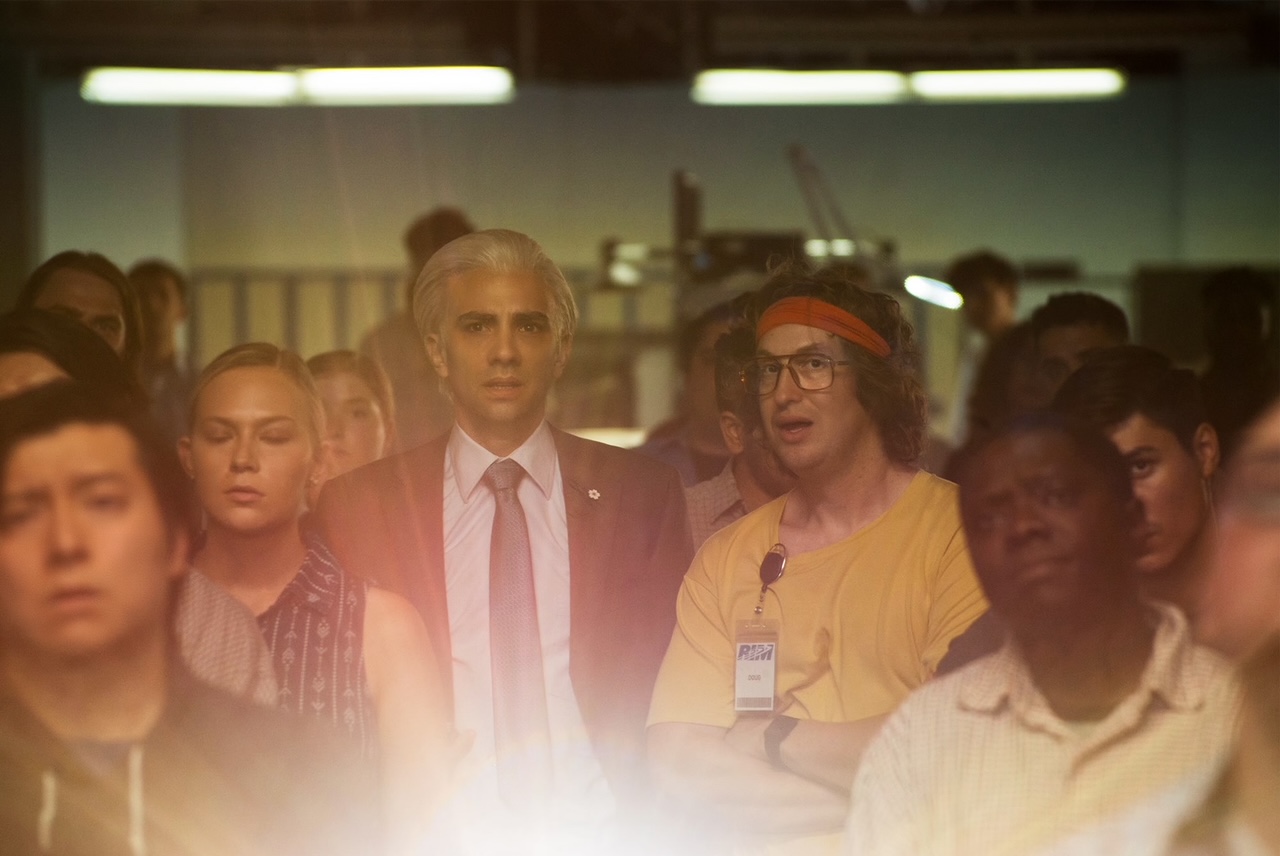
Jay Baruchel and Matt Johnson in Blackberry

In a way, BlackBerry, SFFILM’s Sloan Science on Screen Award recipient that screened at the Festival on Monday, Apr. 17, began with DIY woodworking videos on YouTube. Producer Niv Fichman (The Saddest Music in the World, Antiviral) approached Operation Avalanche writer/director Matt Johnson and writer/producer Matthew Miller with the proposal that they adapt the book Losing the Signal: The Untold Story of the Extraordinary Rise and Spectacular Fall of BlackBerry, about the once popular precursor to modern smartphones. Finding those videos turned out to be key to cracking the story.

The story behind the making of BlackBerry

The book by Jacquie McNish and Sean Silcoff spun the tale of Research In Motion (RIM), the Waterloo, Ontario, company that invented the BlackBerry through the eyes of its two CEOS, tech geek Mike Lazaridis and hard-charging businessman Jim Balsillie. What Toronto native Johnson wanted to find were opinions of people who had worked at RIM. His brother-in-law is an engineer and through him, he learned of the connection between that profession and DIY projects, leading Johnson to scour YouTube until he struck gold when he discovered that one of BlackBerry’s original engineers later started his own woodworking company, posting videos about his projects. Johnson reached out and managed to overcome the man’s initial reticence.

“He really opened up from his perspective as just an engineer on the ground,” Johnson said during a phone call in the days leading up to the Festival. “He told us everything that was happening in the day to day. That’s when it clicked with us that this company, yes, is an engineering firm. But to us, it’s a lot like what it’s like to start a filmmaking career. You’re working with your friends, you’re working all day, and it’s fun. You don’t go to work for the money. The camaraderie is more important than either the product or the compensation.

“That’s when it really took off. We came up with this structure, a story about a kind of exciting startup culture that gets transformed through success into a corporate culture. That is when, all of a sudden, we knew what the characters needed to be and we were able to dig into all of our research from that angle. So that was a real lightning moment for us.”

Fichman originally hired Johnson and Miller merely to write the script, but as the pair threw themselves into the work, it became apparent that they wanted to tell the story themselves. Miller became a producer. BlackBerry became Johnson’s first feature since Operation Avalanche and he took on the role of Doug, Lazaridis’ closest collaborator at the beginning and the company’s amiable and goofy conscience.

“Basically, as soon as I realized this was an opportunity to tell the story of my own life, I thought, ‘Well, it wouldn’t be right to write it and put it in somebody else’s hands,’” Johnson said. “It wasn’t that I wanted to do it so badly, but because I thought, ‘Well, what we’re writing is really not going to be manageable by somebody who hasn’t exactly lived through it in the same way. Niv agreed one to one. He was an amazing partner.”

Glenn Howerton as Jim Balsillie in BlackBerry

The Trotsky’s Jay Baruchel came aboard to play the silver-haired Lazaridis, a man perhaps too invested in his company’s product, while It’s Always Sunny in Philadelphia’s Glenn Howerton is the id of the piece as the energetic, crude, take-no-prisoners Balsillie. BlackBerry represents another step in the evolution of Johnson’s career, after making his 2013 feature debut with the ultra-low-budget, Slamdance award winner The Dirties, followed by Operation Avalanche in 2016, in which film geeks working for the CIA during the Cold War get involved with shenanigans involving the space race and Stanley Kubrick–and a film in which Johnson and his crew managed to invade NASA.

What was it like to work on BlackBerry?

“By American standards, BlackBerry’s budget is quite small, 8½ million Canadian,” Johnson said. For me, it meant that all of the sudden I was working with the actors’ union, all of the sudden we were working with a crew of 40+ people and the marshaling and coaching that went on. It was so funny how life imitated art, trying to maintain the ethos of that early Research in Motion. We’re all doing this for the fun energy while knowing not only the stakes but also that there were way more people involved. I like to hope that some of that energy remains on the screen. That was, by far, the hardest part of the process.

“You may notice that we tried to shoot as much in the real world as we could,” he added. “A lot of the actors aren’t really actors. A lot of them are real people, all those engineers I’m surrounded by are all very young filmmakers from Toronto, who have no background in acting but have a certain vitality, a certain life. And we shot in all the real places Research in Motion actually was. We shot in Waterloo in a lot of the real factories. The kind of stuff was important. We didn’t necessarily break in to as many places as we did on my last film but certainly authenticity was important.”

What does Johnson make of the rise and fall of BlackBerry?

The story of BlackBerry reads like an Icarus tale, a company that flew too high and crashed and burned, as much a victim of corporate hubris as the invention of the iPhone, the product that slew BlackBerry with its more advanced features and sleek style. But Johnson sees another reason for the fall of Research In Motion and its phone.

Jay Baruchel as Michael Lazaridis in BlackBerry

“I think Michael Lazaridis really had a bit of falling love with his own product, to the point of obsession,” he said. “I think what the film highlights in its own small way is a kind of – I don’t want to say arrogance–but there is that myth of the man who makes a statue of a woman and he makes it so perfect, so beautiful, that he falls in love with it. It was like that with Mike, so that when all of a sudden there was another device that did things almost the exact opposite of what his did, his pride and love for his own creation made him completely blind to the positives of what the smartphone was going to become. He fell so in love with what he’d done that he was blinded by possible improvements, because he thought, ‘Well, this could never be better.’” —Pam Gradt

Thanks to SFFILM for allowing me to reprint this interview from https://sffilm.org/blog/

Be ‘Afraid’ of ‘Beau’s’ endless journey

Tags

, , , , , ,

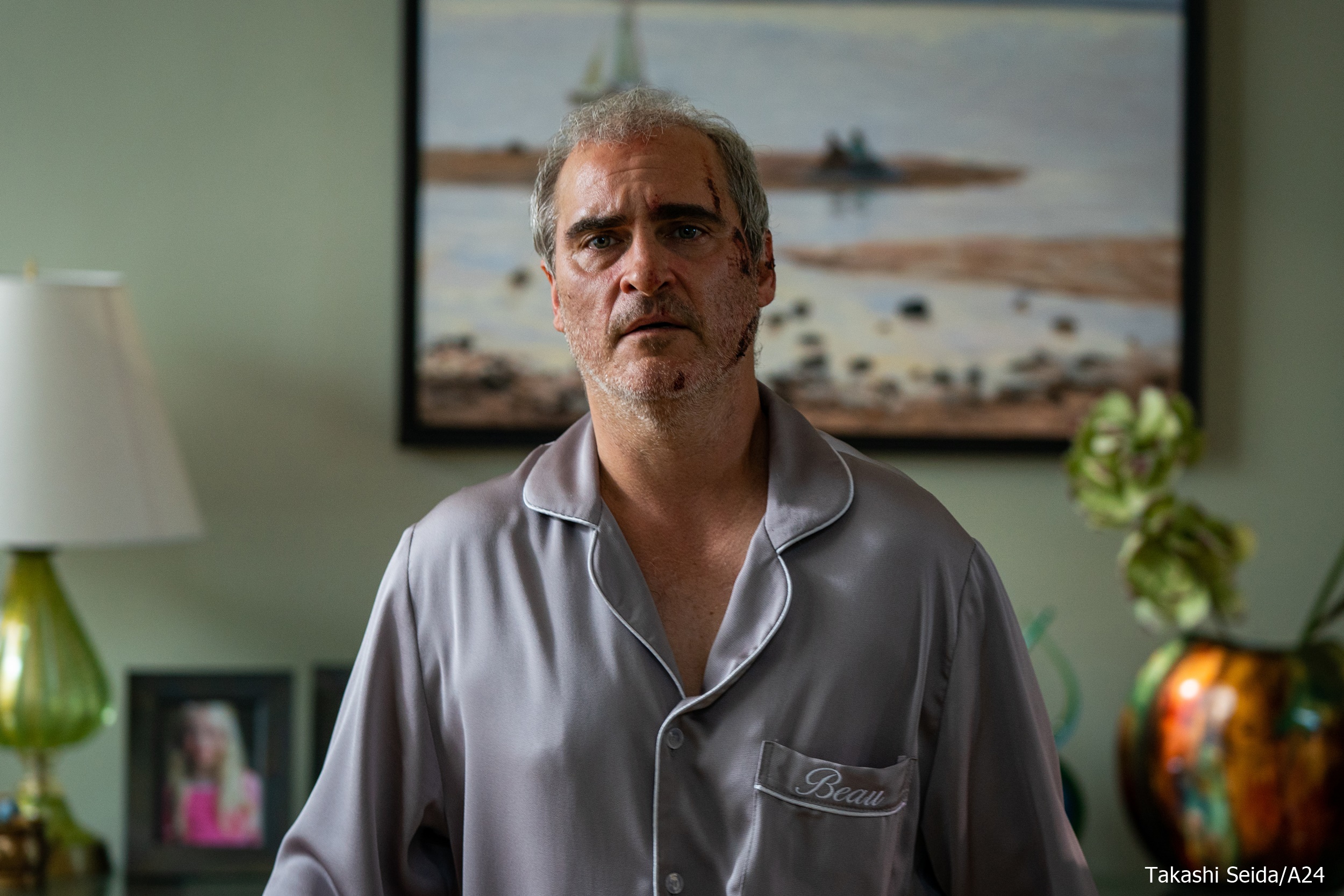
Beau Is Afraid. The title is literal, Beau (Joaquin Phoenix), fears everything, anxiety rooted in his relationship with his monster mommy Mona (Patti LuPone) that permeates every corner of his life. It’s a promising start as Midsommar writer/director Ari Aster’s latest begins in Beau’s psychiatrist’s (Stephen McKinley Henderson) where Beau picks up new meds prior to a visit with Mom, but it doesn’t take long to unravel. Three hours long, and full of forced surrealism and repellant characters, Beau Is Afraid only intermittently amuses. It’s not so much a movie as a filmgoers’ exercise in endurance.

The pity is it begins well enough. Beau lives in such an urban hellscape that you half expect Phoenix to show up in a dual role as the Joker to confront his meek doppelganger. These early scenes with bodies moldering in the streets, crowds of junkies and criminals that seem more dead than alive, and violent crime busting out all over feel like the beginning of an especially visceral zombie movie. But Aster soon moves on to a suburban home where Beau, recovering from an accident, finds himself the prisoner of its cheerful owners (Nathan Lane and Amy Ryan) before running off into a forest where he finds a theater group mounting a seemingly endless play. From there, he works his way home to Mother and a chance meeting with his childhood crush Elaine (an ill-used Parker Posey).

That’s not all, of course. There are plenty of flashbacks back to Beau’s childhood, explicating the roots of his troubled relationship with Mona (played by Zoe Lister-Jones in these scenes), even a trip to the attic long forbidden to Beau, and much more. So much more. It all feels… endless. And pointless, unless the only point is to torture this poor guy for existing.

While the rest of the cast plays at being cartoons (they have no choice – like Jessica Rabbit, they are simply drawn that way), Phoenix delivers a full-bodied, empathetic performance. All for naught. His efforts are simply wasted in this epic empty exercise. –Pam Grady

Chatterbox: David Johansen tells his own story in glorious ‘Personality Crisis’

Tags

, , ,

Nearly a decade ago, Martin Scorsese cast an actor to play the young David Johansen in Vinyl, his 2016 short-lived television series set during the glam rock era of the early 1970s. Now he turns his lens to the real deal with Personality Crisis: One Night Only, Scorsese’s first feature documentary since 2019’s Rolling Thunder Revue and co-directed by editor David Tedeschi. Using a January 2020 Johansen performance at New York’s Café Carlyle – on the singer’s 70th birthday, yet – as a base, the film flits back and forth through time to tell Johansen’s story from his childhood on Staten Island to his days fronting the legendary protopunk band The New York Dolls and beyond, a lively snapshot of a fabulous 50-year career.

The title, of course. Comes from one of the Dolls’ signature tunes. While David Johansen performing as Buster Poindexter performing the songs of David Johansen, the conceit of his Café Carlyle show, might seem like the definition of a “personality crisis,” what is manifest in this wildly entertaining documentary is that crisis of personality has never been an issue for Johansen. He is all personality, warm, witty, and wise as a septuagenarian on his SiriusXM podcast and in conversation with his daughter, Leah Hennessey, and virtually jumping out of the screen as a young man whether performing with the Dolls or in early interviews.

The Café Carlyle performance captures Johansen in fine form, masterfully interpreting his catalog and as an ace raconteur relating stories of his life between songs. The New York Dolls footage interspersed with this is stunning, demonstrating exactly how and why the band was so influential on the glam and punk movements and making the case for how contemporary it remains. Heck, these days they would be banned in Florida, Texas, and other states for their outfits alone let alone lyrics that would make Moms for Liberty types squirm.

Scorsese and Tedeschi don’t stop with just the bookends of Johansen’s career but also delve into his work with The David Johansen Group, his blues band The Harry Smiths, the birth of his pompadoured alter ego Poindexter (just don’t ask him to play his hit “Hot Hot Hot”), and the second 2004-2011 iteration of the Dolls.

Seeing Johansen’s various iterations on stage and in videos is glorious. He is a consummate showman even when simply standing and holding a drink. But Personality Crisis’ secret sauce is Johansen’s vivid memories related in that purring growl of a voice. Scorsese and Tedeschi have made a wonderfully vivid documentary of someone for whom the word “icon” actually fits. But be forewarned: This is a film that will leave you jonesing for Johansen to bring his Café Carlyle show to your own town. – Pam Grady

Personality Crisis: One Night Only available on demand and on Showtime as of 8pm, Friday, April 14.

Flash, Bam Boom: Keanu Reeves’ brilliant return as John Wick

Tags

, , , , , ,

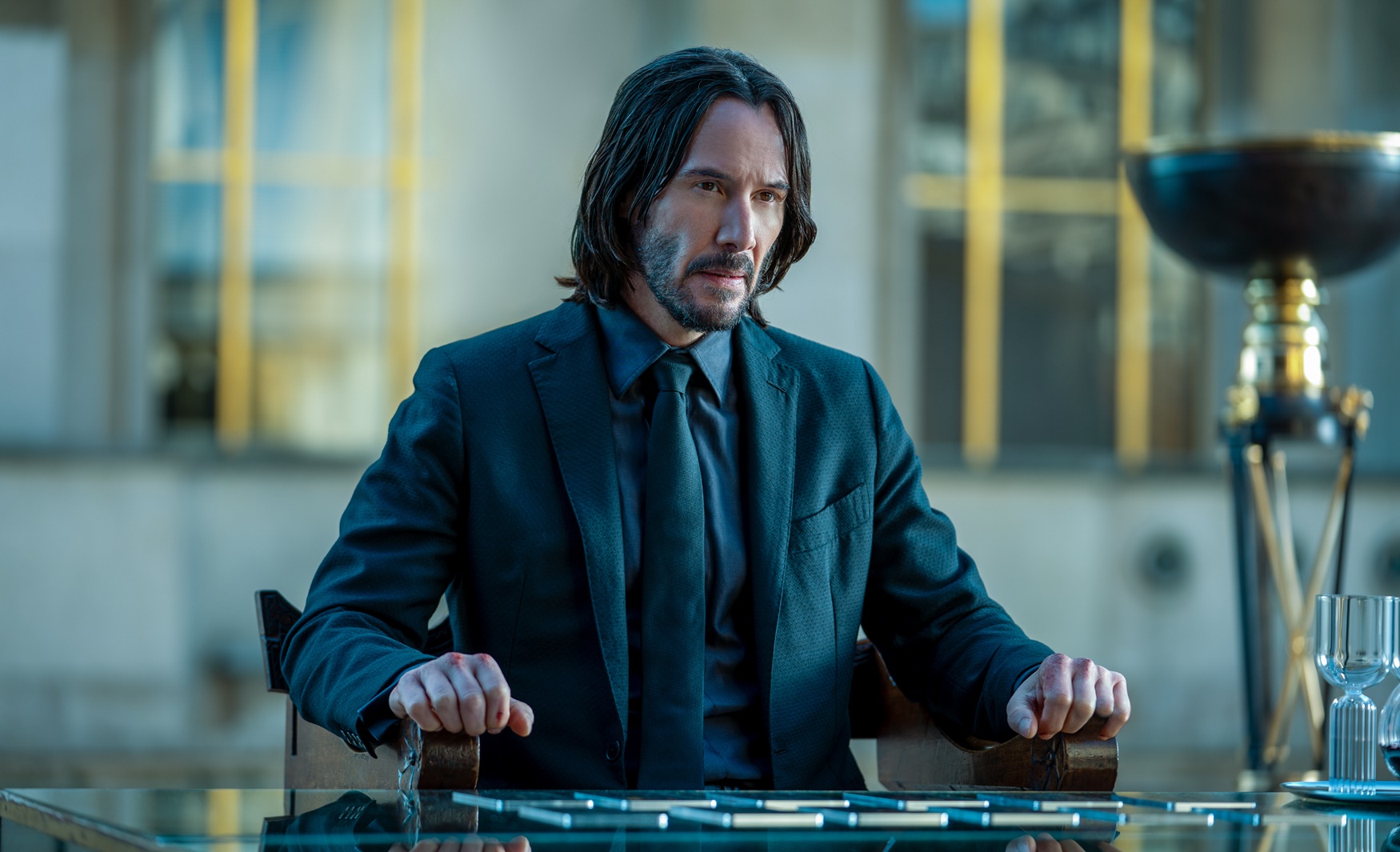
Keanu Reeves as John Wick in John Wick: Chapter 4. Photo Credit: Murray Close

Who—or what—is John Wick, really? A nearly indestructible assassin, sure. A lonely widower, definitely. A loyal friend, yes. A lover of dogs, certainly. But as John Wick: Chapter 4 gloriously proves, he is also a live-action cartoon character, as well, a Roadrunnerfigure who melds the qualities of that elusive desert bird with his genius for evading the falling anvil or rolling boulder with those of his hapless antagonist, Wile E. Coyote, who never gets to avoid the anvil or boulder. In his fourth and final outing as the character, Keanu Reeves gracefully inhabits both qualities, dodging bullets and flying fists and feet while expressing the pain of every bone-rattling encounter.

With Wick still among the living despite their best efforts to vanquish him, his vexed former employers at the criminal underworld’s High Table have reached out to a new psychopath to front their organization and bring Wick down. Arrogant and supercilious, Marquis (Pennywise himself, Bill Skarsgård) is a coward at heart who relishes in inflicting cruelty on others. One of his strategies in pursuing Wick is to isolate him from his allies, beginning by decertifying New York’s five-star hotel for the killer elite, the Continental, a dark turn of fate for manager Winston (the magnificent Ian McShane) and concierge Charon (the late Lance Reddick, the picture of elegance). The Tokyo Continental and its manager, Shimazu (Hiroyuki Sanada, Reeves’ costar in 47 Ronin), are similarly endangered by the Marquis’  lethal initiative. To further insure success, he blackmails one of Wick’s friends, Caine (Hong Kong icon Donnie Yen), a blind assassin, into targeting his buddy. And Marquis keeps raising the bounty on Wick’s head, unleashing an army of killers, including Tracker (Shamier Anderson), who, like Wick, loves dogs.

Fans of Walter Hill’s 1979 classic The Warriors will delight in John Wick’s third act, which is framed as a homage to that action thriller, only instead of traveling across New York, Wick speeds across Paris. And instead of encountering Gramercy Riffs, Baseball Furies, and Rogues, he is beset by a seemingly endless horde of killers intent on earning millions by taking him down.

In this fourth outing together, neither Reeves nor director Chad Stahelski have lost a step. Reeves is all-in as the nearly indestructible Wick, kind of the anti-Tom Cruise, in that you know that that one is always going to come out the way he started, fit and fresh as a daisy. With Wick, no one would be surprised if he had full-on hip and knee replacements between the last film and this or wore an elaborate brace beneath his impeccable tailoring. Reeves makes us feel every punch, fall, and other crunching shock to his system. And it’s a lot of such trauma: Stahelski rarely eases up on the action of tension for long. As a former stuntman, he knows how this kind of action is supposed to work and he is a genius at execution. The film is nearly three hours long but the time flies by.

Every Roadrunner cartoon eventually comes to an end, and so it appears the same with John Wick. But if this is Reeves’ last go-round in Wick’s skin, he is going out in a glorious hail of flash, bam, boom. It is a fitting goodbye to an indelible character. –Pam Grady