
Step aside, Mean Girls and Heathers and Election‘s Tracy Flick. Your portraits of high school power games and popularity contests are so… well, teenage, when put against the actions of the titular character in Selah and the Spades. In Tayarisha Poe’s sensational feature debut, 17-year-old Selah Summers (Lovie Simone) is more Lucrezia Borgia or John Gotti than adolescent queen bee.
Poe sets her tale in the hermetically sealed world of a boarding school. These kids are rich and have the sense of entitlement that comes from money and privilege. At the same time, they are also their parents’ prized trophies, raised with the expectation that will attend Ivies or other elite universities and go on to fabulous lives that will reflect well on the family.
It’s a lot of pressure and the kids at Haldwell School in Pennsylvania have reacted by taking the normal cliques familiar to any high school and weaponizing them. Instead of jocks and geeks and stoners, the five strata at Haldwell are teenage crime families. Working in tandem with one another in an uneasy alliance, each group plays a different role and wields far more power than their neutered headmaster (Jesse Williams). The band that Selah rules over, The Spades, keeps their classmates awash in liquor and drugs.
But, as Shakespeare noted in Henry IV, Part II, “Uneasy lies the head that wears a crown,” and so it is with Selah. On the surface, she is a picture of composure and supreme confidence. But she trusts no one, not even her second in command Maxie (Jharrel Jerome). Compounding her issues are a long-simmering feud with Bobby (Ana Mulvoy Ten), leader of a rival faction, that threatens to break into the open, and an obsession with her legacy. Selah is a senior, who will inherit the Spades when she graduates?
New student Paloma (Celeste O’Connor) might hold the key to succession. The two girls become instant besties. Paloma is smart. She’s reliable. Very little fazes her. But she also has a streak of independence that resists Selah’s attempts at control and manipulation. And not much gets past her as she observes how Selah treats Maxxie and the fraught interactions between Selah and Bobby. Can anyone truly be friends with Selah or does she ultimately see everyone as a frenemy?
At one point, Selah visits her parents. Her mother (Gina Torres) relates to her the old fable of the scorpion and the frog in which the scorpion hitches a ride with the amphibian across a river, only to sting his benefactor mid-crossing, dooming them both. The scorpion can’t help it; it’s his nature.
Selah and the Spades zeroes in on Selah’s nature, which is not so different from the scorpion’s. She is a smart young woman, but it is not her intelligence that drives her but something much more primal. Her outward calms masks a tumultuous emotional life rife with anger, resentment, and jealousy. There is also an element of fear: When she moves on from Haldwell, who is she? Who is Selah Summers when she is no longer a high school celebrity, when she is just another anonymous college freshman?
Writer/director Poe has created an outstanding first feature, one that sells the offbeat reality of the situation and the idea that these kids have successfully forged a world completely separate from their teachers and parents. Simone’s performance is indelible, a finely etched character portrait of a young woman who has found her purpose within that universe and reacts badly as the time nears to move on to her next chapter. –Pam Grady
Selah and the Spades is streaming on Amazon Prime.
 Greed plays to Steve Coogan’s strengths. He is an actor able to embody repellent characters but layer them with enough charm that an audience will keep watching and even begrudgingly like even the complete bastards he sometimes plays. And so it is with Greed, Michael Winterbottom’s latest, a misfire in which Coogan soars as billionaire jerk Sir Richard “Greedy” McCreadie even as the film flails around him in a mostly unsuccessful attempt to satirize the super-rich while calling attention to the injustices built into the garment industry.
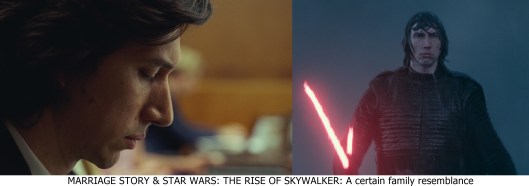 Spoiler alert: The following discusses certain aspects and plot points of Marriage Story and Star Wars: The Rise of Skywalker.
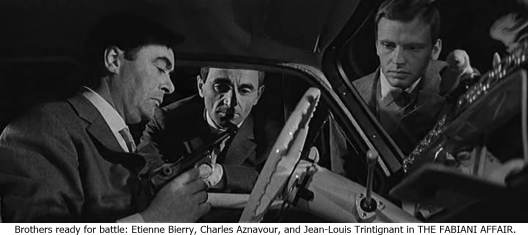 When Charles Aznavour died just over a year ago in October 2018, it brought the end of not just one of the world’s great singers but also an actor of considerable charisma. That quality is on full display in The Fabiani Affair (1962), a tense crime drama that is one of 15 1960s Gallic film noirs screening at The French Had a Name For It 6, Thursday, Nov. 14-Monday, Nov. 18 at San Francisco’s Roxie Theater.
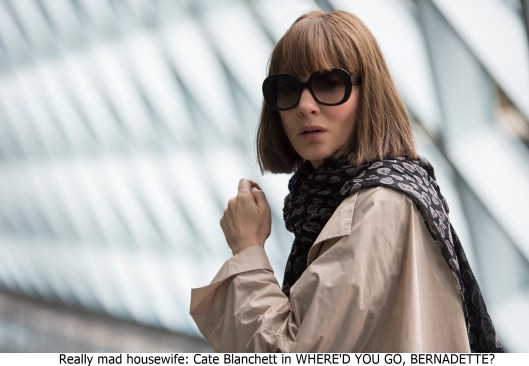
 Stealing a beer from my uncle’s fridge and running off to share it among the four of us behind the nearby grammar school used to be a thing for me, my two cousins, and my little sister (who we were corrupting, since we were tweens and she wasn’t). Then one day when they were going to come to my house for a sleepover, we stashed a beer in my sister’s purse where my mom discovered it. Busted. Sleepover canceled. Beer filching days over.


 In a key moment of Wild Rose, aspiring country singer Rose-Lynn Harlan (Jessie Buckley) travels to London—probably the farthest she’s been outside of her hometown of Glasgow—to meet one of her heroes, real-life BBC The Country Show radio host Whispering Bob Harris—who tells her that if she is serious about making it in country music she needs to write her own songs. It is a suggestion that flummoxes her; she feels she has nothing to write about. She can’t see what the audience sees: Her life is a country song. And so is this movie, the story of a working-class heroine who can’t seem to get out of her own way, whose life would utterly defeat most other people, but whose hope and big dreams remain undistinguished.
