• About

Cinezine Kane

Cinezine Kane

Category Archives: Interviews

On THE LAST FIVE YEARS and Robin Williams: Richard LaGravenese

11 Thursday Sep 2014

Posted by cinepam in Interviews

≈ Leave a comment

Tags

Anna Kendrick, Jeremy Jordan, Richard LaGravenese, Robin Williams, The Fisher King, The Last Five Years

Behind the scenes during the filming of "The Last 5 Years"

Next Valentine’s Day, Richard LaGravenese’s The Last Five Years looks to be the lovers’ holiday’s hot date movie. Starring Anna Kendrick and Smash star Jeremy Jordan, it is the story of a relationship between a gentile actress and a Jewish novelist weaving backward and forward in time and told almost totally in song. LaGravenese never saw Jason Robert Brown’s award-winning play when it was produced Off-Broadway, but he had the soundtrack.

“I would listen to it over and over and over,” LaGravenese says at the Toronto International Film Festival where The Last Five Years had its world premiere.

The writer/director knew Kendrick from the movie Camp, and knew she was perfect for the female lead. Casting the male was trickier. Within the film is a joke about a brilliant actor who is a terrible singer cast in the musical, a recent trend in big Hollywood musicals. LaGravenese was having none of that.

“A lot of the actors who wanted to do it, couldn’t sing it,” he says. “The deal I had with Jason was I pick the actor I want, because they have to be able to act the score, but he has to tell me whether or not they can sing it, because I don’t know enough about music. I would meet them and then send them to Jason and they would have to sing for Jason. Except Jeremy. We knew Jeremy could sing, so we had to make sure he could act it.

“I’m so sick of musicals, especially ones that I love, where they cast actors, ‘Oh they don’t have to sing well, they just have to act well.’ No! You have to sing the score I love.”

LaGravenese’s first love is the theater, so The Last Five Years is a way to pay homage to that. It was his wife, Anne, who first suggested he try his hand at screenwriting. After apprenticing with a friend, his first solo screenplay was The Fisher King.

“I wrote it just to be a writing sample so that I could get a job,” he says. “I never thought it would get made.”

And while The Last Five Years makes its debut on the world stage, LaGravenese is touched to learn that The Fisher King is screening this weekend in San Francisco as part of the Castro Theatre’s celebration of Robin Williams’ life.

“That was a heartbreaker for me,” LaGravenese says of Williams’ recent death. “I owe that man so much. That movie would not have been what it was had he not said yes. He was the most respectful, kind, lovely man. It’s a heartbreaker to think he was in so much pain.

“He was wonderful,” he adds. “He ad-libbed maybe five lines, but other than that, he treated the script like the Grail. He was just fantastic.”—Pam Grady

The Last Five Years opens Friday, February 13, 2015. The Fisher King plays the Castro Theatre Sunday, September 14. For further information, contact castrotheatre.com.

Share this:

  • Share on Facebook (Opens in new window) Facebook
  • Share on X (Opens in new window) X
  • Email a link to a friend (Opens in new window) Email
  • Print (Opens in new window) Print
  • Share on LinkedIn (Opens in new window) LinkedIn
  • Share on Tumblr (Opens in new window) Tumblr
  • Share on Reddit (Opens in new window) Reddit
  • Share on Pinterest (Opens in new window) Pinterest
Like Loading...

A fractured married tale: Mark Duplass & Charlie McDowell on THE ONE I LOVE

22 Friday Aug 2014

Posted by cinepam in Interviews

≈ Leave a comment

Tags

Charlie McDowell, Elisabeth Moss, Mark Duplass, The One I Love

the-one-i-love-In The One I Love, Ethan (Mark Duplass) and Sophie (Elisabeth Moss) have reached a rough patch in their marriage. Their therapist (Ted Danson) suggests they try to reconnect during a weekend retreat at a gorgeous country house. There is much more to this wildly inventive romantic comedy than that, but the challenge in writing or talking about director Charlie McDowell’s sublime feature debut is to not give too much away.

“It’s certainly tricky,” says Duplass. “It is such a good conversation piece, but at the end of the day, we have just discovered that you do better as a viewer of this movie when you don’t know what’s in there…We did this really cool test screening where we put 100 people in one theater on the left and 100 people on one theater on the right. People on the left knew everything about the movie that you would know from an average Hollywood trailer, lots of spoilers. People on the right went in blind, just with, ‘It’s a romantic comedy with Mark Duplass and Lizzie Moss. They go on a couples’ retreat to try to save their relationship.

“Everybody loved the movie. It was great, but the way that people would talk about it when they didn’t know what was there, there was like an electricity in their eyes and in their voice. In particular, they would just arrest people, ‘You have to see this movie! You have to see this movie! Oh my God!’”

The One I Love was born out of Duplass and McDowell’s friendship and desire to make a movie together. Duplass furnished his pal with the kernel of an idea that McDowell and his writing partner (and the film’s eventual screenwriter) Justin Lader transformed into a 10-page outline fleshing out the story and characters.

“Then we picked this location to set it in and reverse-engineered the movie to take place inside this location and wrote for all the things in there,” says Duplass. “It’s kind of following along in the thing I’ve always described as ‘the available materials school of filmmaking.’ Don’t write a script and figure out how you’re going to make it. Write a script for what you have at your disposal, so you know you can make it.”

Moss, another friend of Duplass, was quickly recruited to play Sophie, and added her input into her character. Producer Mel Eslyn also contributed notes to the story. The project came together quickly. It was only six months from the time that McDowell and Duplass started talking about the movie until they were actually shooting it.

“There’s something about the energy that happens when you do that,” says Duplass. “Everyone’s still excited about the movie. It still feels fresh. It’s like the difference between getting married when you’ve been dating for six months and getting married after you’ve been dating for five years. When you’re standing there on the altar and you’ve just been together, you’re like, ‘This is so exciting! This is so exciting!’ After five years, you’re like, ‘Yeah, I suppose it’s about time we do this.’”

McDowell says he is often asked what The One I Love‘s ending means, but the ending relates to everything that comes before it. With or without that which makes the film so unusual, it is the story of a relationship. McDowell points out that it is a romantic comedy that focuses on real people with real problems rather than the usual rom-com stereotypes and conventions. Still, Duplass notes, what the film is actually about only emerged in the making of it.

“The theme that came out sort of posthumously, after the first draft of the outline, is that we tend to when we’re first dating people, to put forth this perfect version of ourselves where we try to be more sensitive and more loving and more intelligent,” he says. “They bring up a book and you’ve never read it and you say, ‘Oh, I love that book!’ Then the shine comes off and how do you deal with that disparity between who you said you are and who you really are? That seemed fun and playful, but also meaningful, and we were like, ‘This is a good theme to explore through this magically real plot machination that we employ in the movie.’”

Adds McDowell, “They’re in this place a lot of us get into where you’re in a rut and it’s like, how do you get out of it and should you get out of it? A lot of times it’s, ‘Should we cut our losses and should we move on?’ We kind of came to a place in their relationship where Ethan had cheated on Sophie and so he’s kind of created this separation between them. Now, they’re stuck. A lot of times something needs to happen for a couple to get out of that rut.” —Pam Grady

Share this:

  • Share on Facebook (Opens in new window) Facebook
  • Share on X (Opens in new window) X
  • Email a link to a friend (Opens in new window) Email
  • Print (Opens in new window) Print
  • Share on LinkedIn (Opens in new window) LinkedIn
  • Share on Tumblr (Opens in new window) Tumblr
  • Share on Reddit (Opens in new window) Reddit
  • Share on Pinterest (Opens in new window) Pinterest
Like Loading...

CALVARY’s father and son reunion

07 Thursday Aug 2014

Posted by cinepam in Interviews

≈ Leave a comment

Tags

Brendan Gleeson, Calvary, Domhnall Gleeson, John Michael McDonagh

CalvaryWriter/director John Michael McDonagh admits he hesitated before casting Domhnall Gleeson in the small but pivotal role of serial killer Freddie Joyce in his latest film, the blackly humorous drama Calvary. For Gleeson—whose credits include both parts of Harry Potter and the Deathly Hallows, True Grit, Anna Karenina, the upcoming comedy Frank, and a Tony-nominated turn in Martin McDonagh’s The Lieutenant of Inishmore—it would be casting again type, but that wasn’t what concerned McDonagh. It was just that in this single scene, Domhnall would be acting against Calvary‘s star, Domhnall’s dad, Brendan, playing a priest whose week starts with a death threat and doesn’t get any better with his jailhouse visit with Joyce.

“I was a bit worried about it, because I thought it would bring the audience out of it. They’re going, ‘Oh, that’s Brendan Gleeson. That’s his son,” McDonagh says.

“It’s a very intense scene obviously,” he adds. “There were a lot of things being said that unnerved people in the crew as they were listening to it. And we go from a very big wide into really close. It’s very intense … It’s deliberately a kind of black hole right in the middle of the film. I think it’s about 50 minutes, so it’s right dead center.”

For Brendan Gleeson, sharing the scene with his eldest child was a revelation. They have acted together before on a number of occasions, including a 2006 Irish football comedy Studs and Ian Fitzgibbon’s 2009 comic thriller Perrier’s Bounty, and Domhnall directed his old man in his 2010 short Noreen.

But Calvary is different. Brendan Gleeson remembers reading through the scene with Domhnall in rehearsal, and then the younger Gleeson went away until it was time to shoot it, adopting radio silence with his dad as he worked to find the character. On the day, Domhnall was not only in character, but McDonagh had directed hair and makeup to make him as unrecognizable as possible.

“It was very difficult in a sense. It was a harrowing day,” says Brendan Gleeson.

“We had kind of retreated to our separate corners and we just came out fighting on the day. Then we sat down at this table in this vast room and we didn’t really talk to each other very much. My analogy for it afterward was we were two sparring partners who were great friends or brothers or something, but when you do it in the ring for real, you have to park all that stuff and just fight your corner, basically, and that’s what we did.”

The scene between Freddie and Father Michael is an arresting one, one of the darkest in the movie, and one that McDonagh discovered, from Calvary‘s first screenings at the Sundance Film Festival where the movie premiered, has a curious effect on audiences.

“After that scene, I thought, ‘That’s going to turn the film into a really dark, somber place,” says McDonagh. “What I found … was that we would still get laughs after that sequence and they would be bigger laughs than what I was expecting. I think it’s because that scene is so dark and somber that the audience wanted relief from it. They’re looking for any kind of relief and so they laugh a bit more than probably they should.”

For Brendan Gleeson, it was just a relief to finish the scene.

“It was fantastic to work with Domhnall, but in retrospect, it was nice to get him back at the end of the day,” he says.

Gleeson starts to say that in that scene he saw in his son something that he’d never seen before, but then he corrects himself. That face, the expression on Freddie Joyce’s face, that was familiar.

“When I tried to get him out of bed too early maybe over the years, I’ve seen that look before,” Gleeson laughs.

“I think Domhnall did extraordinarily well,” he adds more seriously. “He’s quite chilling. I’d be proud of him, anyway, but I was particularly so after that.”—Pam Grady

For more of my Brendan Gleeson interview, click here.

Share this:

  • Share on Facebook (Opens in new window) Facebook
  • Share on X (Opens in new window) X
  • Email a link to a friend (Opens in new window) Email
  • Print (Opens in new window) Print
  • Share on LinkedIn (Opens in new window) LinkedIn
  • Share on Tumblr (Opens in new window) Tumblr
  • Share on Reddit (Opens in new window) Reddit
  • Share on Pinterest (Opens in new window) Pinterest
Like Loading...

A Singular Career: The Roxie pays tribute to actor Don Murray

10 Thursday Jul 2014

Posted by cinepam in Interviews, News

≈ Leave a comment

Tags

A Hatful of Rain, Advise and Consent, Bus Stop, Confessions of Tom Harris, Don Murray, Donald Malcolm, Elliot Lavine, Roxie Theater, Sweet Love Bitter, The Hoodlum Priest, Unsung Hero

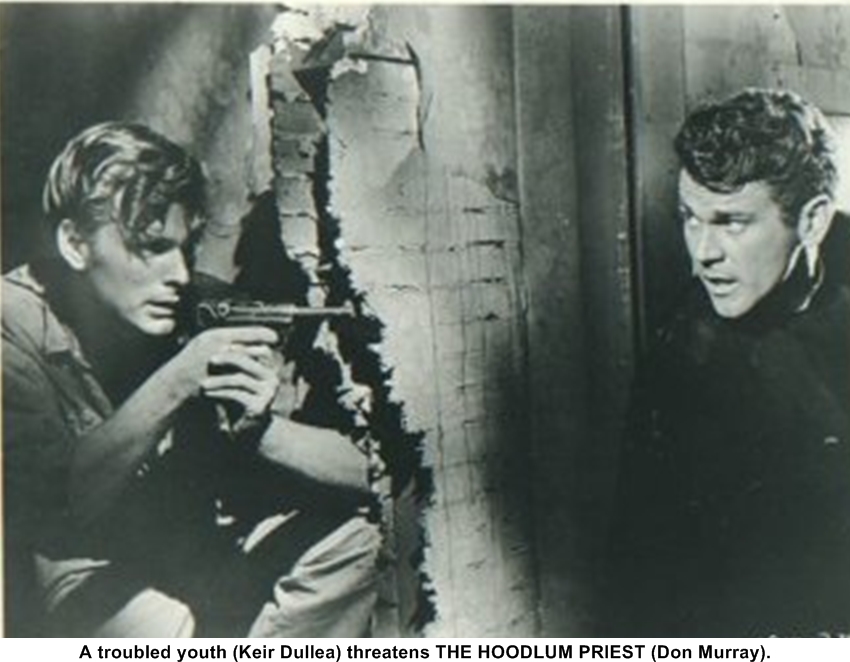
hoodlum priest1

After toiling in television for half a dozen years, Don Murray made his big screen debut in Joshua Logan’s romantic comedy drama Bus Stop (1956). His role as a cowboy smitten with a singer played by Marilyn Monroe earned him an Oscar nomination for Best Supporting Actor and made him a movie star at 27. He went on to make a number of high-profile films, including A Hatful of Rain (1957) and Advise and Consent (1962), but his career never quite reached the heights that Bus Stop promised.

Instead, Murray’s career became much more idiosyncratic and much more interesting. He worked on a number of his own projects, including writing, producing, and starring in The Hoodlum Priest (1961), an involving drama shot by Haskell Wexler with Murray as a priest struggling to keep juvenile delinquents on the straight and narrow, and writing, producing, and starring in Confessions of Tom Harris (1969), a truly eccentric drama in which Murray plays the titular character, a one-time vicious criminal who became a prison chaplain as well as Murray’s stand-in and stunt double after a conversion to faith. He also appeared in independent features, such as Herbert Danska’s Sweet Love, Bitter (1967), a downbeat drama set to Mal Waldron’s evocative score, in which Murray plays an alcoholic college professor in free fall who becomes friends with a Charlie Parker-like, junkie jazz musician played by comedian Dick Gregory.

All of these films and more will screen July 11-13 at San Francisco’s Roxie Theater as part of A Very Special Weekend with Don Murray. Coordinated by Roxie programmer Elliot Lavine and filmmaker Don Malcolm, who is currently directing and producing Unsung Hero, a documentary about Murray, the program offers a broad range of Murray’s movie and television work. The actor, who turns 85 this month, will be on hand over the weekend along with other special guests.

Malcolm will also screen clips from Unsung Hero throughout the retrospective. In this Q&A, he talks about Murray, his career, and what inspired Malcolm to make a documentary.

Q: Was there a defining movie for you, one that made you think, ‘There’s a film here?’

Donald Malcolm: I would say The Hoodlum Priest really broke something open. Don was the writer of the script, the producer, and all of that. I said, ‘How could that combination of talent not end up doing more of that kind of work?’ I found out why later on as we got into it. I think it really galvanized him—it didn’t happen all at once—I went and did the research and found the things that were hard to find.

I suddenly realized there were two phases to his career, the one that was sort of in the wake of Bus Stop up through The Hoodlum Priest. Then there was the material that followed, which then became more puzzling, more interesting, and just made the story even more needed to be told. As I got to know Don, I got to understand his perspective on it. Then I realized there were aspects of what he had been doing and the type of person he was when he wasn’t making movies that made it clear there was another thread that can be told in the story.

Q: In his more personal work there seems to be an emphasis on social justice and faith, most explicitly in The Hoodlum Priest.

DM: There’s a point of connection between social justice and the benefits of religious faith, and understanding how to apply it and how to use it in one’s life without being doctrinaire about it…Hoodlum Priest is what I would call a combination of a social problem film and neorealism jammed together to make a very hyper-dramatic point, which I think it’s very successful in doing, but it is looking backward into a different style of filmmaking that I think Don became enamored with when he first came to Hollywood. Obviously, he had an idea of how he wanted that film to look and he found Haskell Wexler making B noirs. He signed Wexler and [director] Irvin Kershner to do it from that side of the camera for him.

Q: Did you have any problems tracking down material for the documentary? Obviously, there are the things you’re screening at the Roxie, but beyond that group of movies, did anything prove elusive?

DM: There’s tons of stuff we weren’t able to get and we’re still working on getting bits and pieces to show in the film. One of the areas that will be covered as part of the quartet of films we’re showing on Saturday that deal with race relations is the live Philco Playhouse TV show called A Man Is Ten Feet Tall where he is opposite Sidney Poitier. Live television experience was something that buoyed Don quite a bit, because his contract with Fox didn’t push him to do that many movies and he was having trouble finding movies, because they kept trying to find some variation of Bus Stop or cowboy or whatever. They never quite figured out how to market him or go with him beyond that, because he also had a mind of his own and said, ‘I don’t want to do that kind of work.’

Don never wanted to do the same thing twice. As he said, ‘I came to Hollywood and they said I needed to establish a persona that the audience could relate and would be a reliable thing for them to get behind. I did the exact opposite.’ Live television turned out to be a great way for Don and many other actors with similar predilections to stay working…The actors enjoyed the challenge of working in a live context. It was like doing a play one time in front of a national audience. It also kept them in the public eye, because those shows were popular. That sustained Don quite a bit and that is one of the areas of his career that is difficult to reconstruct sufficiently in the documentary.

Q: How much time have you spent with Don?

DM: Quite a bit. Quite a bit of time, quite a lot of discussion to understand his perspective and finding out about his development as a young man and how he came to form a lot of his ideals and beliefs. It was important to have the time and also meet some of the people who worked with him when he was doing the refugee project that he did in the late ’50s that was an outgrowth of him doing alternative service as a conscientious objector during Korea. That’s all part of the story, trying to get people to understand the kind of person he is and how that shapes a lot of work that he’s done.

Don said, ‘Are you sure that my story is really the one that should be told? Is it really all that bad?’ I said, ‘All that bad? You’re a stoic. You’re a survivor. You’re a guy that found a way to forget about be forgotten and found a way to live a life that had nothing to do with all the hype and the craziness that can go in being in that kind of profession.’—Pam Grady

For more information about A Very Special Weekend with Don Murray, visit roxie.com.

Share this:

  • Share on Facebook (Opens in new window) Facebook
  • Share on X (Opens in new window) X
  • Email a link to a friend (Opens in new window) Email
  • Print (Opens in new window) Print
  • Share on LinkedIn (Opens in new window) LinkedIn
  • Share on Tumblr (Opens in new window) Tumblr
  • Share on Reddit (Opens in new window) Reddit
  • Share on Pinterest (Opens in new window) Pinterest
Like Loading...

A Legend Speaks: Q&A with SUPERMENSCH Shep Gordon

05 Thursday Jun 2014

Posted by cinepam in Interviews

≈ Leave a comment

Tags

Alice Cooper, Mike Myers, Shep Gordon, Supermensch: The Legend of Shep Gordon

SUPERMENSCH

Forty-odd years ago, Shep Gordon was an aimless youth, dealing drugs to support himself, when a chance meeting with Jimi Hendrix at the Hollywood Landmark Hotel changed his life. Sizing he new acquaintance up, the guitarist suggested that Gordon try his hand at talent management. Not long after, Gordon signed Alice Cooper as his first client. They’ve been together ever since and that was just the first step in a life that has included, in addition to representing musicians, making movies, befriending the Dalai Lama, and turning chefs into superstars.

Actor and comedian Mike Myers and Gordon met when the former was making Wayne’s World. A fast friendship formed and when Myers was going through a rough patch in his life, it was to Gordon whom he turned. What started as a short stay at Gordon’s Maui home stretched into months and seeing him daily and listening to his stories convinced Myers that Gordon was the perfect documentary subject. Thus, Supermensch: The Legend of Shep Gordon was born, an affectionate and lively film that includes not just Gordon’s tales of his adventurous existence, but also testimonials from famous friends, including Cooper, Myers, Michael Douglas, Sylvester Stallone, and Emeril Legasse.

Supermensch: The Legend of Shep Gordon recently screened at the San Francisco International Film Festival where Gordon himself sat down to talk about his storied life and how he feels to find himself in an unaccustomed spotlight.

Q: One of the things that stands out in this movie is your sense of ethics, which is not that common in the world of talent management. Where does your sense of ethics come from?

A: My dad was a really wonderful man, really wonderful. I have no idea, really. I was just talking to a Jewish journalist for a Jewish publication, and we were talking about the social liberal aspect, which I think probably comes from DNA – it’s a Jewish trait. I have no idea where the ethical – it just always felt right. I never really had a set of principles. I just did what I thought was right. And I got very lucky with Alice as my first client, because he had a very strong religious upbringing. So his sense of right and wrong, is disciplined, learned, and he believes it 100 percent. It was really easy for me to be ethical, because I had an ethical artist.

Sammy Hagar lives here and I’m going to see him tonight. The first time I met Sammy he was in a group called Montrose. We had hired them to open for Alice in Tampa, Florida in ’72.

They were getting like $500 or $300, it was nothing. A hurricane came and blew the stadium apart. We couldn’t do the show. We had no obligation to pay them; we weren’t getting paid. I went into Alice’s dressing room and I said, ‘Listen, we can afford to not get paid, but if they’re only getting $300, that’s gas money, that means they won’t sleep in a hotel tonight. Let’s just pay them.’ He said, ‘Oh, great, we should.’ Sammy couldn’t believe that someone actually paid them when they didn’t have to. That was an ethical decision, that just was the right thing to do. I never thought of it as ethics, just as the right thing to do.

Q: How did Mike Myers approach you about making the film and what your feelings were about it when he first talked to you about it?

A: He’s asked me for about 10 years. He loves my stories and he felts those stories told a cultural history of those decades and he wanted to tell that story. I didn’t really have any reason to want to do it. I really felt like fame is very dangerous and should only be flirted with if you need it for your income. If you happen to be unfortunate enough that that’s the way you made your money, then—and I didn’t. Never planned to, never will. So there was no real reason to do it. I appreciated him telling the story, but that was a bit more ego for me than I could deal with. I don’t consider myself that special. I just said, ‘No, no, no, no.’ Then when I was in the hospital, heavily medicated, he got through to me—in a weak or strong moment, I’m not sure which. (Laughs)

Q: One of the most moving things about the movie is people talking about you. Listening to someone like former Golden State Warriors coach Don Nelson say he’d like to kiss you on the mouth says so much about you and what you mean to people. When you watched the film for the first time, what was your reaction to that?

A: I was really humbled. I was amazed how many people gave up stuff that most public figures would never give up. Alice saying, ‘I would have been two years and gone.’ That’s from an artist, who’s an icon in the Rock ‘n Roll Hall of Fame. That’s pretty humble. Sylvester Stallone, who has this image of this tough, macho guy, talking about anybody being better than him at anything or wanting to emulate anyone. Just everybody. Mike, his words. It was very humbling. Now, I can watch it and accept it, but it was weird. I went to Mike and asked him, ‘Did you write these things for them?’ He said, ‘No.’ That was my first thought, that maybe they were scripted, but they weren’t. I had a really warm feeling, that I have friends [like that].

Q: Where do you you might be right now if you hadn’t stopped off at the Hollywood Landmark?

A: You know, I have no idea. It’s really funny. I have no idea. I was with my partner, Joe Greenberg, we probably just would have kept dealing or tried to or something. I don’t know. My whole life has sort of been like that. If I hadn’t been at the restaurant that night when Mr. [Roger] Vergé came in, would there be celebrity chefs today? I don’t know. I’m just happy to have taken the journey. It’s an interesting question that I’ll never know the answer to.

Q: When you look back over your career, and you’ve had so many facets of it, is there one thing that stands out more than anything else?

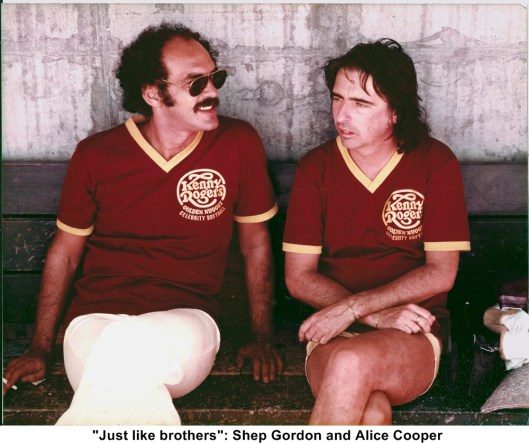
A: I think the thing I’m proudest of is the celebrity chefs, really creating a new category. Also, Alice and I are just like brothers, I almost take that too for granted, ’cause I know how much that changed the world and how important we were to it. It’s so part of me. I think probably those two. The celebrity chefs is very rewarding to me, because they were really underserved. I’m really proud that I had a part in that.

Q: The film does its best to try to encapsulate a very varied life with the different industries you’ve been involved with and different adventures. Was there something that maybe got left out, some big part of your journey, some aspect there wasn’t time to go into?

A: A lot got left out, A lot of people got left out. When the word ‘I’ is used in that film, it has nothing to do with ‘I.’ It’s ‘we.’ There’s nothing I ever accomplished that wasn’t a team effort. The person I felt was most left out of the story was my partner from the early days, Joe Greenberg. I put that [title] card up to try to show that, even though, it was my story, through Mike’s eyes, I wanted some recognition that the ‘I’ was really ‘we.’ … My ex-partner’s very angry, very angry that I’m stealing his story. I told him, ‘I’m not stealing anybody’s story. Mike’s telling my story and I don’t know what to say.’ So, I think that. There isn’t any one incident that I care about, it’s more the people who got left out. … It’s Mike’s movie. Sometimes I feel like a chair in his movie, but an interesting chair.—Pam Grady

Share this:

  • Share on Facebook (Opens in new window) Facebook
  • Share on X (Opens in new window) X
  • Email a link to a friend (Opens in new window) Email
  • Print (Opens in new window) Print
  • Share on LinkedIn (Opens in new window) LinkedIn
  • Share on Tumblr (Opens in new window) Tumblr
  • Share on Reddit (Opens in new window) Reddit
  • Share on Pinterest (Opens in new window) Pinterest
Like Loading...

ONLY LOVERS LEFT ALIVE: Jim Jarmusch airs a theory

17 Thursday Apr 2014

Posted by cinepam in Interviews

≈ Leave a comment

Tags

Christopher Marlowe, Jim Jarmusch, John Hurt, Only Lovers Left Alive, William Shakespeare

RZ6A9993.JPG

Jim Jarmusch is a Shakespeare fan, not just of the works themselves, but of the theories surrounding their authorship. He is not sure who wrote the plays and sonnets. Perhaps Edward De Vere, Earl of Oxford, the man immortalized by Rhys Ifans in Roland Emmerich’s 2011 drama Anonymous, or perhaps Christopher Marlowe. Whoever it was Jarmusch is certain that it wasn’t William Shakespeare.

“It really doesn’t matter who wrote that stuff, in my opinion,” the filmmaker says. “It’s beautiful. In my opinion – along with Sigmund Freud, Orson Welles, Henry James, Ralph Waldo Emerson, Mark Twain – none of them bought that Shakespeare thing. Come on, it’s ridiculous, if you do any research at all.”

Jarmusch’s love of Shakespearean theory is what led him to write in Marlowe as best friend to Adam (Tom Hiddleston) and Eve (Tilda Swinton) in his new romantic drama Only Lovers Left Alive. Like the couple, Marlowe is a vampire. Hundreds of years after his supposed death, he is living the undead life in Tangier. More curious is that, according to the history books, the Elizabethan playwright was only 29 when he was murdered in 1593, but Jarmusch cast 74-year-old John Hurt to play him.

“Because Marlowe’s death, the more I researched it, it seems totally faked,” Jarmusch says. “I don’t believe in Marlowe’s death, so another conspiracy comes to light. And Marlowe is a possibility, so in this version I’m going with the Marlowe theory.

“It’s so crazy,” he adds “You mean Shakespeare wrote all that shit and there’s not a single manuscript of a single page. Where did it go? Come on! What is this? It’s the biggest conspiracy in literary history. I find it fascinating. Someday I might make a documentary on my Marlowe theory, but I don’t know. I snuck it in here.”

Only Lovers Left Alive may not convince the world that William Shakespeare didn’t write a thing and that it was Christopher Marlowe all along, but Jarmusch has made at least one convert: John Hurt.

“He hadn’t really researched it much,” Jarmusch says. “Now he’s definitely sure that Shakespeare wrote nothing. He’s pretty sure it wasn’t DeVere, but he’s reading everything, too. It’s just fun to get his mind going. He’s like, ‘Thank you! I now know Shakespeare didn’t write a thing!’

“I love it when Adam says, ‘Well, you still got the work out there, kid.’ It’s kind of like, ‘Well, you still did your job even though no one will know you wrote it ever.’” –Pam Grady


Share this:

  • Share on Facebook (Opens in new window) Facebook
  • Share on X (Opens in new window) X
  • Email a link to a friend (Opens in new window) Email
  • Print (Opens in new window) Print
  • Share on LinkedIn (Opens in new window) LinkedIn
  • Share on Tumblr (Opens in new window) Tumblr
  • Share on Reddit (Opens in new window) Reddit
  • Share on Pinterest (Opens in new window) Pinterest
Like Loading...

A different measure of making it: T-Bone Burnett on INSIDE LLEWYN DAVIS

20 Friday Dec 2013

Posted by cinepam in Interviews

≈ Leave a comment

Tags

Bob Dylan, Coes Bros., Dave Van Ronk, David Blue, Ethan Coen, Inside Llewyn David, Joel Coen, Oscar Isaac, Phil Ochs, Ramblin' Jack Elliott, T-Bone Burnett

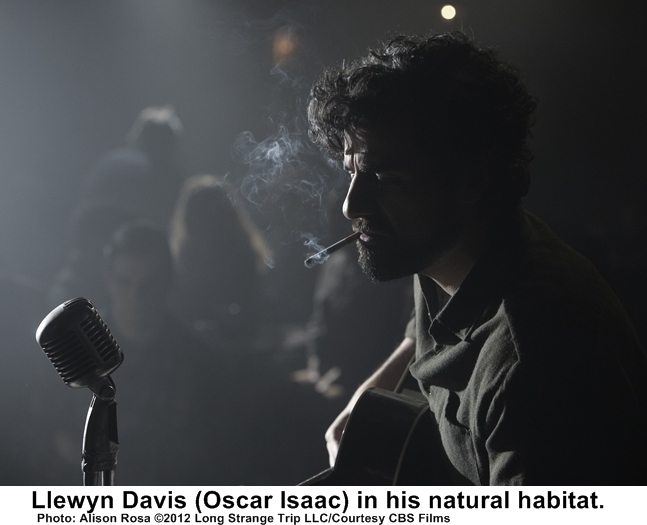
tboneInside Llewyn Davis, Joel and Ethan Coen’s latest, captures a moment in New York when a folk music revival was going strong inside smoky Greenwich Village clubs and on weekend afternoons in Washington Square Park. T-Bone Burnett, the lanky Texan who first worked with the Coens as their musical archivist on The Big Lebowski, won two Grammys as the music producer on O Brother, Where Art Thou?, and serves as executive music producer on the new film, was just a kid in Fort Worth when all of that was going on. In 1975, though, he joined Bob Dylan’s Rolling Thunder Revue and got to know several of those musicians from those days. While the Coens have said they were particularly inspired by the life and career of Dave Van Ronk, Llewyn could as easily have been conjured from a Ramblin’ Jack Elliott or a David Blue.

“That was a time when they were just trying to be good there,” Burnett says during a recent visit to San Francisco. “That’s a beautiful thing. That’s where everything happens, in fact. All the great things happen in small communities that aren’t thinking in grand thoughts. They’re thinking about taking care of the things that are right under their noses. All this energy converged there, so I would say in that way Llewyn wasn’t a guy who was thinking about making in that way. He’s just a guy thinking about what’s good, it seems to me. He’s just thinking like what’s good music and what’s not, according to him. That’s always what it is. It’s about taste. It didn’t seem like to me that he was a guy thinking, ‘I’ve got to make it.’

“Maybe David Blue thought he would make it,” he adds. “Phil Ochs thought he would make it. Phil Ochs put on a gold lame suit. It was mocking making it. He was doing some kind of like, ‘I’m the folk Elvis,’ and it was ironic and it was meant as a joke, but I don’t think it landed exactly the way he wanted it to, although I have a lot of admiration for Phil Ochs – for all those guys.”

llewyn 2Certainly, if Llewyn Davis has any thoughts of success on even a modest level, he is also the one person who can ensure that that will never happen. Part of Burnett’s job in choosing the music was choosing which songs Llewyn would include in his repertoire for any given occasion, thus Child ballad #170 a/k/a “The Death of Queen Jane” becomes a key song in Llewyn’s universe.

“He goes for his big audition in Chicago and he has a chance at the big time, and the song he chooses to play is a song about a Caesarean section, so he’s not a guy who’s going out of his way to try to alter show biz,” says Burnett.

Burnett thinks that every musician, even the most successful, will find something to identify with in Llewyn Davis. Everyone, he points out, goes through periods of boom and bust. Someone who’s the most happening thing out there today is nobody again tomorrow only to rise up once more out of the ashes. What is different for Llewyn and those folk musicians back in the day is a matter of scale. Until Bob Dylan came along, the New York contingent defined success by a different measure.

“Specific to that time, I would say that one of the interesting things about it is is that was a time where there was a park, Washington Square Park, and there were all these different camps that played in the park and there was never any – all the competition was within the park,” says Burnett. “It was all for space in the park, it wasn’t for trends on Twitter or something, right? It was for square feet in a little grassy area downtown – in the country of New York, because back then the Village was the country. Nobody was thinking about being famous. They were thinking about what was good and what was authentic and they were thinking about all these kinds of questions.

“So that’s why when Dylan came along, there was all this extraordinary music everywhere. They were all infighting and he was just like Fast Eddie came to town and just ran the table. He said, ‘I’ll have some of that and that and that.’ He had no compunction – he was doing the right thing. Those people were looking backward and they were doing the right thing, too. They were going backward and preserving and he was going backward and forward at the same time. He was going backward and preserving and all of that and then he was reinventing for us now. We’re still living in his reinvention of it now.” – Pam Grady

Share this:

  • Share on Facebook (Opens in new window) Facebook
  • Share on X (Opens in new window) X
  • Email a link to a friend (Opens in new window) Email
  • Print (Opens in new window) Print
  • Share on LinkedIn (Opens in new window) LinkedIn
  • Share on Tumblr (Opens in new window) Tumblr
  • Share on Reddit (Opens in new window) Reddit
  • Share on Pinterest (Opens in new window) Pinterest
Like Loading...

THE BOOK THIEF: Geoffrey Rush revels in the ordinary

17 Sunday Nov 2013

Posted by cinepam in Interviews

≈ Leave a comment

Tags

Brian Percival, Emma Watson, Geoffrey Rush, Sophie Nélisse, The Book Thief

Book ThiefIn his time, Geoffrey Rush has played troubled pianist David Helfgott, Les Misérables‘ obsessive police inspector Javert, the Marquis de Sade, Leon Trotsky, Peter Sellers and the Pirates of the Caribbean franchise’s vicious buccaneer Barbossa, among other vivid characters. In contrast, the most remarkable trait of Hans Hubermann, the character he plays in the Nazi era drama The Book Thief is that he is so very unremarkable, a quality Rush finds very attractive.

“I loved the matter-of-fact ordinariness of Hans Hubermann, just for me as an actor in terms of things I’ve played before,” he says during a recent visit to San Francisco. “The needle’s probably gone to the extreme end of the spectrum of eccentric or colorful, bold characterizations. It appealed to me to play this man who seemingly on the outside was ordinary to the point of actually being quite boring.

“He didn’t have big heroic attributes on any level or any ticks or qualities that might have made him an eccentric or unusual personality. He’s a quiet guy that got on with his life, but you realize underneath he’s politically almost a radical.”

In Brian Percival’s adaptation of Markus Zusak’s bestselling novel, Hans is a patient, good-natured man who bears his shrewish wife Rosa’s (Emily Watson) incessant carping with humor and grace and who becomes both father and teacher to Liesel (Sophie Nélisse), the foster child the family shelters. In their small German town in the months leading up to World War II, he stands out because of his stance against the Nazis. He refuses to join the Nazi Party or distance himself from the Jews that remain in town. A painter be trade, he is mostly unemployed, except for the occasional odd job.

“Hans isn’t a lazy man,” says Percival. “He doesn’t work, because he can’t work. Morally, he doesn’t want to join the Party. Anybody that didn’t join the Party at that time didn’t get work. Here’s a man who would love to be out working and painting every day, but he’s not allowed to be because of the system.”

“When I first read the novel and the screenplay, I could identify with this by thinking of a small outback town in New South Wales or somewhere in the Midwest,” adds Rush. “It’s a community, a working-class community where these events are taking place very slowly and very slyly around them. Suddenly, it’s a dividing line of are you going to join the Party or not?”

The lens that The Book Thief applies to everyday people was one of the things that appealed to Rush. This is not Schindler’s List or Defiance. There are no grand heroics in this drama, only small gestures in a town that maintains the party line as Germany rushes toward world war and holocaust.

“We are looking at, I suppose, for an English-speaking community – English, Americans, Australians or whatever – it’s a story about our former enemy on a very kind of street-level, human scale of a microcosm of what happens in average daily life to this community and their perception of the war that they were fighting,” Rush says. “They’re thinking, ‘We’ll win this and it’s great. Hitler’s reviving the economy and the country. We’ll come out of the loss and devastation of the First World War.’

“It’s not sensationalized and not a biased account of the German perspective; it’s a very honest look at the ordinariness of these people and the age of terror and anxiety that surrounded their lives for a very long period.” – Pam Grady

Share this:

  • Share on Facebook (Opens in new window) Facebook
  • Share on X (Opens in new window) X
  • Email a link to a friend (Opens in new window) Email
  • Print (Opens in new window) Print
  • Share on LinkedIn (Opens in new window) LinkedIn
  • Share on Tumblr (Opens in new window) Tumblr
  • Share on Reddit (Opens in new window) Reddit
  • Share on Pinterest (Opens in new window) Pinterest
Like Loading...

Jared Leto talks transformation in DALLAS BUYERS CLUB

08 Friday Nov 2013

Posted by cinepam in Interviews

≈ Leave a comment

Tags

Dallas Buyers Club, Jared Leto, Jean-Marc Vallée, Matthew McConaughey

Leto_DBC3Jared Leto vividly remembers the day he went to Whole Foods during a break in shooting Dallas Buyers Club just to stare at the vittles. To play Rayon, an AIDS-afflicted transgender man living as a woman, the actor-musician lost 30-40 pounds for the role by simply not eating. He also never broke character for the duration of the shoot, so he essentially was Rayon while he communed with what he couldn’t partake.

“I got three looks,” Leto recalls on a recent visit to the San Francisco Bay Area where he was feted at a screening of Dallas Buyers Club at the Mill Valley Film Festival and performed with his band 30 Seconds from Mars at a San Jose concert.

“One of them was, ‘Is that Jared? No!’ Then the other one was, ‘Who is that?’ The third was, ‘What is that?’ With a slight, ‘I don’t like that.’ It was important to get that kind of judgmental, ‘That’s disgusting. That scares me. I don’t like that.’ Then to imagine what that was like in 1985. I couldn’t imagine walking through a supermarket in full drag in 1985. You better get charming and funny real quick, or you’re gonna get your ass kicked.’”

Those nasty looks also meant that Leto was doing his job, convincing even when the cameras weren’t rolling as the character elicits similar disgust from Ron Woodroof (Matthew McConaughey) when they meet in a hospital AIDS ward in Jean-Marc Vallée’s drama. The homophobic electrician and rodeo cowboy has no use for the likes of Rayon, but when he feels firsthand the kind of rejection she has faced her whole life, it opens the door to an unexpected friendship as the two partner to try to save their own lives.

“I think she saw through that armor and saw a good person,” says Leto “I also think they needed each other. I think that played a key role there. They were both fighting for their lives. I think she also saw in Ron a father figure. She’s someone who is scorned, shunned by her own father and in some ways Ron kind of filled that role.”

Leto jokes that the only actor who works less than he does is Daniel Day-Lewis. Staying in character the way he does is draining. Since making 2009’s Mr. Nobody he had no real interest in going back in front of the cameras until he read Craig Borten and Melissa Wallack’s Dallas Buyers Club script.

“I think I got seduced by the role. Rayon is such a unique character,” he says. “I really fell in love with her and got to know this person. She was so kind and sweet and had a lot of grace and charm. She was funny and fun, very gentle and soft.”

Vallée has said that he never met Leto until after Dallas Buyers Club wrapped. The actor confirms that that assertion is true as he talks about how he started to get into character from their first Skype phone call. He remembers putting on lipstick as Vallée was introducing himself, removing his jacket to reveal a pink sweater worn off the shoulder and flirting with the director. The next day he had the job.

To better understand the role, Leto met with transgender people, studying their physicality and listening to their stories, learning from their experience. He only had a few weeks to become Rayon, so the extreme dieting started immediately. He also had to learn to walk in heels and endure body waxing.

“Once you make those commitments and the eyebrows come off, you’re like, ‘OK, here we are,” he says. “Lipstick, heels, eyelashes were a lot of external keys to some of the physicality, but I think there was a gentle spirit and kindness that were really keys [to the character] as well, that desire to be loved and to love other people.

“Staying in character was just an obvious thing for me,” he adds. “There were so many physical attributes, so many emotional things to keep track of. I couldn’t imagine letting go of all that and going, ‘Hey, bro, what’s going on?’ ‘Action!’ ‘Oh, wait, let me bring all of this back.’ I don’t think I would have done a very good job. Staying focused was essential.

“You have to do what works best for you. I don’t want there to be any difference between when the camera’s rolling and the camera’s not. I don’t want to have to act. I don’t want to have to portray. I just want to exist.”

Dallas Buyers Club has garnered raves ever since its world premiere at the Toronto International Film Festival. Leto is pleased and surprised that his performance along with McConaughey’s is the subject of much buzz as the awards season commences. He is happier still that the work he, McConaughey, Vallée and everyone else involved in making the film put in paid off in the final cut.

“I loved the story from the very beginning, and for me, the most important part is the experience I had making the film,” he says. “It was life-changing and the response that we’ve gotten is incredible. When it works, it’s so wonderful. Most of the time it doesn’t work. You make a film and it doesn’t turn out as good as you hoped. The pieces don’t fall into place. I feel really fortunate, really proud. It’s pretty fun to be celebrating this story, this tiny little movie, this impossible story of survival.” – Pam Grady

Share this:

  • Share on Facebook (Opens in new window) Facebook
  • Share on X (Opens in new window) X
  • Email a link to a friend (Opens in new window) Email
  • Print (Opens in new window) Print
  • Share on LinkedIn (Opens in new window) LinkedIn
  • Share on Tumblr (Opens in new window) Tumblr
  • Share on Reddit (Opens in new window) Reddit
  • Share on Pinterest (Opens in new window) Pinterest
Like Loading...

An Unforgettable Debut: Lupita Nyong’o on 12 YEARS A SLAVE

01 Friday Nov 2013

Posted by cinepam in Interviews

≈ Leave a comment

Tags

12 Years a Slave, Chiwetel Ejiofor, Lupita Nyong'o, Michael Fassbender, Steve McQueen

Lupita3Lupita Nyong’o makes an unforgettable screen debut in Steve McQueen’s 12 Years a Slave, playing Patsey, a slight, delicately boned woman who, day after day on the harsh Louisiana plantation where she toils, bests all the men with the sheer amount of cotton she picks. She befriends the drama’s hero, Solomon Northup (Chiwetel Ejiofor), a free man kidnapped into the nightmare of bondage. She is also the object of obsession for slave master Edwin Epps (Michael Fassbender), a position that puts her in the cross-hairs of Epps’ jealous, vengeful wife (Sarah Paulson). The role is a riveting, auspicious beginning for the recent Yale School of Drama graduate.

“She’s a star,” says McQueen. “A star is born. I went through over 1,000 girls. [Casting director] Francine Maisler and I looked through all these girls, and I was giving up hope and then one day, this tape came in. I put it on and thought, ‘This woman is beautiful. She’s amazing. Is she real?’ I couldn’t even believe that she was real. And then she came into the audition and that was it. That was solved. When all hope was lost, we found that girl. Amazing.”

In the San Francisco Bay Area recently with McQueen and Ejiofor to attend the Mill Valley Film Festival where 12 Years a Slave screened, Nyong’o was ebullient and gracious as she sat down to talk about the film and her dazzling role in it.

Q: Patsey is quite a debut. What was it like for you to start here with the likes of McQueen, Ejiofor and Fassbender?

A: It was a dream come true to work with such complex and meaty material and then to do so with such incredible artists. Steve McQueen, I watched Hunger and Shame shortly after my first audition and I fell in love with immediately and was just spellbound by his pursuit of the truth and the patience of his camera and the way in which he depends on the actors to really do the storytelling. I knew that he was a director that I would be too lucky to get an opportunity to work with. I was all game to do this project and I was so glad that they were game to work with me.

It’s all thanks to the man at the helm, Steve, the conversations happened with Steve. I had conversations one-on-one with Steve and he did the same with the other actors. I think what that creates is a mystery, a danger when you get on set, in a very safe environment, but then you’re really talking and listening, because nothing has been kind of pre-planned. Our rehearsal was kept to a minimum. I probably had a less than 15-minute rehearsal with Michael and about a 15-minute rehearsal with Chiwetel. Steve didn’t want to belabor it. He wanted to save it for the camera, so that it is as real as possible, the human exchange is as real as possible.

Q: Can you talk about researching your role? You must have started with Solomon Northup’s book.

A: Luckily for us, we had the autobiography, which gives a very specific back story as to who Patsey was. She was born in South Carolina and she was sold to Master Epps in her childhood. She was actually a favorite of the mistress and the master before she was sent out into the field. She was coddled and fed with milk and biscuits. It is not until Master Epps gets a sexual interest in her that the mistress begins to get jealous and throws her out into the field.

Other than that, I did research into the time period, but always with – I did subjective research. There’s too much out there. I was going to end up being a historian and that wasn’t the important thing. But I did research into the history and the time period, just to get all my senses involved. What food they ate, things like that. I read other accounts of slavery from the female perspective.

The last bit of research, that actually came in very handy, was into the corn husk dolls. I was daydreaming about a week before we started shooting about what else Patsey could have done in her very little free time. Because she had such nimble fingers to pick 500 pounds of cotton a day, it spoke to me of someone who must have been artistic in some way, very good with her fingers. I knew on Master Epps’ plantation they grew corn and so I thought, ‘Well, maybe she made something out of corn husks’ I looked it up online and it was historically accurate. In Louisiana, they have festivals where they recreate those things. They make crafts out of corn husks. So I shared that with Steve and he really loved the idea and he got the art department to supply me with corn husks immediately. In the end, the way Steve used the corn husk dolls in the film, it’s an externalization of the part of Patsey that couldn’t be enslaved. That was really important for me to discover.

Q: You’re also a documentary filmmaker. (In 2009, Nyong’o made In My Genes, a film that focuses on albinism in her native Kenya.) When it came to doing research, did that background make it easier to hone in on what would be relevant to you?

A: It did, but I think everything in my past has brought me to this point. At the Yale School of Drama, one of the things that we are encouraged to do with every single project, not just one based on truth, is to try and create an environment of truth for yourself that goes beyond the material, beyond the script that you’re using, so that you can play better. When you know this person inside and out then you can be spontaneous in the moment rather than too controlled.

In this case, making this film with Michael and Chiwetel, they are very spontaneous performers, so you really have to be present and listening. Doing that kind of research gives you the freedom to be that present and listening, because you know who you are.

Q: Your character endures things that are absolutely horrific. Even though you are acting and not actually going through what this woman went through, that had to be stressful. How difficult was it to inhabit Patsey’s skin?

A: Playing Patsey was not easy. I had to open my heart and my being to a lot of grief and sorrow. It was the undercurrent of everything I did in 12 Years a Slave. That wasn’t easy. It asked a lot of me, but I was honored and I felt very privileged to have the opportunity to tell this real woman’s story. What kept me sane, if you will, and what kept me light was recognizing that I was doing this in a fictional world and she lived this for real. Whenever I remembered that, it grounded me and centered me. It was like, “If she could live it, I can do it.” – Pam Grady

Share this:

  • Share on Facebook (Opens in new window) Facebook
  • Share on X (Opens in new window) X
  • Email a link to a friend (Opens in new window) Email
  • Print (Opens in new window) Print
  • Share on LinkedIn (Opens in new window) LinkedIn
  • Share on Tumblr (Opens in new window) Tumblr
  • Share on Reddit (Opens in new window) Reddit
  • Share on Pinterest (Opens in new window) Pinterest
Like Loading...
← Older posts
Newer posts →

Categories

  • Interviews
  • News
  • Reviews
  • Short Takes
  • Uncategorized

Recent Posts

  • A Stamp of Approval
  • Life is messy & so is ‘Megalopolis’
  • A star discovers too late there are worse things than aging in the black comic body horror ‘The Substance’
  • A young teen nurses a crush when he finds himself among ‘Big Boys’
  • The stunt man becomes the star as Ryan Gosling becomes THE FALL GUY

Archives

Blog at WordPress.com.

  • Subscribe Subscribed
    • Cinezine Kane
    • Join 48 other subscribers
    • Already have a WordPress.com account? Log in now.
    • Cinezine Kane
    • Subscribe Subscribed
    • Sign up
    • Log in
    • Report this content
    • View site in Reader
    • Manage subscriptions
    • Collapse this bar
 

Loading Comments...
 

    %d