• About

Cinezine Kane

Cinezine Kane

Category Archives: Interviews

Q&A: Writer/Director Antonio Méndez Esparza on LIFE AND NOTHING MORE

26 Friday Oct 2018

Posted by cinepam in Interviews

≈ Leave a comment

Tags

Andrew Bleechington, Antonio Méndez Esparza, Aquí y allá: Here and There, Life and Nothing More, Regina Williams
Life

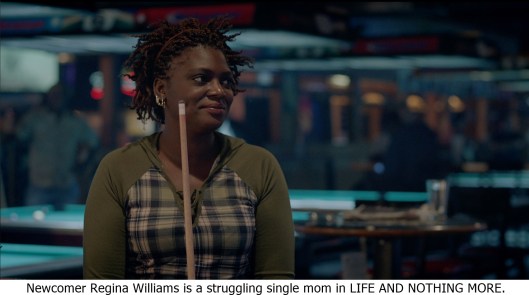
Antonio Méndez Esparza never thought he would make a film in the United States. But after making his first feature, 2012’s Aquí y allá: Here and There, winner of the Critics Week Grand Prize at the Cannes Film Festival, the Spanish director found himself living in the US. Taking a job teaching at Florida State University’s film school and settling in Tallahassee changed his perspective. He decided Florida was the right location for his next work, one employing a documentary style and using a non-professional cast as he’d done in his debut. The result is Life and Nothing More, a drama in which single mother Regina (Regina Williams) struggles to raise two children on her minimum-wage waitressing job and keep her eldest, 14-year-old Andrew (Andrew Bleechington)—whose father is incarcerated—on the straight and narrow. Here, Esparza talks about his latest feature, the winner of the John Cassavetes Award at the 2018 Film Independent Spirit Awards.

Q: Why a single mom?

A: We sometimes have these instincts that are hard to explain. You write a poem or you paint a picture. Sometimes it’s just something that you feel. The first reaction is unexplainable to a certain degree. Even to myself. Is because of my relationship with my mom?  My wife was a single mom when I met her, so that gave me a little insight to what her daily life was. But all of these explanations come as an afterthought in a way. There is a seed lurking, moving inside you that pushes you to that. Then you try to explain why, but it’s never a straight line for me. Also, in the context of this film, it’s me trying to understand the US. The US is maybe too big. It’s me trying to understand the place where I live, Tallahassee.

Q: Your story is clearly drawn from life. Who did you talk to? Where did your characters come from?

A: From the many interviews I did over the year and a half when I was casting. The whole process was very slow. Now when I look at the film and it’s finished and perhaps one may think, ‘That’s what he intended.’ But in a way, the movie was supposed to be about a single mom, and then over the course of it, it became about much more.  It was really all based on encounters I had with many different people. In a way, every scene has a little story—like some of the men they weren’t offended by the story of a single mom, but they told me, ‘We’re fathers. We’re not bad. We’re trying to do good.’ Many of them had been raised by single moms, and they were trying to do better with their kids.

Q: The most solidarity you see in the film is between all the women that work with Regina, all the waitresses. They’re clearly all in the same situation.

A: Those are scenes that I love very much. They are very unassuming scenes, but you see that they care for each other. They’re there to help.

Q: You are known for working with non-professional casts and this film is no different. That has to add a degree of difficulty to what you’re doing.

A: It is a challenge, but I don’t see any other way to make a film, or at least a film like this where you know little about the world and the cast really has to guide you through the process. Casting becomes a process of illumination. You meet people and even if they end up not being in the film, they still provide some jewels, some gold. Or maybe they don’t add to the story, but they end up in the film. Casting becomes everything, in a way.

Casting sometimes is as simple as an interview. With the main actors, there is more of a process. There is an improvisational exercise, and then another one, and then another one. Then we decide to shoot. The actors don’t know the script. They are unaware of what the story is about. They discover it little by little. They know a little bit, like Regina’s going to be the mom. I try to build a world, but not what’s happening. So, we build a house together. They go to the house. They like the house where they’re going to live. Are they OK with it? The school the kids go to is the one they really go to. She has to work in a place where we’ve gone a few times before, so she’s accustomed to it. I try to make it as close to reality as I can, and then we just go. –Pam Grady

Share this:

  • Click to share on Facebook (Opens in new window) Facebook
  • Click to share on X (Opens in new window) X
  • Click to email a link to a friend (Opens in new window) Email
  • Click to print (Opens in new window) Print
  • Click to share on LinkedIn (Opens in new window) LinkedIn
  • Click to share on Tumblr (Opens in new window) Tumblr
  • Click to share on Reddit (Opens in new window) Reddit
  • Click to share on Pinterest (Opens in new window) Pinterest
Like Loading...

Paul Dano explores a fractured family in WILDLIFE

25 Thursday Oct 2018

Posted by cinepam in Interviews

≈ Leave a comment

Tags

Carey Mulligan, Ed Oxenbould, Jake Gyllenhaal, Paul Dano, Richard Ford, Wildlife, Zoe Kazan

Wildlife.jpg

Actor and now writer/director Paul Dano, whose inaugural feature Wildlife is playing in theaters after nearly a year on the festival circuit, and his partner and Wildlife screenplay collaborator Zoe Kazan like haunting thrift stores. They rifle through the bins of old family photos, pictures once so dear and now fallen into anonymity, and have built up a collection.

“I just find them incredible, to look at somebody standing outside of their home in 1950-something,” says Dano during a visit to the Bay Area where Wildlife screened and he was feted by the Mill Valley Film Festival. “These are all lives.”

Old photos, in a way, are a key to Dano’s adaptation of Richard Ford’s 1990 novel about a woman’s life crisis and a family falling apart in 1960 Montana. If he was going to make a movie out of the story in which teenage Joe watches helplessly as his father Jerry deserts the family to fight a wildfire and his mother vents her frustration in untoward behavior that she flaunts before her son, Dano needed a way into the story. He found it in a single line in the book in which Joe mentions that he’s taken a job in a camera store.

“That’s when I finally actually decided to write the film,” he says. “I don’t know why, but I was daydreaming. I was really turning over the film in my head for a long time, because I didn’t want to write to Richard Ford. I didn’t want to spend money on an option. I was like, ‘I want to make sure I can do it.’”

After writing a first draft, he handed his work to Kazan, already an accomplished playwright and screenwriter. She wrote the next draft and they continued to hone the work for the next five years, writing between acting jobs. The couple had Ford’s blessing to alter his story any way their film demanded, the writer telling Dano, “My book’s my book. Your picture’s your picture.”

Dano would go on to cast the couple’s friend Carey Mulligan—who had costarred with Kazan in a 2008 Broadway revival of Anton Chekhov’s The Seagull—as Jeanette, Dano’s Prisoners and Okja costar Jake Gyllenhaal as Jerry, and teenaged Australian actor Ed Oxenbould as Joe. What he was looking to create was a family, dysfunctional and maybe on the verge of breaking into pieces, but still a family.

“In the book there’s a lot of struggle, but there’s still a certain amount of compassion,” Dano says. “For me, with family, there’s so much love and there’s so much struggle and pain, too. The duality that both of those things are true—I was never looking to make a film that condemned these parents or make a film about bad parents. That’s not what it’s about to me. They’re people and I love them.”

Wildlife’s story begins, really, before Jerry has even left the family home to fight the fire when Jeanette takes a job as a swimming instructor. It’s a small gesture with big ramifications. Jeanette and Jerry married and had their child young. She has followed her husband from town to town as he tries and fails to find purchase in life, her disappointment growing. Getting a job is a first step toward independence for an unhappy housewife.

“She has a part of herself that’s been hidden or not attended to. There’s a crisis of identity happening and she probably doesn’t know her full self,” says Dano.

“I just found Jeanette to be so mysterious and complicated, and through the kid’s eyes, it reminded me of the mystery of who are parents are. That was true for me in a certain way, seeing your parents change or experiencing things you didn’t know they did at a certain age. You start to see that they’re human, that they mess up or they have problems.”

The story also explores the differences between the way people present themselves publicly and privately. The Jeanette people see shopping in town or as a swim teacher is different than the one Jerry and Joe see, and even they are only privy to what she allows them to see. They have no entry into Jeanette’s interior life. And while Wildlife is set in 1960, that is something that dichotomy between public and private remains true now, perhaps never more so.

“I find it so moving that we go into the grocery store, and say, ‘Hi,’ and smile with no clue—most of us have been through something,” Dano says. “I just find it beautiful that we’re these insanely layered—like the trees with their rings—and our rings are our emotions. I’m not on social media, but you look at all these people on something like Instagram, you’re seeing people present themselves as something, but there’s something else we’re not seeing. “

He adds, “There’s a passage in the book I think is part of really what spoke to me early on where Joe is watching his mom teach swim class and he’s thinking, ‘Oh, these other people are thinking, ‘Oh, there’s a pretty woman’ or ‘There’s a woman that’s happy’ or ‘There’s a woman with a good figure,’ but he kind of knows there’s something wrong. That duality, I don’t know, I find it incredibly beautiful and moving.” –Pam Grady

To read more about Wildlife, read my interview with Carey Mulligan in the San Francisco Chronicle.


Share this:

  • Click to share on Facebook (Opens in new window) Facebook
  • Click to share on X (Opens in new window) X
  • Click to email a link to a friend (Opens in new window) Email
  • Click to print (Opens in new window) Print
  • Click to share on LinkedIn (Opens in new window) LinkedIn
  • Click to share on Tumblr (Opens in new window) Tumblr
  • Click to share on Reddit (Opens in new window) Reddit
  • Click to share on Pinterest (Opens in new window) Pinterest
Like Loading...

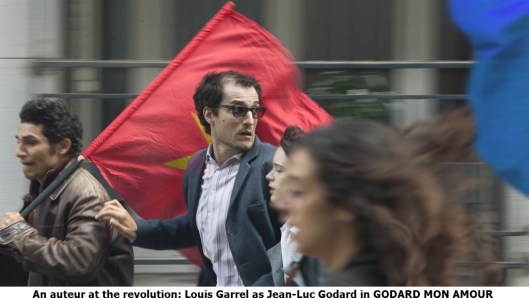
Michel Hazanavicius on poking a sacred cow in GODARD MON AMOUR

04 Friday May 2018

Posted by cinepam in Interviews

≈ Leave a comment

Tags

Anne Wiazemsky, Godard Mon Amour, Jean-Luc Godard, Louis Garrel, Michel Hazanavicius

godard mon amour

To certain cineastes, Jean-Luc Godard is a sacred cow, an auteur who co-founded the French New Wave and who, even now as he nears 90, remains a provocateur. Michel Hazanavicius, the filmmaker best known for his OSS 117 spy parodies and his Oscar-winning silent The Artist, pokes at that sacred cow and throws a pie in his face for good measure in Godard Mon Amour, a comedy that captures the man just as his life is in transition. His films are undergoing a stylistic sea change as their author grows ever more political; he is embarking on a second marriage with his La Chinois leading lady Anne Wiazemsky, 17 years his junior; and as the strikes and riots of May ’68 explode, the 37-year-old director is intent on taking part even as his own midlife crisis rages.

“The movie is not an essay about Godard,” Hazanavicius says during a recent visit to the Bay Area where Godard Mon Amour screened at the SFFILM Festival. “It’s a comedy. I’m not a historian of cinema. I tried to make an entertaining movie. If I had to lie to do it, I would have done it. And maybe I did.”

The filmmaker remains captivated by Godard’s early work, less enchanted by the rest, but says he never intended to make a film about the man. But then he read Wiazemsky’s roman à clef, Un an après, about her relationship with Godard.

“I learned things and I fell in love with the character and the story, this love story and its themes and why it ended and the context of the period,” Hazanavicius says.

“He’s full of contradictions. There is something very freeing for a scriptwriter to work on a character who doesn’t care about being sympathetic,” he adds. “You can work on the negative parts of the character. You can put him in ridiculous situations and mix comedy with it. You can be ironic with him. My challenge was to find the right balance to make fun of him, but still hold the audience’s empathy for him.

“I think, in a way, he’s very heroic. He’s decided something, and he did it, whatever it cost him. It’s ridiculous, but also heroic. Also, he destroys everything around him, just in the name of revolution, but also himself. He’s his own victim.”

The character that emerges in Godard Mon Amour seems created out of equal parts of Charlie Chaplin’s gift for slapstick; Woody Allen’s penchant for self-deprecation; and Godard’s own intellectualism and radical politics. To play him, Hazanavicius settled on an actor not normally associated with comedy, 34-year-old Louis Garrel, a performer who has built his career on the work of auteurs: notably his father,  Philippe Garrel (with whom Louis made his screen debut at 16 in 1989’s Les baisers de secours and who directed his son to a most promising actor César in 2005’s Regular Lovers ); Bernardo Bertolucci (The Dreamers); and Christophe Honoré (Dans Paris, Love Songs, and many more). He’s also a director himself, who debuted his first feature, Two Friends, in 2015.

“I don’t think Louis had ever even made a comedy,” Hazanavicius says. “He’s not famous as a funny guy. He’s very funny, but also touching.

“In real life, he’s very handsome. But I shaved his head and he had this very specific way of talking, which is Godard’s way of talking. I transformed him. I think it was brave of him to do it, because he really worships Godard. He’s part of that sect. Godard is a god for him. He was brave. He went out of his comfort zone, to make a comedy, to make a movie with someone who’s not his father or his friend. We didn’t know each other.”

Hazanavicius was born in 1967, the year before Paris (and so much of the world) erupted in unrest. Growing up, though, he says the spirit of that time was very much present. It was an era that was familiar to him when it came to time recreate if for his film. But he also knew he needed to recreate whatthat time was like for a man like Godard who experienced it as he was undergoing personal transition.

“I tried to recapture the spirit of May ’68, which was very – it was like a nice revolution,” Hazanavicius says. “They wanted to change things for the better and for the best. The way they made that revolution, you could believe you wanted a society made by these guys. They were fun. They were sexy. It was full of good energy.

“It was important to create the contrast with the character of Godard, who was almost 40. He was much older. He wanted to be with the young generation, but they rejected him. I need that contrast; I needed to show both sides of the conflict.

“To the character—I don’t know about in real life—youth is the most important virtue,” Hazanavicius avers. “He was claiming it and he was the director of youth. He was revolutionary. He was shaking cinema, shaking the bourgeoisie, shaking everything. But, suddenly, young people were shaking more than he could do. For him, it was very disturbing. I think that’s why he became more radical than everyone.”

Anne Wiazemsky passed away on October 5, 2017 at 70. She was able to see Godard Mon Amour before she died. She gave it her seal of approval.

“She really recognized Godard,” Hazanavicius says. “She was moved by the movie. She gave me the best compliment. She told me, ‘From a tragedy, you’ve made a comedy.’ That’s what I wanted to do.” –Pam Grady


Share this:

  • Click to share on Facebook (Opens in new window) Facebook
  • Click to share on X (Opens in new window) X
  • Click to email a link to a friend (Opens in new window) Email
  • Click to print (Opens in new window) Print
  • Click to share on LinkedIn (Opens in new window) LinkedIn
  • Click to share on Tumblr (Opens in new window) Tumblr
  • Click to share on Reddit (Opens in new window) Reddit
  • Click to share on Pinterest (Opens in new window) Pinterest
Like Loading...

Russell Peters amps up his acting career with THE INDIAN DETECTIVE

02 Tuesday Jan 2018

Posted by cinepam in Interviews

≈ Leave a comment

Tags

Netflix, Russell Peters, The Indian Detective, William Shatner

indian-detective-russell-peters1

Comedian Russell Peters has been in two movies with Bobby Cannavale—The Take (2007) and Chef (2014)—but they didn’t share any scenes. In fact, they never met until 2017. Peters mentioned their history to the actor.

“He said, ‘Yeah? Which ones?’ I told him, and he was like, ‘Oh, yeah? Who were you in them?’” the Toronto native recalls during a recent phone call.

“I would like to get in bigger budget films with big-name actors and stuff and actually work alongside them, rather than being in films with big-name actors and not actually ever having a scene with them. I’ve been in two movies with Scarlett Johannsson. I’ve never met her. I’ve been in a movie with Robert Downey Jr. and never met him. I was in a movie with De Niro. Never met him. With all the movies that I’ve done, I’ve never actually met the big celebrity.”

A big celebrity himself in the world of stand-up comedy, Peters is about to embark on his 2018/19 Deported world tour, but that doesn’t mean his acting ambitions are on hold. In a step toward getting him toward his goal of better parts in bigger films and actual scene work with the leads, he is starring in his own Netflix series, The Indian Detective. Peters plays Doug D’Mello, a Toronto cop with detective ambitions who stumbles on murder and conspiracy while visiting his father Stanley (Anupham Kher) in Mumbai. The series—shot in Toronto, Mumbai, and Cape Town, South Africa—debuted in Canada in November and made its US premiere on Tuesday, Dec. 19. It was tailormade for its star.

“They kind of let me do what I wanted to do as far as the character goes,” Peters says.  “They wrote the character with me in mind, so they took what they knew of me and then they gave me the freedom to fully ‘Russify’ it. [Co-creator and executive producer) Frank Spotnitz was hitting me up, saying, ‘What kind of jokes should I write?’ I said, ‘Do not write any jokes. You are a dramatic writer. Stay in your comfort zone. Write the best story you can possibly write and when I get the script, I’ll read it in my voice. Don’t write it with my voice in your head, because that is about perception, what you think I would have said. But unless you really know me, you won’t really know what I’m going to say.’

“I would try to be spontaneous on every take,” Peters adds. “But the directors would sometimes be like, ‘That’s great. Can we get one the way it was written on the page?’ And I would say, ‘What’s written on the page is more of a guideline, and some of it is a little way too expositional and I don’t think anybody would talk like that.’ ‘Can we just get one the way it was written?’ ‘Of for fuck’s sake, go ahead.’ I would give them one take of what was written on the page and then on the others, I would do what I needed to do.”

Making The Indian Detective also turned out to be an opportunity for Peters to act alongside an actual legend. Star Trek’s Captain Kirk himself, William Shatner, plays a billionaire property developer working on a project in Mumbai who crosses paths with D’Mello.  Peters was struck by how youthful the 86-year-old actor seemed. (“He looks like a hard-drinking 62,” Peters jokes.) The comedian who has dreamed of sharing scenes with stars was actually doing it.

“It’s one of those things where you walk in the room and you see Shatner,” Peters says. “As long as you’re from this planet, you know who he is, or you’ve seen him at least 10 times in your life. I walk in the room and I see him and I immediately just geeked out. In my head, I’m ‘Holy shit! That’s Shatner!’

“The funniest thing is we do the first scene and he says, ‘Should we rehearse this?’ And everything he’s saying, I’m just listening to his voice. I’m not even paying attention to the words. ‘Holy shit! That’s really him.’ He says, ‘Do you want to run this?’ ‘Yeah, yeah let’s run this.’ So, he starts the scene and he does his lines, and instead of being involved in the scene, I’m just watching him, like a fan. He finishes his lines and I’m staring at him, but I have a line right there. He’s staring at me, and he goes, ‘Don’t you have a line right there?’ I go, ‘I’m sorry! Line, please!’ I forgot the line completely, because the whole time I’m thinking, ‘Oh my God, that’s TJ Hooker right there. I can’t believe I’m working with the Priceline spokesman.’ And he’s Canadian and I’m Canadian, so we were both geeking out about being Canadians.” –Pam Grady

The Indian Detective is currently streaming on Netflix.

Share this:

  • Click to share on Facebook (Opens in new window) Facebook
  • Click to share on X (Opens in new window) X
  • Click to email a link to a friend (Opens in new window) Email
  • Click to print (Opens in new window) Print
  • Click to share on LinkedIn (Opens in new window) LinkedIn
  • Click to share on Tumblr (Opens in new window) Tumblr
  • Click to share on Reddit (Opens in new window) Reddit
  • Click to share on Pinterest (Opens in new window) Pinterest
Like Loading...

No pooh-poohing this bear: Simon Curtis on his kid lit classic creation story

20 Friday Oct 2017

Posted by cinepam in Interviews

≈ Leave a comment

Tags

A.A. Milne, Domhnall Gleeson, Goodbye Christopher Robin, Margot Robbie, Simon Curtis, Winnie the Pooh

robin

“They say never work with children or stuffed animals,” jokes director Simon Curtis in a chat during the Mill Valley Film Festival.

The director does both in Goodbye Christopher Robin, the story of how British author A.A. Milne came to create Winnie the Pooh and friends in the years following World War I.

Played by Domhnall Gleeson—who is seemingly everywhere this fall with roles in Mother!, Crash Pad, and American Made, and returning to the character of General Huck in Star Wars: The Last Jedi—Milne is at the outset of Goodbye Christopher Robin a veteran of the Great War suffering from what was then known as shell shock. A member of the upper crust, he finds reintegrating into the social whirl impossible. Relocating his family to the English countryside frustrates his wife Daphne (Margot Robbie), but it is that decision that paves the way for Milne’s classic children’s stories.

In Curtis’ mind, Daphne is in many ways the key element in the creation of Pooh. She was the person who bought the stuffed bear and other animals, giving him a voice as she played with her son.

“That joy on her face when she hands him the tiger for the first time, that’s one of my favorite moments in the film,” Curtis says.

At the same time, she inadvertently sets the stage for Pooh’s creation when she leaves her family to spend time in London, little realizing that Christopher’s nanny Olive (Kelly Macdonald) would be called away at the same time.

“She’s doesn’t act like a modern mother, but she does act like a mother of that time and of that class did, which was to make sure there’s a great nanny looking after the child, and then live her own life. That’s what she does,” Curtis says.

It is in being left alone with eight-year-old Christopher (Will Tilston) that Milne finds inspiration along with discovering the fun in playing with his child. As they roam the forest around their home, Cotchford Farm, with the boy’s stuffed animals in tow, Milne’s imagination comes alive and he also begins to find a kind of peace that has eluded him since the war.

“The sequence where the father and son play together and you see the joy on their faces [is a special moment],” says Curtis. “Both Domhnall and Will rose to it so perfectly. Domhnall is an extraordinary man and an extraordinary actor, first and foremost brilliantly intelligent.  He had to travel a very long way to play this, because he’s a very gregarious, modern Irishman playing this very particular man. The character holds back, but he opens up and the joy he has with his son is one of my favorite things I’ve ever done.”—Pam Grady

Share this:

  • Click to share on Facebook (Opens in new window) Facebook
  • Click to share on X (Opens in new window) X
  • Click to email a link to a friend (Opens in new window) Email
  • Click to print (Opens in new window) Print
  • Click to share on LinkedIn (Opens in new window) LinkedIn
  • Click to share on Tumblr (Opens in new window) Tumblr
  • Click to share on Reddit (Opens in new window) Reddit
  • Click to share on Pinterest (Opens in new window) Pinterest
Like Loading...

Becoming Hank: Tom Hiddleston and Marc Abraham see the LIGHT

08 Friday Apr 2016

Posted by cinepam in Interviews

≈ Leave a comment

Tags

Hank Williams, I Saw the Light, Marc Abraham, Rodney Crowell, The War Horse, Tom Hiddleston

I Saw the Light_4

This is how much Tom Hiddleston got into playing Hank Williams in writer/director Marc Abraham’s I Saw the Light. When I tell Abraham that it’s possible I learned the Williams canon in utero, the country legend being a hero of my Arkansas-born father, Hiddleston interrupts. Pulling out his phone, he says he has something to play me.

It’s Williams in a live performance, joking with the audience, “We left the United States and went to Arkansas last year and played for a couple of days.”

“I was listening to that this morning,” he says simply.

Then there’s the matter of the hat. There’s a Stetson sitting on a table in the suite at San Francisco’s Fairmount Hotel that looks suspiciously like the one he wears in the film and on the movie poster. It’s not the real hat, he’s quick to say, just one the Sony Pictures Classics provided for the press tour.

“The actual hat is sitting at home in Belsize Park, the hat I wore in the movie, the special hat,” he says.

I Saw the Light is clearly an exceptional experience to the thoroughly British actor, 35, who utterly transforms himself to play a beloved son of the American South in the movie, and even more so to Abraham, a Louisville, KY native who grew up on country radio.

“Those stations, even though they were playing George Jones and Charley Pride and Merle Haggard and Kris Kristofferson, the DJs always played in the set, a little bit of Hank, because Hank is The Man,” says Abraham. “That’s probably the first time I started hearing Hank. … I loved country music and I never stopped loving it.”

Williams’ music and the tragic story of a brilliant, tortured songwriter who didn’t live to see 30 stayed with Abraham as he embarked on a career first as a television scriptwriter and then as a producer on such films as The Commitments, Spy Game, and Children of Men. Then several years ago, he heard that plans were in the works for a Hank Williams movie, and Abraham, who made his directing debut with the 2009 drama Flash of Genius, knew he had get moving on his own. The project was on track when he went to see Steven Spielberg’s 2011 WWI drama War Horse and spied Hiddleston in the role of Capt. Nicholls.

“I turned to my wife and said, ‘That guy looks like Hank Williams.’ She said, ‘Shut up and watched the movie,” Abraham laughs.

The filmmaker sent Hiddleston the script and Skype conversations about it turned into phone calls and eventually into discussing the movie over dinner. The actor’s star was rapidly rising with unforgettable roles in Woody Allen’s Midnight in Paris and Terence Davies’ The Deep Blue Sea, and as the mesmerizing villain Loki in Thor, but that didn’t mean he automatically had the part.  Abraham had promised his casting director that he wouldn’t offer it to anyone without an audition first, since it is a technically difficult role. But then one night over a meal, caught up in the enthusiasm of their conversation, Abraham couldn’t help himself.

“We kept talking about it,” Hiddleston says. “We kept having interesting conversations about the story, up until the point where we were sitting in an Italian restaurant and Marc just kind of popped the question, basically.”

“He was really enthusiastic about it,” Abraham says. “He said to me, ‘I really love this. I really think I could do it, but just promise me one thing. Promise me you’ll allow me the time to prepare before I do a reading.’ Just very generous, and assuming, of course, there would be a reading, because that’s the natural thing.

“He didn’t put on an accent. He didn’t sing a song. He didn’t do anything like that. He just said, ‘I get it. I get it. I know what it’s going to take and I’m the kind of person—I’ll get it.’”

Hiddleston admits he was only familiar with a handful of Williams’ songs before I Saw the Light came into his life, but he found the man he got to know initially through Abraham’s script fascinating. He wanted to tell that story.

“I found the suggestion in Marc’s screenplay that the genius in his songwriting came from the turbulence of his intimate relationships a very incisive thesis, a very brilliant reading of his work,” Hiddleston says.

“It was my job as an actor to really roll up my sleeves and get my hands dirty on that subject, to investigate the volatility of his relationships, especially with women, and his personal pain and his demons and his addiction to alcohol and mix all of that into a cocktail of this astonishing and charismatic performer.”

It was also Hiddleston’s job to learn to sing like Hank Williams, right down to the yodeling that was his signature. Abraham likens the process of mastering Williams’ technique not to climbing Mount Everest, but to scaling the even more daunting K2. To help Hiddleston channel a genius, another was called in, singer-songwriter Rodney Crowell, who took Hiddleston into his Nashville home for several months to work on the actor’s vocal chops and record I Saw the Light’s soundtrack.

‘Rodney’s extraordinarily patient and wise, and we really sweated over it,” Hiddleston says. “We learned a lot about ourselves and each other. It was hard work, but it was joyful work. It was an extraordinary thing when we finished it, saying goodbye to each other, because we became very close. You do when you make music with people.

“I still yodel all the time,” he says.  “It’s funny. I play the guitar a lot more than I used to. I always played. I just play it for myself and I always find there’s no moment I haven’t picked up the guitar and done a little bit of ‘Long Gone Lonesome Blues’ or ‘Move It Over’ or something—the yodeling songs, bizarrely enough, even though they were the most challenging, they were my K2s—they’re the ones I go back to. It was such an extraordinary and unique experience, really unlike anything I’ve ever done and very special for a lot of reasons.”

When he was a kid, Hiddleston would stay through the end credits to find out who had made the music he loved in a movie. Then he would run out to HMV to buy the record. He remembers discovering The Ronettes that way when he heard “Be My Baby” at the beginning of Dirty Dancing. Now, for the first time, it’s his own name he sees.

“When we stay to watch the credits of this film and I see all those songs come up and it says, ‘Performed by Tom Hiddleston,’ I’m like, ‘Wait a second!’” he says. “I can’t believe it, because I’m so used to that being performed by Elvis Presley, performed by Bob Dylan, performed by The Byrds, or whoever it is.”

“He can’t quite get used it,” says Abraham. “It’s sweet … He really gets joy out of it and it’s kind of amazing.” –Pam Grady

Share this:

  • Click to share on Facebook (Opens in new window) Facebook
  • Click to share on X (Opens in new window) X
  • Click to email a link to a friend (Opens in new window) Email
  • Click to print (Opens in new window) Print
  • Click to share on LinkedIn (Opens in new window) LinkedIn
  • Click to share on Tumblr (Opens in new window) Tumblr
  • Click to share on Reddit (Opens in new window) Reddit
  • Click to share on Pinterest (Opens in new window) Pinterest
Like Loading...

Clothes make the woman: Tom Hooper on DANISH GIRL style

11 Friday Dec 2015

Posted by cinepam in Interviews

≈ Leave a comment

Tags

Alicia, Eddie Redmayne, The Danish Girl, Tom Hooper

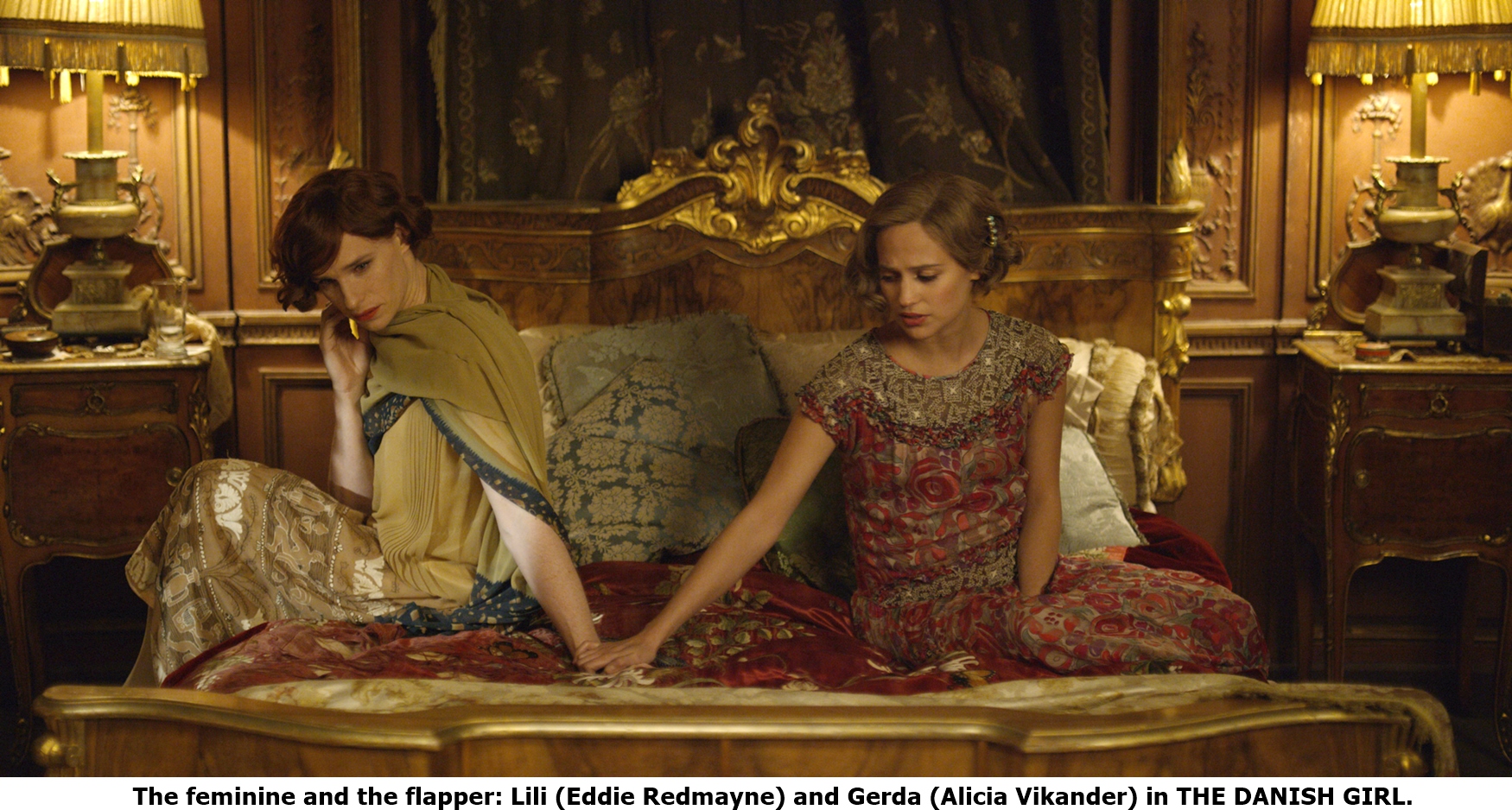
Danish Girl2015 has been quite the year for movie fashion, from the mid-century style of Brooklyn, Carol, and Trumbo to the Swingin’ 60s mod of The Man from U.N.C.L.E. and Legend. But costuming is never more striking than in The Danish Girl, in which Eddie Redmayne stars as Dutch painter Einar Wegener who becomes pioneering transsexual woman Lili Elbe opposite Alicia Vikander  as Einar’s supportive wife and fellow artist Gerda Wegener. Both actors’ performances are extraordinary and they are enhanced by Paco Delgado’s costume designs that empathizes how chic and fashion-forward Gerda is in adopting the latest 1920s styles, in contrast to Lili who favors the ultra-feminine and old-fashioned.

“Paco Delgado is a genius,” says director Tom Hooper (The King’s Speech, Les Misérables) on a visit to the San Francisco Bay Area where The Danish Girl was a Mill Valley Film Festival opening-night selection. “He’s done Pedro Almodovar’s films for years and I discovered him—I was doing a commercial for Captain Morgan rum set on a pirate ship in Spain and he’s Spanish and I was told that he’s the best guy. He kind of conjured amazing costumes out of thin air. Then we did Les Miz together and I thought his eye for detail was extraordinary.

“We were led a lot by the photos we had of the real Gerda and Einar,” he adds. “There were some on the internet, but we commissioned some new research in Denmark and got a few more. At first, it became clear that Gerda’s eye for fashion was immaculate. The real Gerda was probably even more out there than some of the things we did. One of the ways she paid the bills was doing illustrations for fashion magazines. She did covers for Vogue in her life.”

The photos Hooper and his team uncovered did not just give them a sense of Gerda Wegener as a fashion plate, it also offered them another key to Lili. In searching for words to describe Lili’s sense of style, the director finally lights on “bourgeois conservative.” In a sense, he thinks she dressed so as to blend in within a conservative community.

“I think she felt safer in a kind of conventional style of clothing than to draw attention to herself with something kind of more extreme,” Hooper says. “What was extraordinary was the Lili was aspiring to a very different idea of the feminine [than Gerda].

“But it also seemed to me that the film doesn’t involve Lili learning to be like Gerda as a woman. Lili’s body language as a woman is nothing like Gerda’s. Gerda’s actually more masculine. I enjoyed the surprise of the fact that you might think that Gerda being obsessed with painting Lili that Lili would kind of become encouraged to identify with Gerda’s femininity, but they’re quite distinct. I also like the idea that Gerda’s idea of felinity is often quite masculine, so there’s a play of gender roles.”—Pam Grady

Share this:

  • Click to share on Facebook (Opens in new window) Facebook
  • Click to share on X (Opens in new window) X
  • Click to email a link to a friend (Opens in new window) Email
  • Click to print (Opens in new window) Print
  • Click to share on LinkedIn (Opens in new window) LinkedIn
  • Click to share on Tumblr (Opens in new window) Tumblr
  • Click to share on Reddit (Opens in new window) Reddit
  • Click to share on Pinterest (Opens in new window) Pinterest
Like Loading...

Charles Poekel talks reel life among the trees in CHRISTMAS, AGAIN

05 Saturday Dec 2015

Posted by cinepam in Interviews

≈ Leave a comment

Tags

Charles Poekel, Christmas Again, Kentucker Audley

chrismas againCharles Poekel’s evocative, downbeat Christmas, Again, a Yuletide tale of the heartbroken manager (Kentucker Audley) of a 24-hour tree lot enduring a cheerless season, is a film like no other. The story of isn’t autobiographical, but it is steeped in the writer/director’s own experience, lending the drama a heightened sense of reality. Now out on in a limited theatrical run and on VOD, Christmas, Again is also up for an Independent Spirit John Cassavetes Award, given to the best film made for under $500,000. The film made its US premiere in January at the Sundance Film Festival as part of the Next program, and Poekel was full of anticipation for that stateside debut when he talked to me about his unusual first feature.

Q: Why a tree lot? Is that someplace you worked?

Charles Poekel: Yeah, I actually started my own tree lot. I ran it for about three years while I was writing the screenplay so I would know firsthand what it’s like to work in the shop and try to get into the character better.

Q: Where did the story come from? It is inspired, the idea of getting to know this guy that you see briefly once a year.

Charles Poekel: It happened the first Christmas I had been living in Brooklyn. My roommates and I had gone out to get a tree at maybe 10pm. We were wondering if the place near us was still going to be open. We got there and I asked the guy, ‘I’m glad you’re still open. What time do you close?’ He looked at me and he said, ‘We don’t close. We can’t lock up these trees. We’re open 24 hours.’ And I was like, ‘Open 24 hours from Thanksgiving ‘til Christmas, that’s crazy.’ When he told me that, I realized how weird a world this was that they just set it up quickly and then they just pack it up after Christmas and they’re gone. I think as a filmmaker you’re always looking for stories or jobs that haven’t been explored or told before. I hadn’t seen this in a film before and I thought, ‘You know what? That sounds like a great idea.’

Q: It seems like such a specifically New York story, even the idea that the lot is open 24 hours.

Charles Poekel: I think it has to do with the fact that it’s so concentrated of a city that most people don’t have cars and so they are restricted to buying trees at the closest place to them. There aren’t really large lots to fence in or anything.

Q: At what point did you actually start writing your story, before or after you started selling trees?

Charles Poekel: Before. The first thing I started doing is I started talking to people who were selling trees. I recorded hours of interviews just of these guys telling stories and telling about their lives and all this stuff. But I didn’t feel like I was getting the nitty-gritty that you can only know by doing it yourself. I knew when it came time to shoot the film, nobody would ever let me shoot a film at their tree stand, because they’re trying to make money and they don’t want to scare customers away, so I just thought, ‘Why don’t I open my own tree stand? Then I can use the profits from selling trees to help fund the film.’

Q: Your film isn’t so dialogue-heavy. There are so many quiet moments where it’s just Noel. Talk about the importance of casting Kentucker Audley in that role.

Charles Poekel: Of my goodness, [casting the role] literally kept me up at night, because…the camera’s pretty much on him throughout the whole movie. There aren’t that many movies where your main actor is so much a part of it and it’s so hard to carry a movie just on one person’s shoulders. We were really fortunate that Kentucker loved it and did such a great job. There aren’t many people that could do that.

Q: What was it like shooting like that on a tree lot in the middle of New York?

Charles Poekel: I think, in many ways, the weather was the biggest challenge, but in many ways, it wasn’t. Obviously, it was freezing outside and we didn’t have any place for our crew to be. We could only fit a couple of people in that trailer. Even when we were shooting scenes in the trailer—our crew was only, I think, eight people—three or four would have to stand outside and wait until we finished the take. The adjacent buildings were nice enough to let us in and stay warm.

The weather was kind of the most annoying part, because it was constantly cold. It was a really cold December. But that stuff people can work through. You find ways to get through it. But also working with non-professional actors was challenging, as well. It’s difficult to rely on them as much, as far as showing up and preparing their lines as they were supposed to and having them do takes again and again and again. It difficult, but it’s ultimately very rewarding.

Q: How was it making a film and operating a tree stand at the same time?

Charles Poekel: It was fun. One of the reasons it took me so long to make the film was the first three years of running the tree stand, it took me—the first year was pretty crazy, the second year was a lot better, but I was still kind of fixing things. It was really the third year of selling trees, while I was finishing up the script that I felt, ‘OK, this is a turnkey operation now. I can definitely shoot a movie and have people helping out at the stand, selling trees, and not feel like my head would explode.’ I thought it was pretty fun, actually, and pretty much everyone in our crew, at some point, sold a tree. Sometimes we’d have to stop a take and help a customer. A few times we even asked a customer, ‘Hey, do you mind? We’re making this movie. Would you mind if we filmed you buying a tree? Do you want to be in it?’ So a few of the customers actually made it into the film.

Q: Did they get a discount on their trees?

Charles Poekel: Usually, we gave them the tree for free if they appeared in the film.—Pam Grady


Share this:

  • Click to share on Facebook (Opens in new window) Facebook
  • Click to share on X (Opens in new window) X
  • Click to email a link to a friend (Opens in new window) Email
  • Click to print (Opens in new window) Print
  • Click to share on LinkedIn (Opens in new window) LinkedIn
  • Click to share on Tumblr (Opens in new window) Tumblr
  • Click to share on Reddit (Opens in new window) Reddit
  • Click to share on Pinterest (Opens in new window) Pinterest
Like Loading...

Are you now or have you ever been? Jay Roach on TRUMBO

04 Friday Dec 2015

Posted by cinepam in Interviews

≈ Leave a comment

Tags

blacklist, Bryan Cranston, Dalton Trumbo, Edward G. Robinson, Hollywood Ten, Jay Roach, Trumbo

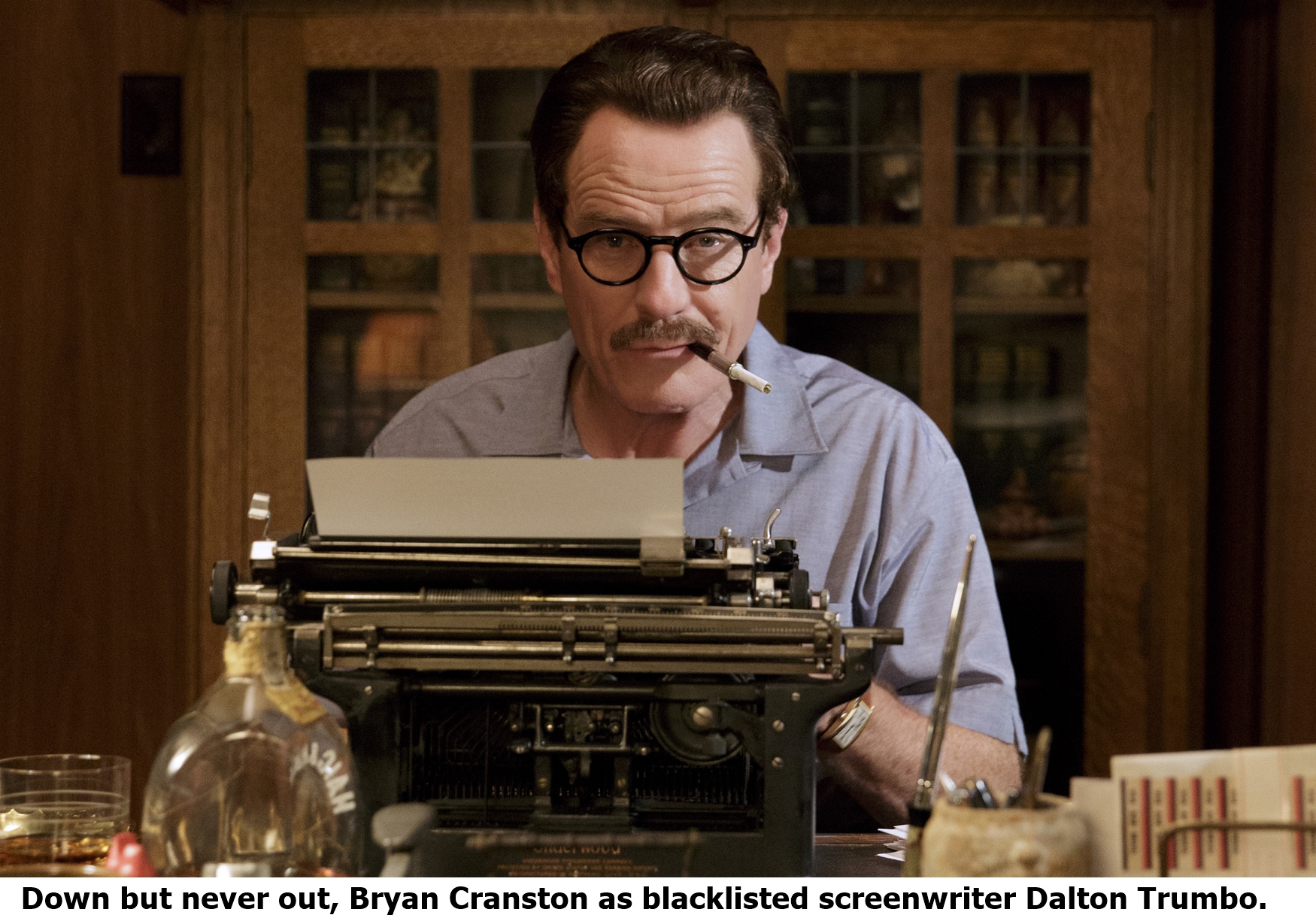
trumboDirector Jay Roach has built a career mixing absurd comedy, including all three Austin Powers movies, Meet the Parents, and Dinner for Schmucks, with political fare that includes Recount and Game Change. Trumbo fits somewhere in the middle of both those poles, a serious subject in its retelling of the screenwriter’s imprisonment as one of the Hollywood Ten—jailed for contempt of Congress for refusing to play ball with the House Un-American Activities Committee’s communist witch hunt—and subsequent blacklisting. There is tragedy in what it costs him, particularly to relationships with old friends like actor Edward G. Robinson (Michael Stuhlbarg). But there’s also absurdity in the way Trumbo spits in the face of those who would deprive him of his life’s work and a living by employing fronts and pseudonyms to take credit for his scripts, even managing to win two Oscars that wouldn’t be properly credited for decades. It’s a subject that clearly fascinates Trumbo director Jay Roach. After weeks of promotion, he is still enthusiastic on a recent visit to San Francisco.

Q: Before you started this project, how familiar were you with the Hollywood Ten and the blacklist?

Jay Roach: I knew something about it, because one of my teachers at USC was Edward Dmytryk, and he was the tenth of the Hollywood Ten, in a way. I say tenth, only because there were nine writers and he was the only director. His story was so complicated, because he came out of jail and did name some names. I might be projecting on to him, but I always felt he was haunted by it a little bit. He made more films and was a really great guy, but I could tell that even the other faculty members had a bit of an attitude about him. I have to confess, at that time, I was just so trying to learn to make films that I didn’t delve very deeply into it.

It wasn’t until I came across this script—John McNamara, coincidentally, had also taken courses from blacklisted people; Ring Lardner Jr. and, I think, Albert Maltz, who were part of the Hollywood Ten, and Ian McLellan Hunter, taught at NYU. It was weird that we came together on this without knowing that about each other.

The more I learned, I couldn’t believe that no one had told the story. I really didn’t know anything about Trumbo, the person, the talent, the voice, all these complex aspects of his personality, that’s what hooked me…[He was] this eccentric, combative, irascible, stubborn man who could also write really great comedy. The tone of the movie, I think, is really derived from me enjoying how funny he was, but also knowing it was very high stakes, very serious. There was a tremendous cost to not just his life—and he kind of got off easy—but there was a tremendous cost and damage done to so many careers.

Q: In Bryan Cranston’s portrayal, Trumbo comes across as larger than life. He clearly sees himself in this heroic—you can see the little boy in him reading Greek myth.

Jay Roach: I love that you spotted that, because he had a kind of idealistic belief in the power of storytelling as a healing force in a civilization. ‘I’m going to tell stories about people trying to cope and figure out how we should then live and organize in a world where we don’t get along by default.’ He was Don Quixote. He really believed in the power of going after windmills like that. Any of us who fall for that are kind of doomed to disappointment, because you can’t change the world that easily, just telling a story. We hope this movie will raise questions, but it’s not necessarily going to change anything.

I always use Recount. I thought, ‘After Recount, with voting rights, there’s just going to be a giant wave of reform to make it so much easier to vote. Voter turnout will skyrocket!’ The opposite has happened, and I’m always like, ‘I have to remember, you can only do so much and it doesn’t always add up.’ But you still keep trying. I still believe in at least the power of at least the conversations that come out of the films.

Q: The script is so balanced between lighter moments and the darkness of the situation. I read Victor Navasky’s Naming Names when I was in high school, so I knew parts of the story, but I never know, for example, about the relationship between Trumbo and Edward G. Robinson. Watching that unfold is just tragic.

Jay Roach: Edward G. Robinson’s story, in general, I know there’s a whole other movie to tell about that man’s life, because of what he went through and his own battle for his soul. He was a really good guy, a really progressive guy. He started from nowhere, like a lot of these guys. Trumbo started from nothing, he was a baker. They worked their way up and Edward G. Robinson gets put in that horrible position. He’s not a communist, but he’s given money to various organizations that had associations. He gets asked three or four times and he refuses to testify. Finally, he does. He names a few names, tells himself, ‘They already had them, so it’s not such a big deal.’ But it’s so heartbreaking, knowing that—you can even tell in his autobiography that he’s haunted by that…All these guys were put in such ridiculous, painful places.

Q: And for what? These were screenwriters, filmmakers, actors, hardly enemies of the state, regardless of party affiliation.

Jay Roach: Dalton Trumbo was never trying to overthrow the United States government through movies like Roman Holiday. None of them were. It was a witch hunt, completely show trial. It was answering totalitarianism and the threat of totalitarianism with a totalitarian system to try to get people to conform to a very narrow sense of what supposedly being American was all about. That’s happening today. That’s not unusual. It’s as much about today as it is about 1947. There’s always going to be people who think they’re the patriots. ‘We’re the special patriots. You are the heretics or the traitors or whatever we want to call you.’—Pam Grady


Share this:

  • Click to share on Facebook (Opens in new window) Facebook
  • Click to share on X (Opens in new window) X
  • Click to email a link to a friend (Opens in new window) Email
  • Click to print (Opens in new window) Print
  • Click to share on LinkedIn (Opens in new window) LinkedIn
  • Click to share on Tumblr (Opens in new window) Tumblr
  • Click to share on Reddit (Opens in new window) Reddit
  • Click to share on Pinterest (Opens in new window) Pinterest
Like Loading...

A vote for women: A Q&A with SUFFRAGETTE’s Sarah Gavron & Abi Morgan

29 Thursday Oct 2015

Posted by cinepam in Interviews

≈ Leave a comment

Tags

Abi Morgan, Carey Mulligan, Sarah Gavron, Suffragette, women's rights

suffragette

Director Sarah Gavron and screenwriter Abi Morgan first collaborated on Brick Lane (2007), an adaptation of Monica Ali’s novel about a young Bangladeshi woman dealing with the constraints of an arranged marriage in contemporary London. The pair are partnering again for another story set in London, but this one set 100 years back. With Suffragette, Gavron and Morgan explore Britain’s early women’s rights movement and the struggle to gain the right to vote through the eyes of Maud Watts (Carey Mulligan), a laundress, married with a young son. A sterling supporting cast that includes Helena Bonham Carter, Anne-Marie Duff, Natalie Press, Meryl Streep, Romola Garai, Ben Whishaw, and Brendan Gleeson, supports Mulligan, but the focus is never long off Maud as she evolves from a young woman shocked at witnessing acts of civil disobedience to one willing to risk jail and worse for the cause.

In the San Francisco Bay Area recently to attend the Mill Valley Film Festival where Suffragette was the closing-night film, Gavron and Morgan sat down to talk about how the story evolved and how an early 20th century laundress’ story might resonate with women today.

Q: Where did this start? Was it an ongoing interest in women’s rights, was it inspired by a particular person, or …?

Sarah Gavron: It was kind of a long genesis for me, because I wanted to do it for about 10 years. I grew up with a mother who became a local politician and I’d watched her agency in a very male world. We hadn’t learned about the suffragettes in school. We just learned this very sanitized version. We knew the Mary Poppins version, like everybody did. It’s not a widely known story.

People began talking about it. There was a really good TV series called Shoulder to Shoulder that made an impact. People were always discussing it, but there hadn’t been a big screen version of it. It seemed extraordinary and such a timely story and overdue in telling such a story, but it also seemed to resonate with the world that we’re in in so many ways. The two producers, Faye Ward and Alison Owen, it occurred to them around the same time, so they had a conversation, ‘How about doing a thing about this?’ It so made sense to us to talk to Abi, because she’d worked with us on Brick Lane and we had such a good collaboration.

Abi Morgan: I think from my point of view, it was just very exciting. I’d done biopics before, but this felt like a different way of looking at a biopic and, in a weird way, when we started to focus in and think, ‘OK, we could do the extraordinary life of Mrs. Pankhurst or Emily Wilding Davidson, but those women will at one point have a film about their lives.’ I hope they do, but actually when we started looking at the lives of the working women and honed in on those, there was just surprising detail wherever we looked: through the police surveillance records, which were only opened in 2003, where you’d see a tiny bit of an interview or you would read the testimonial of a woman that had been taken when she took the deputation to the House of Parliament or just a tiny news article.

You’d suddenly think, ‘Gosh, these women are really interesting.’ The jeopardy on their lives and what the vote would mean for them was so profound. So many of these women were being appallingly treated at work. Their working conditions were just chronic. They were trying to manage having working lives and children. They didn’t have wealthy husbands or family wealth. They were fighting for equal pay. They were dealing with sexual violence at work and at home. So many of these issues that they were dealing with felt so profound and so 21st century.

I think that’s when we started to think, ‘OK, so what would it be like if we took a woman who was outside of that, in a place of passivity, who didn’t realize just how downtrodden and difficult her life was and then through engagement with the movement, moves towards militant activism and change?’ We realized it was the ordinary women that change history. Then we thought, ‘That might be a story for us all.’ So I think that’s when we started to feel like this could be a proper movie.

Q: How important was it that the protagonist be kind of the whole package, be married, be a mother, be someone who has, up to the point, essentially accepted her lot in life and only gradually comes to see that it doesn’t have to be her lot in life?

Abi Morgan: I think those are strains that feel very familiar to us all. We were trying to create a character who was identifiable. I don’t think you have to have been a woman who was married. I think the point of the film is it’s about empowering women, say, in Britain in the 21st century—globally, we know there are these huge inequalities that we deal with.

I think for Maud we wanted to create a woman who was not even yet engaged with how unhappy she was. This is a young woman who was institutionalized from an early age. She’s been abused by her employer. Her mother was most likely abused before her. The character of Maud has a scar on her arm. The nominal idea was she was there when her mother was burned at the laundry. You’re meant to realize this woman has a huge legacy that she has just suppressed and suppressed. An engagement with the movement, an engagement with a group of woman who say, ‘We are equal, you no longer have to deal with these conditions, your life can change,’ is the thing that activates her.

It was very important to create all those pressures that women today have. They have to bring in money. They have to raise their children. They have to deal with sexual violence or sexual intimidation. They have to find their voice, and the whole point of the film is give these voiceless woman a voice.

Sarah Gavron: And by looking at a marriage in the center of it, we were able to look at the politics of marriage in terms of the power balances and the parental rights issues and the lack of economic power within a marriage. I’m sure at the time there were many more women married because it was the convention of the day.

Q: It also raises the stakes so much higher.

Abi Morgan: That’s a good point. The film couldn’t work as just a political tract. It had to work as a piece of genuine human drama. We were trying concretize that jeopardy. That’s something Sarah worked really hard on.

Sarah Gavron: It connects with these people and their lives.

Abi Morgan: And the pace of those quite big action sequences. We sold this as an action movie. Things were going to get blown up and telegraph wires would be cut. There would be car chases.—Pam Grady

Share this:

  • Click to share on Facebook (Opens in new window) Facebook
  • Click to share on X (Opens in new window) X
  • Click to email a link to a friend (Opens in new window) Email
  • Click to print (Opens in new window) Print
  • Click to share on LinkedIn (Opens in new window) LinkedIn
  • Click to share on Tumblr (Opens in new window) Tumblr
  • Click to share on Reddit (Opens in new window) Reddit
  • Click to share on Pinterest (Opens in new window) Pinterest
Like Loading...
← Older posts
Newer posts →

Categories

  • Interviews
  • News
  • Reviews
  • Short Takes
  • Uncategorized

Recent Posts

  • A Stamp of Approval
  • Life is messy & so is ‘Megalopolis’
  • A star discovers too late there are worse things than aging in the black comic body horror ‘The Substance’
  • A young teen nurses a crush when he finds himself among ‘Big Boys’
  • The stunt man becomes the star as Ryan Gosling becomes THE FALL GUY

Archives

Blog at WordPress.com.

  • Subscribe Subscribed
    • Cinezine Kane
    • Join 48 other subscribers
    • Already have a WordPress.com account? Log in now.
    • Cinezine Kane
    • Subscribe Subscribed
    • Sign up
    • Log in
    • Report this content
    • View site in Reader
    • Manage subscriptions
    • Collapse this bar
 

Loading Comments...
 

    %d