• About

Cinezine Kane

Cinezine Kane

Author Archives: cinepam

I Wake Up Dreaming 2012 Review: Une Si Jolie Petite Plage

10 Thursday May 2012

Posted by cinepam in Reviews

≈ Leave a comment

Tags

Elliot Lavine, Francois Truffaut, Gerard Philipe, I Wake Up Dreaming 2012: The French Have a Name For It!, Robert Siodmak, The 400 Blows, The Killers, Une Si Jolie Petite Plage (Such a Pretty Little Beach), Yves Allegret

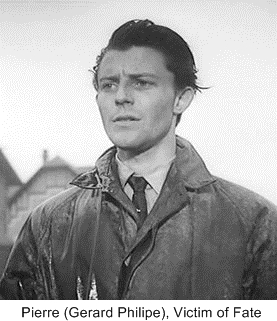
The rain never stops falling in Yves Allegret’s Une Si Jolie Petite Plage (Such a Pretty Little Beach), one of the highlights of “I Wake Up Dreaming 2012: The French Have a Name For It!.” Elliot Lavine’s latest film noir series that runs Friday, May 11 through Thursday, May 24 at San Francisco’s Roxie Theater. A resort town in the off-season provides the backdrop for a cursed man’s inexorable reckoning with fate, but even if Pierre (Gerard Philipe) arrived at the height of summer, no postcard vista or warming sunlight could cut through the gloom that is Pierre’s constant companion or alter his destiny.

Allegret’s melodrama is a triumph of mood. Like Burt Lancaster’s Swede at the start of Robert Siodmak’s The Killers, Pierre is done for and he knows it. He’s on the run, more out of reflex it seems than anything else. Why he has chosen to flee to this sad corner of Normandy is murky at first, but his reaction to Georges (Andre Valmy), a teenager working around the hotel where Pierre is hiding out provides a clue. Just what he’s done is also a little vague until the landlady starts gossiping about a sensational story in the newspaper and begins playing a certain record that only further distresses Pierre. The tale of a youth corrupted and destroyed comes out in bits and pieces, and becomes more clear once Fred (Jean Servais), another visitor from Paris arrives.

Looking at the windswept, desolate beach, it’s easy to wonder if Une Si Jolie Petite Plage was on Francois Truffaut’s mind, however subconsciously, when he was writing the end of The 400 Blows, leaving Antoine Doinel frozen on the beach, his future a question mark. Certainly, Pierre’s fortunes were sealed when he couldn’t have been very much older than Antoine. Philipe is perfectly cast as that lost boy grown into a broken man who can’t imagine any future at all.

As noirs go, they don’t come much bleaker than this. Allegret complements Pierre’s distress with the rain, the pacing, and the views of the dismal shore and village (lensed by Henri Alekan, the cinematographer who shot Jean Cocteau’s Beauty and the Beast and Wim Wenders’ Wings of Desire). The effect is to create a sense of an ending foretold and yet even knowing what is surely coming does not lessen the suspense nor alter the impact of the conclusion. This pretty little beach is a passageway to the heart of darkness and it is a trip well worth taking. — Pam Grady

Une Si Jolie Petite Plage (Such a Pretty Little Beach), screens on Sunday, May 13 as part of “I Wake Up Dreaming 2012: The French Have a Name For It!” at the Roxie Theater, 3117 16th Street, San Francisco. For tickets or further information, visit roxie.com.

Share this:

  • Share on Facebook (Opens in new window) Facebook
  • Share on X (Opens in new window) X
  • Email a link to a friend (Opens in new window) Email
  • Print (Opens in new window) Print
  • Share on LinkedIn (Opens in new window) LinkedIn
  • Share on Tumblr (Opens in new window) Tumblr
  • Share on Reddit (Opens in new window) Reddit
  • Share on Pinterest (Opens in new window) Pinterest
Like Loading...

Review: Letters from the Big Man

20 Friday Apr 2012

Posted by cinepam in Reviews

≈ Leave a comment

Tags

Christopher Munch, Jason Butler Harner, Lily Rabe, Sasquatch

Sasquatches roam the Oregon woods in writer/director Christopher Munch’s Letters from the Big Man, a drama that blends conspiracy theory, environmental concerns and a kind of offbeat romance between one of the big-footed creatures and a young woman working on a stream survey for the U.S. Forest Service. Mind you, it is not a conventional love story, more of a meeting of hearts and minds between sympathetic souls. Lily Rabe’s strong turn as the tale’s prickly heroine and the quiet devotion of “the big man” are what rivets in this low-key and leisurely paced film.

Freshly sprung from a bad relationship, Sarah Smith (Rabe) disappears for a solo trip into the fire-scarred forest where she soon can’t shake the feeling that she is being watched and followed. When she meets another solo camper, Sean (Jason Butler Harner), she assumes that it is him, but once the two go their separate ways, she can still feel eyes on her. Only gradually does the truth reveal itself, even then manifesting itself largely through her art work.

With the government out to capture one of the Sasquatch in an effort to study and exploit its DNA and various characters making a case for the wisdom of the Big Men (not to mention the philosophical musings of Sarah’s furry friend, relayed to her telepathically), Letters from the Big Man sometimes teeters on the edge of the ridiculous. Rabe is one of the elements that saves it and not just because her performance is so assured, but also because her forthright (however peevish) character demands to be taken seriously.

Then there is the lovelorn being itself. Sitting gravely in the forest, keep a respectful distance as he watches over Sarah, he is irresistible. He is a seductive fellow, working his charm not just on the object of his affection but on the audience. There are a lot of talking points in this movie about environmental degradation, the man-made destruction of nature and the evils of governments and bureaucracies, some of it extremely heavy-handed. It is a minor miracle then that Letters from the Big Man manages to charm in spite of all that. Blame it on the Sasquatch. He has a way of making it all better. – Pam Grady

Share this:

  • Share on Facebook (Opens in new window) Facebook
  • Share on X (Opens in new window) X
  • Email a link to a friend (Opens in new window) Email
  • Print (Opens in new window) Print
  • Share on LinkedIn (Opens in new window) LinkedIn
  • Share on Tumblr (Opens in new window) Tumblr
  • Share on Reddit (Opens in new window) Reddit
  • Share on Pinterest (Opens in new window) Pinterest
Like Loading...

Pre-Code at the Roxie: Call Her Savage

01 Thursday Mar 2012

Posted by cinepam in News

≈ Leave a comment

Tags

Call Her Savage, Clara Bow, Elliot Lavine, Gilbert Roland, Pre-Code, Roxie Theater

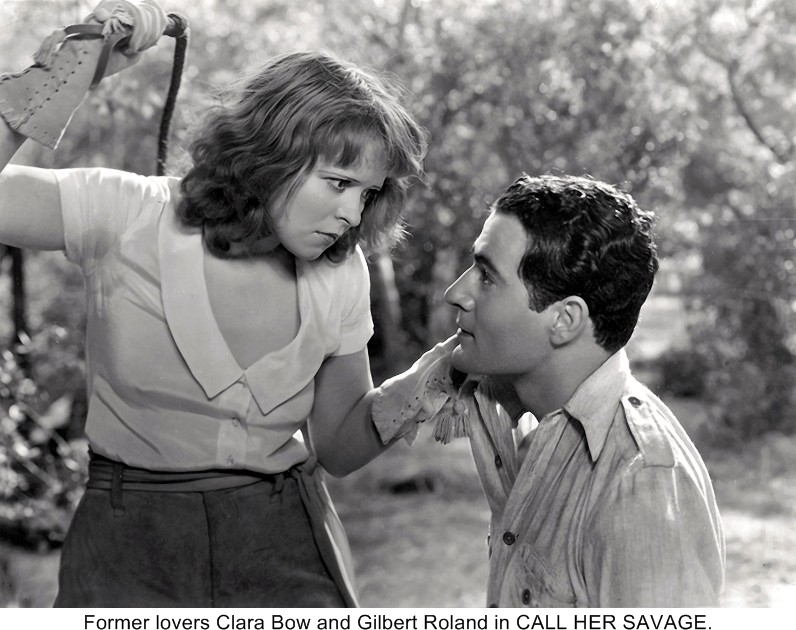
Image1931 was a bad year for Jazz Age “It” girl Clara Bow. Her friend and assistant Daisy DeVoe embezzled from her and tried to blackmail her, lurid details of Bow’s private life leaking out during the sensational trial that followed. Paramount Pictures, the studio that made her a star, declined to renew her contract. If that wasn’t enough, a scandal sheet, the Pacific Coast Reporter, ran a dubious expose that purported to lift the lid off a va-va-voom sex life that the tabloid claimed was rife with multiple affairs, orgies, incest, even a tryst with her pet Great Dane. 1932’s Call Her Savage, screening Wednesday, March 7 at San Francisco’s Roxie Theater as part of Elliot Lavine’s latest program, “Hollywood Before the Code: Nasty-Ass Films for a Nasty-Ass World,” plays like a sardonic commentary on the flame-haired actress’ very bad year. Her career was nearly over. She was about to fade into obscurity and a lifetime plagued by mental health issues, but for her penultimate moment in the spotlight, Bow remained unbowed.

In some ways, Call Her Savage comes across like a direct taunt at Bow’s detractors. Her character, Nasa Springer, even romps suggestively with a large dog, and Gilbert Roland, a former lover of Bow’s, shows up as one of the men in Nasa’s life. The Brooklyn-born Bow plays Nasa as a Texas wild child, a spoiled, impetuous heiress whose frustrated father ships her off to school in Chicago where her carousing and brawling earn her gossip column inches and the nickname “Dynamite.” She even manages to get into a fist fight at her debutante party.

Nasa’s lack of decorum is the least of it. What’s worse is her terrible judgment when it comes to men. With the exception of Moonglow (Roland), the boy she leaves back home, her taste runs to creeps with money. One, Lawrence Crosby (Monroe Owsley) marries her just to make another woman jealous. Another, Jay Randall (Anthony Jowitt), says he’s in love with her – until he realizes that she’ll never fit into his high society world. Most of the men in her life treat her badly, including her railroad baron father Pete Spring (Willard Robertson), who disowns her. Nasa teeters often on the brink of disgrace and disaster, but she is a survivor.

There are lots of goodies in the Roxie’s Pre-Code program, among them the original Scarface, the eerie Island of Lost Souls, the breezy musical Murder at the Vanities, and the melodramatic Ladies of the Big House, but Call Her Savage is in a class by itself. It hits many of the Pre-Code highlights, those elements that the Production Code would soon banish from Hollywood movies for decades to come. There is adultery, unmarried cohabitation, miscegenation, prostitution, and rape. But what makes the film stand out is Bow, blurring the line between fact and fiction, a scandalized girl playing a scandalized girl, a woman unafraid of making the most of a bad reputation. – Pam Grady

Hollywood Before the Code: Nasty-Ass Films for a Nasty-Ass World, March 2-8, Roxie Theater, 3117 16th Street, San Francisco. For tickets and further information, visit roxie.com.

Share this:

  • Share on Facebook (Opens in new window) Facebook
  • Share on X (Opens in new window) X
  • Email a link to a friend (Opens in new window) Email
  • Print (Opens in new window) Print
  • Share on LinkedIn (Opens in new window) LinkedIn
  • Share on Tumblr (Opens in new window) Tumblr
  • Share on Reddit (Opens in new window) Reddit
  • Share on Pinterest (Opens in new window) Pinterest
Like Loading...

Playful Alan Arkin skates on THIN ICE

16 Thursday Feb 2012

Posted by cinepam in Interviews

≈ Leave a comment

Tags

Alan Arkin, An Improvised Life, Billy Crudup, Bob Balaban, David Harbour, Greg Kinnear, Harry Belafonte, Jill Sprecher, Karen Sprecher, Lea Thompson, Little Miss Sunshine, Norman Jewison, Second City, The Russians are Coming The Russians Are Coming, Thin Ice, Thirteen Conversations about One Thing

In the dark crime comedy Thin Ice Alan Arkin plays Gorvy Hauer, an old man in possession of a valuable violin that crooked insurance agent Mickey Prohaska (Greg Kinnear) is desperate to get his mitts on. Director Jill Sprecher shot her Kenosha, Wisconsin-set film in Minnesota in the snowbound winter and the memory of that frigid location elicits a cringe and a snort of laughter from Arkin.

“That was rough,” he says. “That goes on my list of things I don’t want to do anymore. Poor Greg. Greg had it the hardest, because he had to be out on the ice in 10 degree below weather with no coat on and no long johns. He had the roughest time of anybody.”

Arkin is taking a few minutes to chat while he waits for a car that will take him to the Salt Lake City airport after a screening of the movie – then called The Convincer – at the 2011 Sundance Film Festival. He worked with Sprecher and her co-writer sister Karen before on 2001’s Thirteen Conversations about One Thing and that experience was so positive that when he came on board the new movie it was not just as an actor, but as an executive producer. It is only the second time he’s that done that – the last time was in 1979 when he made The In-Laws.

“I helped with the casting to a certain extent,” he says. “I got scripts to people that Jill and Karen didn’t have access to. I felt that it gave me the right to shoot my mouth off every once in a while when I felt a scene needed work, but they didn’t have a problem with that because Jill and I had a very comfortable working relationship from before. It was enormously amicable and comfortable.”

It was also the perfect situation for Arkin, who at 77, no longer wants to tolerate the confinement of a script. He’s an actor who likes to play and Sprecher gave him the room to do that.

“I’m too improvisatory,” he says. “I need to play. I’m not happy being locked into something tightly. And it’s getting more that way. I used to be able to submit to a script word for word. I can’t find it in me to do it anymore.

“My methods are very, very spurious these days. I’m kind of a maverick, I guess” he adds. “This was basically a character I’ve been wanting to play for about 20 years. I used to think in those terms. I used to think of fun characters that I would like to play at some point or another. I looked at the script and I saw that here was a good place to play it. I said, ‘Jill, how would you feel if the character was a guy like this?’ She thought it was great. Basically a Midwestern farmer pushed farther. He has a kind of ridiculous innocence about him that was kind of fun for me – boring to the point of annoying. That kind of tickled me. And sweet – a sweet, little boring guy.”

Arkin made his screen debut in Norman Jewison’s 1966 ensemble Cold War comedy The Russians Are Coming, The Russians Are Coming, garnering a Best Actor Academy Award nomination for his efforts. He won an Oscar for Best Supporting Actor for his role in yet another ensemble comedy 2006’s Little Miss Sunshine, the film that also marked his first time acting opposite Kinnear. Thin Ice with a cast that includes – in addition to Arkin and Kinnear – Billy Crudup, Bob Balaban, David Harbour, and Lea Thompson is another group effort, a further enticement for Arkin to sign on to the movie.

“I think of myself as a team player. I feel like my work is worthless unless I’m working with people I can really bounce off of and get stuff from, get surprises from and throw surprises to,” he says. “That to me is the whole joy of acting. To me, the whole joy of being an actor is ensemble. I teach improvisation and that’s the emphasis I have, how to serve the entity rather than looking for your own self-aggrandizement.”

Arkin’s attitudes about humor, improvisation, ensembles, and an actor’s place within a play or movie were shaped early. In 1960, he joined the fledgling Second City troupe in Chicago. In An Improvised Life, the memoir that he published last year, Arkin wrote that he considers his time with the group to mark the real start or career. He feels that way despite the fact before he joined Second City, he was a musician and composer (he co-wrote “The Banana Boat Song,” made famous by Harry Belafonte) and had even already tasted improv in 1959 when he joined the Compass Players in St. Louis.

“If I know anything at all about comedy it’s from working at Second City,” he says. “I didn’t think I was funny at all when I got there. I had to learn. It came through working on characters. Now I don’t feel like I’m particularly funny as me, but when I put on a particular character I feel like there’s humor in that. In a nutshell, of all the myriad things I learned there, the two most important were, first, we were allowed to fail. People used to come to the theater and know that 30% of what they saw every night was not going to work, because it’s improvisatory and they knew if the first thing’s not going to work, then the next thing might be great, something they’d remember 50 years later. That was an enormous thing, the fact that we took chances every night. That was the first thing.

“The second thing was that on any given night, we would play sometimes 15 or 20 characters, sometimes in a two-minute scene, sometimes in a 15-minute scene. We were doing operas. We were doing pantomimes. We were doing every conceivable kind of theater. I got about 30 years of training in the two years that I spent there. It was a miracle. It was an extraordinary adventure.”

These days he puts that training to use on nearly every movie he makes. He’s written screenplays and directed movies and plays. He can see where scenes need work and dialogue needs tweaking. Before he signs on to a film, he talks it over with his director to make sure that he will have the leeway he needs to improvise.

“People recognize that that’s the way I work and it doesn’t seem to hurt the films adversely, so they take a deep breath and jump in with me,” he says.

“I like working with people that don’t have a big agenda, who have a certain amount of flexibility, who want to play. These days I want to have fun. If the element of play – it’s call a play, after all – isn’t in it, it’s exhausting. I’m too old to be exhausted anymore by the work.” – Pam Grady
Share this:

  • Share on Facebook (Opens in new window) Facebook
  • Share on X (Opens in new window) X
  • Email a link to a friend (Opens in new window) Email
  • Print (Opens in new window) Print
  • Share on LinkedIn (Opens in new window) LinkedIn
  • Share on Tumblr (Opens in new window) Tumblr
  • Share on Reddit (Opens in new window) Reddit
  • Share on Pinterest (Opens in new window) Pinterest
Like Loading...

When Ewan met Iggy

18 Friday Nov 2011

Posted by cinepam in News

≈ Leave a comment

Tags

Beginners, Ewan McGregor, Iggy Pop, Todd Haynes, Velvet Goldmine

The release of the Beginners DVD this week reminded me of a story that Ewan McGregor told on himself when he came through San Francisco in April for that film’s opening night screening at the San Francisco International Film Festival. The conversation turned to Todd Haynes’ Velvet Goldmine and his role as Iggy Pop-like rock icon Curt Wild. For the actor, making the movie was a singular experience in which he got to sing live, dropping his trousers while singing The Stooges’ “TV Eye” during his character’s memorable introduction at an outdoor music festival and later performing “Gimme Danger” at Brixton Academy.

“I really did it. I told Todd Haynes, ‘I’ll only do this if you let me sing live,’ and he did,” McGregor said.

Several years later, he heard that Iggy was going be playing at a fashion show and he jumped at the chance to meet Curt Wild’s real-life counterpart.

“I had never been a fashion show. It was back in the day and I was very, very drunk,” he recalled.

It didn’t dawn on him until he was backstage that Iggy Pop maybe hadn’t seen Velvet Goldmine and wouldn’t necessarily understand the connection between his legendary self and his eager (if tipsy) young visitor.

“He didn’t remember that I had played him in the movie or that he’d given his permission to use all his songs,” McGregor said, cringing at the memory. “I’m standing there in this dressing room, Iggy Pop’s dressing room, after the show, I kind of came to and I was doing him for him. I was doing Iggy Pop in front of him, and I went, ‘What the fuck am I doing?’

“I got out of there as quickly as I could before I died of embarrassment. It was horrible.” – Pam Grady

Share this:

  • Share on Facebook (Opens in new window) Facebook
  • Share on X (Opens in new window) X
  • Email a link to a friend (Opens in new window) Email
  • Print (Opens in new window) Print
  • Share on LinkedIn (Opens in new window) LinkedIn
  • Share on Tumblr (Opens in new window) Tumblr
  • Share on Reddit (Opens in new window) Reddit
  • Share on Pinterest (Opens in new window) Pinterest
Like Loading...

Werner Herzog stares INTO THE ABYSS

13 Sunday Nov 2011

Posted by cinepam in Interviews

≈ Leave a comment

Tags

Cave of Forgotten Dreams, Death Row, Into the Abyss, Werner Herzog

Next year, Werner Herzog will bring Death Row, four hour-long documentaries spotlighting death row inmates, to television. The case of Michael Perry, who along with a partner murdered three people in Conroe, Texas in a scheme to steal a red Camaro, was to have been part of the series. But the more Herzog delved into it, the more dimensions Perry’s story took on until the filmmaker realized it was a larger tale than the miniseries could contain. His latest feature documentary, Into the Abyss, was born.

“It was so mind-boggling, because of the senselessness of the crime and all of the ramifications and repercussions of it that I thought, ‘This is epic, this is a big movie,” says Herzog during a recent visit to San Francisco.

Herzog’s second documentary this year, Into the Abyss sets up quite a contrast with the first, Cave of Forgotten Dreams, a tour of cave paintings – the earliest human artwork yet discovered – in France’s Chauvet Cave. But while on the surface one film shows the worst of humanity and the other the best, Herzog observes a thematic link between the two.

“Into the Abyss could have been the title of many of my films, let’s face it,” he says. “In some of my feature films, as well, I am always trying to look deep into the human heart, into the human condition – and when you mention Cave of Forgotten Dreams – into the recesses of human prehistory. There’s an always an attempt to try to illuminate what’s deep inside of us, and in this case, of course, a dark side of human existence.”

Herzog is opposed to the death penalty under any circumstance, yet Into the Abyss is no screed. He simply lets the people involved tell their own stories. Among these are Perry, who the director interviewed only once, eight days before his 2010 execution; Perry’s partner Jason Burkett, who is serving a life term; Burkett’s father, Jared, himself a lifer; the daughter and sister of two of the victims; the brother of another; a prison chaplain; and a former head of the “tie-down team,” essentially an executioner. It is a bleak, ugly tale of wasted lives and heartbroken families. Yet within it, Herzog also found something to celebrate.

“In Into the Abyss, you see some of the best of the best,” he insists. “When you look at the former captain of the tie-down team, for me, he’s like a national treasure. His weight should be measured in gold. In early antiquity, you would weigh a good man in gold and he’s one of those. I really like to find these kind people in the heartland of America. I love most of America. I’m not really into Texas bashing – when you look at a man like that, yes, he’s a Texan.

“When you look at the young man [an acquaintance of Perry and Burkett] who was in a fight and stabbed with a 20-inch screwdriver through his chest, in a life-threatening attack and a friend of his throws him a knife, and he looks at the knife at his feet and he doesn’t pick it up, because he wants to see his kids at night, this is a heroic act,” he adds. “ And the man has been an illiterate until recently and you look at him and you see a man who has committed a true heroic act. I really love these people, so it’s not just the dark side. It’s the best of the best.”

Herzog insists that the film is not meant as a commentary on the criminal justice system. The murders occurred in 2001. What happened at Perry’s arrest, his trial, and appeals does not concern him. Instead, the story touched him on a more personal level. He points out that the full title of the film as it unreels in the opening credits is actually Into the Abyss: A Tale of Death, A Tale of Life.

“It has to do with life as much as it has to do with death, of people who were murdered or capital punishment, execution” he says. “There is the urgency of life, which somehow came out of the whole material. It has to do with survivors, it has to do with families of victims of violent crime, and the film is dedicated to them.” – Pam Grady


Share this:

  • Share on Facebook (Opens in new window) Facebook
  • Share on X (Opens in new window) X
  • Email a link to a friend (Opens in new window) Email
  • Print (Opens in new window) Print
  • Share on LinkedIn (Opens in new window) LinkedIn
  • Share on Tumblr (Opens in new window) Tumblr
  • Share on Reddit (Opens in new window) Reddit
  • Share on Pinterest (Opens in new window) Pinterest
Like Loading...

PETE SMALLS IS DEAD , Really

11 Friday Nov 2011

Posted by cinepam in Reviews

≈ Leave a comment

Tags

Alexandre Rockwell, Mark Boone Jr., Michael Lerner, Pete Smalls is Dead, Peter Dinklage, Seymour Cassel, Steve Buscemi, Tim Roth

Pete Smalls is Dead is the title of Alexandre Rockwell’s first movie since 2002’s little seen 13 Moons, a moniker that comes perilously close to describing this weak comedy. The story of one-time screenwriter lured back to Hollywood after his elderly dog is kidnapped by a loan shark is barely coherent and so chock-full of whimsy that it chokes on the stuff. It is tempting to say this is a movie purely for Rockwell completists (if such a thing exists), but it has one redeeming feature and that is star Peter Dinklage’s soulful performance, a glowing beacon in the midst of the wreckage.

K.C. Monk (Dinklage) long ago fled Tinseltown, a one-time screenwriter turned laundromat proprietor. The dog, Buddha, is more than a pet, it’s a connection to his late wife, so when he cannot repay a $10,000 debt and the dog is taken, he is willing to do anything to raise the ransom. That is the situation that make him so vulnerable to a completely harebrained scheme hatched by his old friend Jack Games (Mark Boone Jr.) who informs K.C. that their recently deceased friend, big deal director Pete Smalls (Tim Roth), stole one of K.C.’s scripts for his last, unfinished film. Jack has the idea of using K.C.’s claim on the screenplay to commandeer the film’s rights, which the pair will then sell back at a high price to producer Hal Lazar (Ritchie Coster).

Seymour Cassel shows up as a cheerful Armenian gangster. Steve Buscemi (in an awful Afro wig) and Michael Lerner are a couple of slimy, would-be producers. Rose Perez is Pete’s scornful widow. Newcomer Theresa Wayman plays Pete’s editor and K.C.’s wan love interest. There are multiple weak sight gags involving the enormous Jack and diminutive K.C. riding through L.A. on Jack’s ancient scooter. Guys dressed in panda suits pull a heist. The movie’s climactic scenes, set in Mexico, take place amidst a carnival-like atmosphere that is clearly meant to evoke Fellini, but only succeeds in being another loud, tone deaf scene in a movie that is rife with them.

Within the film is a glimpse at Pete’s movie, a martial arts action movie. It’s a wire work scene that goes awry and like so much else in Pete Smalls is Dead, it is a lame joke that falls flat. That is really not a surprise, but there is something a little pathetic about a bad movie trying to make fun of a different kind of bad movie. It is a testament to Dinklage’s talent that despite everything, K.C. emerges as a full-blown, empathetic character and someone to root for even as one is rooting for this mess of a movie to just hurry up and end – Pam Grady

Share this:

  • Share on Facebook (Opens in new window) Facebook
  • Share on X (Opens in new window) X
  • Email a link to a friend (Opens in new window) Email
  • Print (Opens in new window) Print
  • Share on LinkedIn (Opens in new window) LinkedIn
  • Share on Tumblr (Opens in new window) Tumblr
  • Share on Reddit (Opens in new window) Reddit
  • Share on Pinterest (Opens in new window) Pinterest
Like Loading...

Family SHOUTING SECRETS at American Indian Film Festival

09 Wednesday Nov 2011

Posted by cinepam in Reviews

≈ Leave a comment

Tags

Gil Birmingham. Chaske Spencer, Korinna Sehringer, Q'orianka Kilcher, Shouting Secrets, Tantoo Cardinal, The Twilight Saga: Breaking Dawn – Part 1, Tonantzin Carmelo, Tyler Christopher

A week before Gil Birmingham and Chaske Spencer once more take their places on the big screen as Billy Black and Sam Uley in The Twilight Saga: Breaking Dawn – Part 1, they will appear together as father and son in an altogether more intimate drama, Korinna Sehringer’s Shouting Secrets. The tale of a fractured family brought together by tragedy makes its world premiere at San Francisco’s Palace of Fine Arts on Thursday, November 10 at the 36th American Indian Film Festival. Nominated for six awards at the festival, including Best Film and a Best Actor nod for Spencer, it is a richly realized portrait of kin repairing bonds once thought irretrievably broken.

Cal (Birmingham) and June (Tantoo Cardinal) are getting ready for their 40th wedding anniversary party when June suffers a stroke. Eldest son Tushka (Tyler Christopher), drowning in a midlife crisis, is separated from his wife Annie (Molly Cookson) and living at home. Daughter Pinti (Q’orianka Kilcher) also lives nearby with her musician boyfriend Brody (Connor Fox). But younger son Wesley (Spencer) long ago left Arizona and the San Carlos Apache Reservation in his rear view mirror. A successful novelist who remains close to his mother but who alienated the rest of the family with his autobiographical bestseller, he had no intention of returning for the anniversary fete but now finds himself pulled back into the fold.

Coming home only underlines what a mess Wesley’s life has become, but he’s not alone in that. The entire clan is in flux in a story that is at once about the constancy and the fragility of love, as well as the importance of family. Screenwriters Mickey Blaine, Tvli Jacob, and Steven Judd have constructed a strong narrative that resonates and filled the tale with memorable and only too human characters. Performances are strong across the board, justifying the four AIFF acting nominations that – in addition to Spencer’s – include nods for Christopher (Best Supporting Actor), Kilcher (Best Supporting Actress), and Tonantzin Carmelo (Best Actress), who plays the old friend that Wesley regards as “the one who got away.”

The AIFF’s sixth nomination went to Sehringer for Best Director. Shouting Secrets is an impressive directing debut, not just for the way she handles her actors and the demands of the story, but for the way she transforms the reservation into another character. Wesley jokes at the movie’s beginning that the rez ranks as one of Time magazine’s most desirable places to live. By the end of the film, the description no longer seems like such a joke, and not just because of the natural beauty of desert and mesas. – Pam Grady

The 36th American Indian Film Festival continues through Saturday, November 12. For tickets and further information, visit http://americanindianfilminstitute.com/.

Share this:

  • Share on Facebook (Opens in new window) Facebook
  • Share on X (Opens in new window) X
  • Email a link to a friend (Opens in new window) Email
  • Print (Opens in new window) Print
  • Share on LinkedIn (Opens in new window) LinkedIn
  • Share on Tumblr (Opens in new window) Tumblr
  • Share on Reddit (Opens in new window) Reddit
  • Share on Pinterest (Opens in new window) Pinterest
Like Loading...

Federal Bureau of Insinuation: J. EDGAR

09 Wednesday Nov 2011

Posted by cinepam in Reviews

≈ Leave a comment

Tags

Clint Eastwood, Dustin Lance Black, J. Edgar, Leonardo DiCaprio, The Aviator

Billed as a biopic of the FBI’s first and most powerful director J. Edgar Hoover, Clint Eastwood’s latest, J. Edgar, is really something else: a bodice ripper where the hysterical Victorian maiden is none other than the famed G-man. A driven man who built the FBI into the potent agency that it remains to this day, but who also warped it to fit his own agenda, Hoover is a ripe subject for biography. It is just too bad that neither Eastwood, screenwriter Dustin Lance Black or star Leonardo DiCaprio have any real interest in Hoover’s actual story.

DiCaprio’s involvement is the real mystery here. After playing Howard Hughes in The Aviator, why would he want to portray another 20th-century icon who beneath the legend is a twisted, crabbed individual with no clue how to behave with other people? For what Black has seized on are the rumors about Hoover’s homosexuality and his relationship with FBI Deputy Director Clyde Tolson (Armie Hammer). Rather than portray a love affair between two deeply conservative men at a time when the closet was not an option but a requirement, he opts for the notion of a deeply repressed Hoover in thrall to a domineering mother (Judi Dench) who warns her boy against becoming “a daffodil.” In this telling, Hoover is not just afraid of sex with men, he is terrified of women as well – he gets the vapors when Ginger Roger’s mother Lela (Lea Thompson) merely asks him to dance with her. He will primly hold hands with Clyde, but recoil at any other demonstration of affection, even verbal ones. These scenes are ridiculous, inviting unintentional laughs, but they also portray Hoover as pathetic when he was about as pitiful as your average rattlesnake.

Hoover’s life within the FBI gets the “lite” treatment. Much of it is told through the man’s eyes as he dictates an official history to a succession of agents sometime during the Kennedy administration, beginning with the post-World War I, anti-Communist Palmer Raids before the Bureau was even formed and continuing through the Lindbergh baby kidnapping and gangland raids during the Great Depression. In a kind of greatest hits approach, the film moves back and forth between that early era and that of the 1960s and early ’70s as Hoover’s power wanes (as witnessed when he clumsily tries to prevent Martin Luther King Jr. from accepting the Nobel Peace Prize) and Tolson’s health fails. The movie touches on Hoover’s confidential files that he wielded like a club, his penchant for wiretaps, and his contentious relationships with Presidents Roosevelt, Kennedy, and Nixon. But it entirely skips the ’40s and ’50s and glosses over the fact that Hoover’s targets were not just the mighty who were in a position to defend themselves but also thousands of everyday Americans who were destroyed by the FBI’s often illegal activity.

J. Edgar fails at history and fizzles as a drama. Black’s screenplay is a tone-deaf mess and most of the characters lack substance. Hammer’s Clyde Tolson barely registers except as the pretty boy who caught Hoover’s eye. Naomi Watts as Hoover’s secretary Helen Gandy fares even worse – there was absolutely no reason to cast an A-list actress in this nothing role. DiCaprio is miscast, altogether too callow to persuade as the brilliant, vicious political animal that Hoover was at the office and unable to transcend the ridiculousness of Black’s script when it comes to his private life. Eastwood tries to spackle over the film’s deficiencies with a somber coat of pure gloss, but what ails J. Edgar cannot be cured with production value.

– Pam Grady

Share this:

  • Share on Facebook (Opens in new window) Facebook
  • Share on X (Opens in new window) X
  • Email a link to a friend (Opens in new window) Email
  • Print (Opens in new window) Print
  • Share on LinkedIn (Opens in new window) LinkedIn
  • Share on Tumblr (Opens in new window) Tumblr
  • Share on Reddit (Opens in new window) Reddit
  • Share on Pinterest (Opens in new window) Pinterest
Like Loading...

O Stoner Night: John Cho on HAROLD & KUMAR’s Xmas Adventure

04 Friday Nov 2011

Posted by cinepam in Interviews

≈ Leave a comment

Tags

A Christmas Story, A Very Harold & Kumar 3D Christmas, After Hours, Danny Trejo, John Cho, Kal Penn, Martin Scorsese, Neil Patrick Harris

In San Francisco to promote A Very Harold & Kumar 3D Christmas, the third of the outrageous and outrageously funny stoner comedies that he has starred in with Kal Penn, John Cho ponders just what it is that accounts for the success of the franchise.

“I always feel like the key to doing a Harold and Kumar movie is you make it earnest,” he says. “And primarily what we do is make Harold and Kumar’s relationship and friendship believable. If Harold and Kumar are real and set up – as they always are – as a romance between the two guys in a tale of love, then almost anything goes around them. I feel that that’s the key and you just do that. I feel that this a Christmas romance movie between two men. If you just do that and have everything else happen around them, I feel like that’s the formula if there is one.”

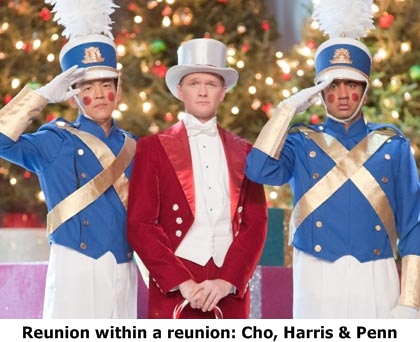
In the latest installment of the pals’ continuing adventures, the movie opens with that bromance on the skids. Kumar (Penn) is still a stoner and a screw-up, while Harold (Cho) is successful in business and in his marriage. The hunt for a Christmas tree good enough to please Harold’s disdainful father-in-law Mr. Perez (Danny Trejo) and perhaps earn Harold a little of the old man’s respect brings them together. Chaos reigns in a movie that could be the Yuletide cousin to Martin Scorsese’s After Hours as bad breaks and bizarre encounters dog them through the night. There is even a reunion within the reunion as Harold and Kumar wander into a theater and are thrust on stage to back up their old friend Neil Patrick Harris in a holiday extravaganza.

“The song-and-dance number was the most delightful thing to film,” Cho says. “I was up close and personal watching the triple threat that is Neil Patrick Harris, the triple-named Neil Patrick Harris. Triple-named, triple threat. It was just so preposterous to me that in a Harold and Kumar movie, I would be doing this old Hollywood dance number. That’s the absurdity of that world, and to me, there’s no better example of that absurdity than us in toy soldier costumes.”

The laughs in A Very Harold and Kumar 3D Christmas are strictly adults only, including a preposterous, ribald tribute to the family classic A Christmas Story. Despite that bawdy humor, the movie perfectly evokes the holiday spirit and Cho thinks he knows why.

“We’re both paying homage to and perverting Christmas tradition,” he says. “Harold and Kumar, and hence the movies, are pretty well meaning. There’s a lot we couldn’t get away with if the movies at their core didn’t have that. There’s an innocence to it. Like this movie is a perversion of Christmas movies, but it’s also very traditional and it affirms family values and it’s about love between the two guys and it’s about love between their significant others. At their heart, that’s what they’re about, strangely enough, and the movies have a rather childlike, innocent attitude about them.” – Pam Grady

“

Share this:

  • Share on Facebook (Opens in new window) Facebook
  • Share on X (Opens in new window) X
  • Email a link to a friend (Opens in new window) Email
  • Print (Opens in new window) Print
  • Share on LinkedIn (Opens in new window) LinkedIn
  • Share on Tumblr (Opens in new window) Tumblr
  • Share on Reddit (Opens in new window) Reddit
  • Share on Pinterest (Opens in new window) Pinterest
Like Loading...
← Older posts
Newer posts →

Categories

  • Interviews
  • News
  • Reviews
  • Short Takes
  • Uncategorized

Recent Posts

  • A Stamp of Approval
  • Life is messy & so is ‘Megalopolis’
  • A star discovers too late there are worse things than aging in the black comic body horror ‘The Substance’
  • A young teen nurses a crush when he finds himself among ‘Big Boys’
  • The stunt man becomes the star as Ryan Gosling becomes THE FALL GUY

Archives

Blog at WordPress.com.

  • Subscribe Subscribed
    • Cinezine Kane
    • Join 48 other subscribers
    • Already have a WordPress.com account? Log in now.
    • Cinezine Kane
    • Subscribe Subscribed
    • Sign up
    • Log in
    • Report this content
    • View site in Reader
    • Manage subscriptions
    • Collapse this bar
 

Loading Comments...
 

    %d