• About

Cinezine Kane

Cinezine Kane

Author Archives: cinepam

Sarunas Marciulionis relives THE OTHER DREAM TEAM

12 Friday Oct 2012

Posted by cinepam in Interviews

≈ Leave a comment

Tags

1992 Barcelona Olympics, Golden State Warriors, Marius A. Markevicius, Sarunas Marciulionis, Sundance Film Festival, The Other Dream Team

Sarunas Marciulionis’ 48-year-old knees don’t appreciate winters in his native Lithuania. So the former NBA guard, whose career began with with the Golden State Warriors, still spends part of every year in sunny California. But sore knees or no, nothing was going to keep Marciulionis away from Park City, Utah this past January where Marius A. Markevicius’ documentary The Other Dream Team was making its world premiere at the Sundance Film Festival. The story of the first ever Lithuanian national basketball team’s Cinderella run in the 1992 Barcelona Olympics (where they won the bronze medal), it also spins Marciulonis’ own story of growing up in Soviet-occupied Lithuania; playing on Soviet teams, including the 1988 Olympics crew that took home the gold; his career in the NBA; his key role in forming that 1992 team in the wake of his country’s liberation in 1990 and his life now as a hotelier and owner/operator of a basketball academy in Lithuania. It is a life and career that he can take pride in and on a snowy afternoon the day after The Other Dream‘s Temple Theatre debut, Marciulonis spent a few a few minutes with me talking about his memories and the documentary’s visit to his storied past.

Q: What was it like to sit down and talk about all those memories after so much time had passed?

A: Those memories, when you know the final result, look like they should be nice, but the reality is you remember the pressure. Those are sleepless nights, aches and pains. It’s connected with really heavy, heavy, heavy physical and mental exertion and stress.

But now, everything is fine, you look back 20 years and go, “What happened?” That’s how I know it was a stressful thing. The happiest thing about it was the victory, the result and independence, 1992. But even the 1988 Olympics, playing for Soviet Russia, it doesn’t matter. It was four years of preparation, of dedication, commitment to what we do best. People sometimes ask, “Which medal is more valuable?” You can’t say gold is more valuable or bronze. Each year has its different story and its different memories and glory.

Q: In ’88, there were four Lithuanian starters on the Soviet team, how did you see yourselves? Did you look on that as some kind of statement?

A: There were three, sometimes four starters, yes. At the time, the dream of independence, that was way too early. Only later on did we say, “Oh, yeah, we were four. Look at our stats!”

Q: You’ve lived through extraordinary times. You grew up in an occupied country, then came to the United States and then your nation was liberated. When you look back on all that, how do you take it all in?

A: I’m close to 50, but I can’t free up my brain. All those things that were put in my head at a young age, those fundamentals, when I was a kid, that you’ll never be free. Even though you’re free, you’re not free in your brain. I’m enjoying life, enjoying the San Diego area, Bay Area, I often come back. I have things in Lithuania that I’m doing, the basketball academy and the hotel business, but there’s still that Soviet part that’s still in me. Free people, kids who are free, the way they act and react – we’re still locked. There’s no key to unlock, I haven’t found it yet. When you change a place, it doesn’t mean you change your head.

Q: You had played a lot internationally with the Soviet team, but what was it like for you those first you those first few weeks or months when you came to the Warriors and began living in the west full time?

A: I can’t say it was culture shock, because culture shock is when you go from good to bad. When you go from bad to good, it’s an adjustment, not a shock. You’re adjusting to good things. There are things you appreciate. You’re excited. That’s the life side. The basketball side, my first year, my world was very small. It was Alameda, Alameda gym, the arena and the airport. That was my life. There was no time for anything else. I was talking to [former Warrior teammate] Chris Mullin before coming here and I said, “I haven’t been to Alcatraz!” Friends come to the Bay Area and they always go to Alcatraz, but I never found the time.

The game is a responsibility when you play, it’s not just for yourself. I was always trying to do my best. If I did wrong, then I felt bad. – Pam Grady


Share this:

  • Share on Facebook (Opens in new window) Facebook
  • Share on X (Opens in new window) X
  • Email a link to a friend (Opens in new window) Email
  • Print (Opens in new window) Print
  • Share on LinkedIn (Opens in new window) LinkedIn
  • Share on Tumblr (Opens in new window) Tumblr
  • Share on Reddit (Opens in new window) Reddit
  • Share on Pinterest (Opens in new window) Pinterest
Like Loading...

Beloved: Like mother, like daughter when it comes to romance

17 Friday Aug 2012

Posted by cinepam in Reviews

≈ Leave a comment

Tags

Beloved, Catherine Deneuve, Chiara Mastroianni, Christophe Honore, Louis Garrel, Ludivine Sagnier, Milos Forman

Beloved begins as a candy-colored consumer fantasy in a Paris shoe store as pop singer Eileen warbles a French rendition of “These Boots Are Made For Walkin’” on the soundtrack. Ludivine Sagnier and her fellow salesgirls and their customers go about their business in a shop that sells nothing but the pointy-toed, spike-heeled footwear known colloquially as “fuck-me pumps,” an ebullient scene that suggests that what follows will be a cinematic bonbon. But Beloved is a Christophe Honore movie, the writer/director who made the melancholic Dans Paris and Love Songs. This romantic musical that charts the ups-and-downs over four decades in the lives of a mother and daughter follows in that downbeat, darkly humorous and ultimately resonant vein.

The movie begins in 1964 with Sagnier starring as Madeleine, a full-time shoe saleswoman and part-time prostitute whose short-lived marriage to Jaromil (Rasha Bukvic), a Czech doctor, results in an unhappy stay in Prague and a daughter. Back in Paris, she remarries, but the bond she shares with Jaromil is unshakeable.

As the story enters the 1990s, Catherine Deneuve and the great Czech director Milos Forman take over as Madeleine and Jaromil, while Deneuve’s real life daughter Chiara Mastroianni plays their daughter Vera. In a London club one evening with her good friend and still besotted ex Clement (Louis Garrel), she sensuously dances to the house band’s cover of Bo Diddley’s “Who Do You Love?,” attracting the attention of American drummer Henderson (Paul Schneider). When the two lock eyes, Vera’s story truly begins. She and her mother are very different, but their love lives run a parallel track. They are both obsessed with men they cannot completely have while remaining loving but indifferent to the men who are in love with them.

To say much more would be to give too much away. This is an epic drama, nearly two-and-a-half hours long that takes sharp turns into unexpected places. Like Love Songs, it is a musical in the low-key, Jacques Demy mode (underlined by The Umbrellas of Cherbourg star Deneuve’s presence) with Alex Beaupain’s songs conveying much of the story.

Honore gifts Garrel – like Mastroianni, one of the director’s regulars – with the most moving song of the bunch, a poignant ode to Clement’s impossible love for Vera. And Sagnier is wonderful in her portion of the film, as Madeleine’s charming effervescence gradually loses its fizz under the onslaught of life’s disappointments. There is no mistaking who the real stars of Beloved are, though. Deneuve and Mastroianni are glorious apart. The scenes they share are downright magical and give Honore’s title a double meaning. “Beloved” are the men they adore who perhaps don’t deserve their strong feelings, but “beloved” is also what they are to one another, feelings that are richly deserved. – Pam Grady

Share this:

  • Share on Facebook (Opens in new window) Facebook
  • Share on X (Opens in new window) X
  • Email a link to a friend (Opens in new window) Email
  • Print (Opens in new window) Print
  • Share on LinkedIn (Opens in new window) LinkedIn
  • Share on Tumblr (Opens in new window) Tumblr
  • Share on Reddit (Opens in new window) Reddit
  • Share on Pinterest (Opens in new window) Pinterest
Like Loading...

360 Degrees of Separation

10 Friday Aug 2012

Posted by cinepam in Reviews

≈ Leave a comment

Tags

Ben Foster, Fernando Meirelles, Jude Law, Peter Morgan, Rachel Weisz, Vladimir Vdovichenkov

360 has so much going for it – on paper, anyway. The Queen/Manchester United scribe Peter Morgan wrote it. City of God/The Constant Gardener director Fernando Meirelles helmed it. Among the stars in a large international ensemble are Jude Law, Rachel Weisz, Anthony Hopkins, Ben Foster, Moritz Bleibtreu and Jamel Debbouze. Great writer. Great director. Great cast. In theory, this latest variation on La Ronde that spins a web of interconnection between a disparate group of people ought to be a winner. The drama blending elements of romance and suspense is never boring, but it never catches fire either. Too many of the characters are too sketchily drawn, making their stories only intermittently compelling.

A handful of fine performances are what make 360 worthwhile. Law is particularly effective as a businessman at a trade show in Vienna who, finding his attempts to let his hair down in a foreign city thwarted, uses his down time to phone home. His marriage to Weisz looks perfect from the outside, but his voice mails to her acknowledge the gap between them. Russian actor Vladimir Vdovichenkov also makes a memorable turn as a lonely, soulful mobster, stuck in a loveless marriage and harnessed to rude and impossible boss Mark Ivanir. And Ben Foster as a twitchy sex offender trying to stay straight is creepy and poignant at the same time.

The people in 360 are citizens of the world. Their connections are forged on planes, in airports, at hotels, in support groups, on the internet. Borders are porous and a random connection can come from anywhere. The film starts and ends in Vienna and visits Bratislava, London, Paris, Denver and Phoenix. Morgan and Meirelles are trying to make a point about the global nature of humanity and how small the world has become in our age. But they have overreached in trying to balance too many characters and too many situations. What might have resonated is instead too often a bland muddle. – Pam Grady

Share this:

  • Share on Facebook (Opens in new window) Facebook
  • Share on X (Opens in new window) X
  • Email a link to a friend (Opens in new window) Email
  • Print (Opens in new window) Print
  • Share on LinkedIn (Opens in new window) LinkedIn
  • Share on Tumblr (Opens in new window) Tumblr
  • Share on Reddit (Opens in new window) Reddit
  • Share on Pinterest (Opens in new window) Pinterest
Like Loading...

Elliott Gould and THE LONG GOODBYE that almost wasn’t

23 Monday Jul 2012

Posted by cinepam in News

≈ Leave a comment

Tags

Elliott Gould, Peter Bogdanovich, Robert Altman, San Francisco Jewish Film Festival, The Long Goodbye

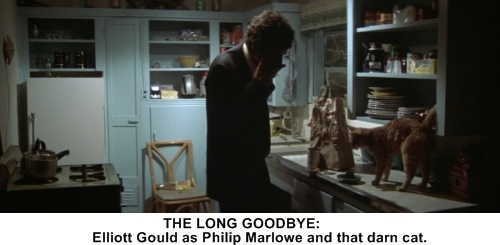
The Long Goodbye almost didn’t happen, at least not the version that eventually emerged with Elliott Gould as Raymond Chandler’s private eye Philip Marlowe reinvented as perhaps the last principled man in the cynical post-Watergate 1970s. Gould graced the cover of Time magazine in 1970 as “The Star of an Uptight Age.” That same year he received a Best Supporting Actor Oscar nomination for Bob & Carol & Ted & Alice and he starred in M*A*S*H. He was on top of the world. A couple of years later, he was just another unemployed actor when then-United Artists head David Picker told him about the Chandler film, which was then attached to director Peter Bogdanovich. Gould wanted the part and he needed the job, but Bogdanovich had other ideas.

“Bogdanovich couldn’t see me in it,” Gould recalls during a Q&A at the San Francisco Jewish Film Festival where he received the festival’s 2012 Freedom of Expression Award.

The director favored more hard-boiled casting. He wanted Lee Marvin or Robert Mitchum (who would go on to play Marlowe twice in 1975’s Farewell, My Lovely and 1978’s The Big Sleep).

“I couldn’t argue with that. They were like my uncles,” Gould says, but he adds, “We’ve seen them, but you haven’t seen me.”

But then Bogdanovich was out and Robert Altman, who had already directed Gould in M*A*S*H took over the reins.

“You are that guy,” said Altman.

“That guy” in this case being a slobby loner with an obnoxious orange tabby for a roommate, who just can’t let it go when his good friend Terry Lennox (ex-baseball player and Ball Four author Jim Bouton) gets into trouble, even at the expense of his own hide.

That Gould’s Marlowe is not so tough as the traditional Marlowe can perhaps best be summed up by the one question about a costar asked of Gould at the film festival event. Bouton, classic tough guy Sterling Hayden, Laugh-In comedian Henry Gibson, director Mark Rydell, and fraudster Clifford Irving’s mistress Nina Van Pallandt were all part of The Long Goodbye cast. None of them rated a query. No, what inquiring minds wanted to know was, what was it like to work with that scene-stealing cat?

“You can’t lie to nature,” answered Gould. “Nature will take its course.” – Pam Grady

Share this:

  • Share on Facebook (Opens in new window) Facebook
  • Share on X (Opens in new window) X
  • Email a link to a friend (Opens in new window) Email
  • Print (Opens in new window) Print
  • Share on LinkedIn (Opens in new window) LinkedIn
  • Share on Tumblr (Opens in new window) Tumblr
  • Share on Reddit (Opens in new window) Reddit
  • Share on Pinterest (Opens in new window) Pinterest
Like Loading...

Taking a WALTZ with Luke Kirby

09 Monday Jul 2012

Posted by cinepam in Interviews

≈ Leave a comment

Tags

Luke Kirby, Sarah Polley, Take This Waltz

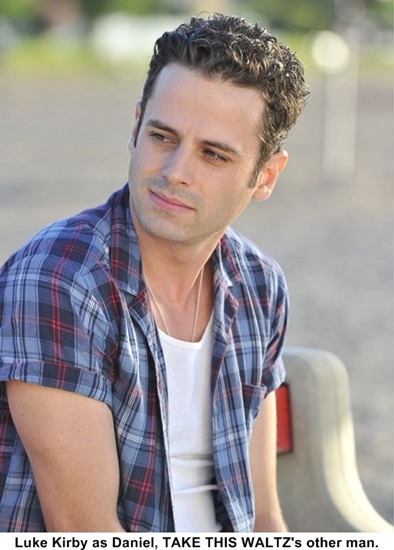
Take This Waltz, Sarah Polley’s second feature, had just made its world premiere the night before at the 2011 Toronto International Film Festival when I sat down to talk to costar Luke Kirby. In casting her romantic drama, Polley first looked toward Hollywood, casting Michelle Williams and Seth Rogen as Toronto couple Margot and Lou. But in filling the role of Daniel, the handsome neighbor who catches Margot’s eye and threatens her ostensibly happy marriage, Polley stuck closer to home and turned to the 34-year-old Hamilton, Ontario native, an old friend. If Kirby – who is best known in the States for his turn as the actor cast as Romeo on the Canadian comedy series Slings and Arrows – was exhausted after the 24-hour whirlwind of premiere and press, he didn’t show it as he waxed enthusiastically about  a film that is dear to his heart and explained how he related it to an actor’s life.

Q: When Margot and Daniel meet, she talks about how much she hates to be in between things. It’s funny that Sarah, an actor, wrote those lines, because that is kind of the actor’s permanent condition. Given how much of the movie is about just that, being in between, how do you feel about that or do you ever even think about it?

A: As I get older, there is this kind of interesting feeling of untetheredness. I’ve been trying to find a home somehow in my own personal life. It’s really been reassuring, life-wise, to know that I can actually attempt that. In many ways, I felt like I was just going to be a vagabond for life. In some ways I will be, but I’ve been really lucky the last couple of years to have a sense of home to some degree that has sort of allowed me to find that, although the die was cast, it isn’t as serious as I thought it was going to be. I think everyone’s sort of allowed to find home.

Q: That’s another interesting thing in the movie, because Margot already has what should be home and she’s rejecting it.

A: She says she doesn’t like being in between places, but she might really like being in between places. For me, I know one of the things that feeds the appetite to do this is kind of enjoying that place. It can feel at times really freeing. It can feel utterly terrifying at other times, but knowing that I can do it inside the context of work is a great place to kind of work through that impulse. But I think Margot, I don’t know if in some ways she likes it necessarily, but her comfort zone kind of is on the ride and she just hates it when it stops.

Q: She is such a piece of work in the way she messes with both guys’ heads, perhaps without meaning to do so, but that’s the effect.

A: It’s interesting. I haven’t been able to quite detach myself when I see it from the experience of doing it, of what Daniel goes through with this kind of light being cast on his otherwise dark world through Margot. I see the kind of beauty of that. I see the poetry of it, but at a distance I can see how incredibly frustrating … she’s in a very frustrating place.

Q: You say that you’ve been trying to find a home. What does home mean to you?

A: For me, family is tied into it somehow, whatever family is. It can be friends. It can be environment, landscape. Flora and fauna can be home. Whatever it is, it’s something that sort of speaks to you and it’s something you feel matches the beat of your heart. That’s that home that we kind of look for that if we were privileged enough to feel that at any time in our childhood, we would consistently want to have something similar somewhere along the line.

Q: How long have known Sarah?

A: Ten years, but she and I have worked together only once prior to this, which was on a film called Luck, and we worked it together as actors. I adore her as an actor. I think she’s a really, really funny person and incredibly bright and intelligent and engaged in a way that’s kind of a little bit off-putting initially, but such a kind of blessing to get to be around.

It was just that one time that we worked together, but over the years, we’d touch base every so often. This was sort of our latest way of touching base, which really, really added to an already delicious cake.

Q: Given your prior relationship, did the two of you talk about this project at all before you read the script?

A: We didn’t talk. I got the script, which I think was probably the right thing to do. Those are the bones of what you’re looking at. You can then see if there is any possibility of fleshing it out or not. I was really somewhat haunted by the story. In many ways – just off the bat, reading it strictly as a reader – I could relate to Margot especially. I knew I couldn’t play her. I knew Sarah wanted me to read for Daniel. But then we actually read some scenes and it flowed very nicely.

I kind of felt, because of the scope of the production, that Sarah was sort of just doing a kindness of involving me on some level. I didn’t really think that it was going to go anywhere.

Q: Why would you think that?

A: It was just one of those things that you tell yourself that, because this profession is so hard to – attachment is so difficult. It’s such an exercise in control and release all the time. When you read something that you feel so attached to, depending on how you work and how quickly you dive in, if you’re not careful, it can be utterly heartbreaking to find out it’s not going to move any further. If you’re not careful, you can fall into a sort of deep melancholy for ages thinking about it. So in some ways, I think I was saying that to keep that from happening, just shut down and keep quiet.

Q: So when you found out it was a go and it was you –

A: I was really, really quite happy.

Q: So who is Daniel to you?

A: I think when we meet him it’s very possible that he’s as lost, if not more lost than Margot. I think he’s a very lonely, lonely man and when he meets Margot, the dawn breaks and his world is filled with light and color. I think he just feels compelled toward her. It isn’t something by design. He isn’t an architect of seduction or anything. He’s caught on the same ride as her. There she is. To him, either the gods have dictated it or the cosmos has dictated it, but it feels like something that he’s been thrust into, that has been unleashed and he can’t look away from it. The siren song has been calling. – Pam Grady

Share this:

  • Share on Facebook (Opens in new window) Facebook
  • Share on X (Opens in new window) X
  • Email a link to a friend (Opens in new window) Email
  • Print (Opens in new window) Print
  • Share on LinkedIn (Opens in new window) LinkedIn
  • Share on Tumblr (Opens in new window) Tumblr
  • Share on Reddit (Opens in new window) Reddit
  • Share on Pinterest (Opens in new window) Pinterest
Like Loading...

Put a stake in it: ABRAHAM LINCOLN: VAMPIRE HUNTER

22 Friday Jun 2012

Posted by cinepam in Reviews

≈ Leave a comment

Tags

Abraham Lincoln: Vampire Hunter, Anthony Mackie, Benjamin Walker, Dominic Cooper, Mary Elizabeth Winstead, Rufus Sewell, Timur Bekmambetov

The other day I read one of those articles about doofuses on Twitter, you know, the ones that insist on tweeting their ignorance of stuff generally considered common knowledge, like the folks stunned and amazed to discover that the Titanic sinking isn’t just something that happened in a movie. I was thinking about that while watching Abraham Lincoln: Vampire Hunter the other night, and began to anticipate the opposite kind of tweet, the one posted by the guy who watches the movie and convinces himself that he slept through the most fascinating history lesson ever: “Abraham Lincoln freed the slaves and killed vampires? For realz? #mindblown” That tweet, at least, would be mildly entertaining as opposed to the movie, which takes itself far too seriously to be very much fun.

The movie has a joke of a title and, in its 3D presentation, throws stuff up at the screen with the wild abandon of Drive Angry or A Very Harold & Kumar 3D Christmas. Cheesiness is built into its DNA, but director Timur Bekmambetov squelches humor that might have breathed some life into the film in favor of dull earnestness. What this movie is crying out for is Evil Dead‘s lamebrain hero Ash and an actor with Bruce Campbell’s deadpan grasp of the absurd. Instead, it is stuck with a sober, familiar Abe Lincoln (albeit one with martial arts training and quite a way with a silver-tipped axe) and a bland Benjamin Walker, who looks the part but barely registers on screen next to more charismatic costars Dominic Cooper, Rufus Sewell and Anthony Mackie.

Seth Grahame-Smith (who also penned the screenplay of the recent, even more dire Dark Shadows) adapts his own novel in which he offers an alternative history, one in which the 16th president of the United States is cast as a lifelong vampire foe and the Civil War presented as less a War Between the States than a battle between the living and the undead. Slaves are food for the vampires and that supply must be maintained. It is a conflict that pits Lincoln, vampire-turned-vampire-hunter Henry Sturgess (Cooper, playing the most intriguing character in the story, someone intent on wiping out his own kind), Lincoln’s childhood friend Will Johnson (Mackie), shopkeeper Joshua Speed (Jimmi Simpson) and Lincoln’s wife Mary Todd Lincoln (a pallid Mary Elizabeth Winstead) against diabolical vampire Adam (an exuberant, scenery-chewing Sewell) and his bloodsucking tribe. It is Adam who ups the ante in the Civil War when he offers Confederate President Jefferson Davis (John Rothman) a vampire army to battle the Union forces.

Frankly, it is hard to top the horror of the actual Civil War. The addition of battalions of the undead in a fictional version of those historical events doesn’t top the terror quotient of the single bloodiest chapter in American history. But then Bekmambetov has as little sense of horror as he does a sense of humor. The whole endeavor is merely an excuse for outsized violence; adequate, if unspectacular, special effects; and one big rote action sequence after another. And it all feels a little derivative. It’s missing “the loom of destiny,” but at times, Abraham Lincoln: Vampire Hunter feels like a 19th century version of the director’s 2008 thriller Wanted in its lavish, loud and sometimes cartoonish battles. The two films even share similar climaxes. Apparently Bekmambetov enjoys playing with trains.

In the absence of humor and the absence of horror, Abraham Lincoln: Vampire Hunter is just another routine action thriller and all the drearier for it. Lincoln deserves better and so do movies audiences. – Pam Grady


Share this:

  • Share on Facebook (Opens in new window) Facebook
  • Share on X (Opens in new window) X
  • Email a link to a friend (Opens in new window) Email
  • Print (Opens in new window) Print
  • Share on LinkedIn (Opens in new window) LinkedIn
  • Share on Tumblr (Opens in new window) Tumblr
  • Share on Reddit (Opens in new window) Reddit
  • Share on Pinterest (Opens in new window) Pinterest
Like Loading...

Ethan Hawke, Pawel Pawlikowski muse over THE WOMAN IN THE FIFTH

18 Monday Jun 2012

Posted by cinepam in Interviews

≈ Leave a comment

Tags

Ethan Hawke, Kristin Scott Thomas, Pawel Pawlikowski, The Woman in the Fifth

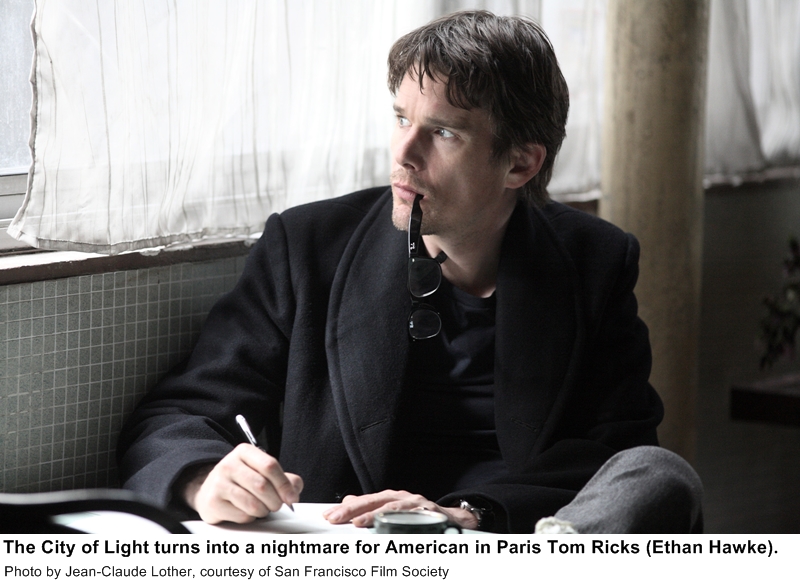
The adventures of an American in Paris, so often cast in a romantic glow in the movies, is reframed as a nightmare with erotic overtones in Pawel Pawlikowski’s sinister thriller The Woman in the Fifth. In the Polish filmmaker’s first film since his acclaimed 2004 coming-of-age drama My Summer of Love, Ethan Hawke plays Tom Ricks, a writer who travels to the City of Light to try to put his life back together and reunite with his estranged wife and young daughter. Things don’t go according to plan and after he’s robbed and left destitute, he is trapped is Paris, living a bleak existence until he meets Margit (Kristin Scott Thomas), a beautiful woman who injects some light into his life – at least that’s the way it appears at first.

At the Toronto International Film Festival where Women in the Fifth made its world premiere, Hawke and his director sat down to discuss some of the implications of a film in which things are rarely what they seem.

Q: Kristin Scott Thomas plays your lover, but at times she almost seems like your mother in some of her interactions with you, Ethan. Once that becomes apparent, then it’s easy to start reassessing Tom’s relationships with all of the women in the film. How did you keep all of the female roles straight in your head, who they were representing and who they actually were?

EH: We struggled a little bit with the title of the movie. Part of the reason why, I think, is because there’s this kind of knee-jerk thought that Kristin is the “woman in the Fifth,” and part of me started thinking that it’s more true that there are these five women: his daughter, his ex-wife, his Polish lover, Kristin and I don’t know who else.

PP: That’s four!

EH: (Laughing) Then himself! He’s the woman in the Fifth, the woman inside him. The point is that they are all these different ways of accessing aspects of himself, who we are to different people. The movie works as this kind of weird, lyrical dance of symbols, anyway. They are all something that is not exactly real. It’s a very difficult thing to verbalize, because as soon as you verbalize it, you kind of box it in.

Q: Pawel, you made a point of staying away from the more familiar landmarks of Paris, except for the Eiffel Tower, but even that is never seen full on. At one point, a chunk of it looms so close outside an apartment window that it could be an adornment in the backyard and then at times we see only the tip of it. Also, there is the visual style where everything in a scene is out of focus except for a focal point.

PP: We wanted to limit the vision of the viewer, because the hero’s vision is kind of limited. We gave Ethan these very thick glasses.

EH: I couldn’t see a thing. The movie looks the way it looks when I was doing it. I couldn’t see anything, then it would be, wow, really big!

PP: It’s a key, metaphorical, but also a literal key to the performance. He doesn’t see in depth. He sees something. He identities one thing and then doesn’t notice the layers and layers behind it. He doesn’t notice some obvious things, because he’s in his head. When you’re in your head, you only notice some things that strike you at the time.

Also, I wanted Paris to be slightly unreal. I’ve seen so many films set in Paris and I had no idea how to do it interestingly. When I went there, I kind of despaired, because I love Paris, but it’s so full of itself, it’s so obviously Paris at ever step, in every direction. It took ages to figure it out. The secret was to find strange little places in Paris that don’t look like Paris. I was looking at places that rang a bell for me, that looked like Eastern Europe from the ’70s or something.

Q: Getting back to Margit, she comes across as lover, mother and muse, a dream figure brought to life, but that’s how an outside observer sees her. How does Tom see her?

EH: It’s kind of amazing to me, as much as a symbol as you feel Kristin is, when she’s sitting there, kind of glowing and ripe asking me to come up the stairway, it’s so beautiful. When she takes him up to the roof and sings him that song, it’s some kind of other metaphor that I’m not sure – it’s not really realism either. It’s like, “What? Who says that?”

Q: He’s so lonely and she’s offering him –

EH: – some kind of solace. He is so alone. And she offers him some understanding and someone to talk poetry with, who’s read his book and says she knows him completely. I love how she says, “It’s so you,” the book. She doesn’t even know him. It’s the kind of thing people say.

PP: She’s fantasizing about him already.

EH: It’s just like women I used to date who would say, “This is just like Before Sunrise!” No, it’s not, actually. – Pam Grady


Share this:

  • Share on Facebook (Opens in new window) Facebook
  • Share on X (Opens in new window) X
  • Email a link to a friend (Opens in new window) Email
  • Print (Opens in new window) Print
  • Share on LinkedIn (Opens in new window) LinkedIn
  • Share on Tumblr (Opens in new window) Tumblr
  • Share on Reddit (Opens in new window) Reddit
  • Share on Pinterest (Opens in new window) Pinterest
Like Loading...

What’s the frequency, Kenneth? A Q&A with SAFETY NOT GUARANTEED director Colin Trevorrow

14 Thursday Jun 2012

Posted by cinepam in Interviews

≈ Leave a comment

Tags

Aubrey Plaza, Colin Trevorrow, Derek Connolly, Eternal Sunshine of the Spotless Mind, Jake M. Johnson, Karan Soni, Mark Duplass, Safety Not Guaranteed

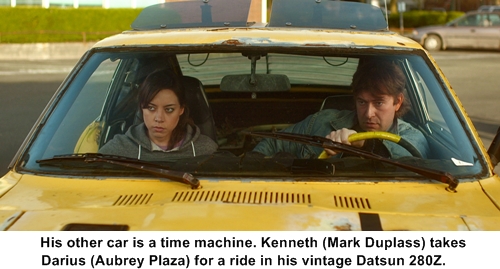
The ad that ran in Backwoods Home back in the mid-1990s began, “WANTED: Someone to go back in time with. This is not a joke.” And while screenwriter Derek Connolly and director  have fashioned their new film inspired by that classified, Safety Not Guaranteed, as a comedy, they don’t treat it as a joke. Instead, they find a lot of heart in this tale of lonely stock clerk and possibly mad, possibly genius Kenneth (the suddenly ubiquitous Mark Duplass) whose invitation to time travel draws downbeat Seattle Magazine intern Darius (Aubrey Plaza), her nerdy colleague Arnau (Karan Soni), and oily journalist Jeff (Jake M. Johnson) into his story, an unexpectedly life-altering experience for all four of them. A San Francisco Bay Area native who now lives in Vermont, Trevorrow recently returned to his former home turf to talk Safety in advance of the Sundance Film Festival hit’s theatrical release.

Q: You and Derek Connolly are writing partners. When he brought you this, how far along in the story had he gotten and were you involved with the writing at all?

A: He came to me with the script, with a draft that we then developed for a while. Derek did all of the actual writing and I think part of the job of a director is to mold the story and build a narrative that’s going to work on screen. That’s what I did, but I respect Derek’s abilities so much and I respected his voice in this so much that I really wanted to make sure that every word was his. He also gave me the gift of being able to direct this film. So we just decided, “OK, we’re both going to be producers and I’ll direct and you’ll be the writer.” It really was a collaboration, not only that part, but on set he was next to me the entire time and I would confer with him daily, even moment to moment. “What would Kenneth say here? What feels honest in this moment? What feels true?” I’m very proud of our collaboration on this movie. It’s very organic.

Q: You juggle a number of genres in the movie. Was that part of it from the start or was that something evolved as the script evolved?

A: The first draft of the script was very much a comedy, mystery, road trip movie. What we really fleshed out of it was the romantic side of it, the love story and issues of emotional time travel and how – right now, Facebook is our time machine in a lot of ways, being able to go back and find people from your past that you otherwise wouldn’t have seen. We took that, but the question of the movie was always the same, “Is this guy crazy or not?” Even though we were going to turn it into a bit more of a love story, we didn’t want to turn it into a romantic comedy where the question is, “Are these two going to end up together?” We wanted to keep the question the sci-fi question and yet still have it supported by a love story. I think in the end it makes for a movie – I don’t know if it’s tonally erratic, but there are a lot of different tones that are coming into play. For me, the big challenge was juggling all these tones and making sure that everything, like a funnel, came down to that last moment where ideally a lot of these various questions you have are going to be answered in a single sequence.

Q: The four characters in this movie are so isolated and lonely and maybe not even aware of how isolated they are until they embark on this mad project …

A: To me, it starts as a movie with a bunch of characters who all need a time machine for a different reason. It really is a movie about self-awareness in a lot of ways. The characters become more self-aware all across the board. We were trying to make a movie that was an emotional time travel film and about why we all have moments that we identify in our past that if we could just go back and change that one thing, things might be different for us. That’s a very universal thing. I find that when I ask people, “What would you do with a time machine?” when they really think about it, it comes down to something deeply personal. “I might not have said that thing to my dad that I said.” “I might not have ended that relationship the way that I did or treated that person the way that I did.” In the same way I think that Eternal Sunshine of the Spotless Mind addresses regret in a time travel kind of scenario, we could do that while also having it be fun and hilarious and have momentum and sci-fi and mystery and all those other things. – Pam Grady

Share this:

  • Share on Facebook (Opens in new window) Facebook
  • Share on X (Opens in new window) X
  • Email a link to a friend (Opens in new window) Email
  • Print (Opens in new window) Print
  • Share on LinkedIn (Opens in new window) LinkedIn
  • Share on Tumblr (Opens in new window) Tumblr
  • Share on Reddit (Opens in new window) Reddit
  • Share on Pinterest (Opens in new window) Pinterest
Like Loading...

Ezra Miller needs to talk about KEVIN

24 Thursday May 2012

Posted by cinepam in Interviews

≈ 2 Comments

Tags

Ezra Miller, John C. Reilly, Lynne Ramsay, Tilda Swinton, We Need to Talk About Kevin

In Lynne Ramsay’s We Need to Talk About Kevin, playing the profoundly disturbed son of Eva (Tilda Swinton) and Franklin (John C. Reilly), Ezra Miller delivers a stunning performance. Kevin is a duplicitous boy, feigning easygoing normalcy for his dad, but baring his true self – a malicious, rage-filled soul – to his horrified mother. For the 19-year-old who only made his big-screen debut four years ago in Antonio Campos’ Afterschool, it is a career high to date, earning him a British Independent Film Awards nomination for Best Supporting Actor. What is most striking about the young actor during a January phone call is the enthusiasm and warmth that blasts through the phone, a marked contrast to the role he so thoroughly inhabited. It is a performance not many have seen yet – the film earned under $2 million at the American box office in a limited release – but that should change now that We Need to Talk About Kevin is available on demand and coming out on DVD on May 29.

Q: How do you get into a character like this, who is so angry and so self-contained?

A: You know there’s a lot in this movie that has to do with memory. Almost the whole movie is told through the hindsight perspective of Eva. For me, the formation of the character came in a similar fashion, where obviously what composes a human being will largely be the experiences of his life before the point that we meet him. In this movie we see really sort of the highlights in Eva’s memory from Kevin’s conception. For me, it was about sort of internalizing those memories and making those memories my own, elaborating on those memories and finding the way the track of this person’s life, in combination with just who he innately was, led him to feel so much rage and aggression and hostility.

A lot of that process is simply sitting and thinking and reminiscing on a lifetime that truly was not my own, was this invented lifetime and finding the way that that forms everything from the way that Kevin moves to the way he talks to the way he looks at his mother.

Q: John C. Reilly has talked about how the story is told through Eva’s eyes and since she is not necessarily a reliable narrator, it skewed the way he played the father. Did you feel that way as well?

A: It was absolutely a matter of at certain times addressing the fact that I was playing a dream figure or a formation of someone’s memory, particularly a memory at a time in her life when she is under the weight of extreme emotions, as sort of polarizing her reminiscence of who Kevin was at various times. I would say polarization would be the most prominent factor when someone’s looking back at this experience that they – because of the nature of an event, you associate all the details with the centerpiece of that event. Perhaps at times his malice is exaggerated in her hindsight. Those were certainly considerations the whole way through except for a single scene that I personally believe to be in real time and actual.

Q: How did this come to you? Was it just another script coming through your agent or was this something you knew about and actively pursued?

A: Oh yes! Initially, it came through an agent just like any other script does, in an email. But I read it and it sort of consumed me. It became instantaneously my most passionate pursuit. I’ve truly never wanted anything more. I vehemently chased this film. I went in and auditioned for it with a casting director. Then I met Lynne the second time I went in. I was very excited about it. I spent a bizarre majority of my time considering the way to approach this character, not knowing we were almost two years away from when the film would actually be made.

The film disappeared for a while, to my absolutely horror. I was pretty consistently annoying my agent when he was trying to show me other wonderful options and things that could be great and fun. I would say, “Yes, sure, cool, whatever. What’s going on with We Need to Talk About Kevin? What’s happening with that?” It vanished for a little while, as a lot of films at that time did – it was around the time of the economic crisis. Several months later it re-emerged and I was ecstatic and then put myself back on the intense regimen of spending most of my day considering how to properly approach this character.

Q: Was the audition process still going on at this point?

A: Yes. I met Lynne for a second time and then for a third time with her companion and co-writer Rory [Kinnear] and then after that, there was a chemistry read with Tilda. So now tensions are heightening and I’m sort of starting to become a nervous wreck in all other aspects of my life. I’m walking around subway platforms terrifying people, because I’m in character. I think when I was going to that chemistry read with Tilda someone actually got out of their seat on the subway platform and moved to the other end of the platform just because I’d been giving them the Kevin stare. Then after the chemistry read, I waited two weeks, just chewing every available part of my body. Any part of my body that my mouth could reach, I would chew incessantly.

Q: Was the chemistry test the end of the auditions?

A: I got a call from Lynne and she just had this specific thing that she really wanted to do. She wanted to see the last scene, because we’d been doing all these other scenes from the film and there’s an extreme difference in that last scene. There’s something new. We see a mask drop, we see a performance slip, Kevin’s performance. That’s really a key factor of that character, that pretty much all of the time that we see him, he is performing. So to see that change, to see that sort of glimpse through the facade, it was essential for Lynne to see.

She told me to come on Saturday and she meant Sunday. I came on Saturday and was waiting in the lobby and she had already left the building, but fortunately, she had forgotten her cell phone, so she came back and saw me there. “Oh my God, I’ve made such a mistake! Oh no, I’m so sorry! Why don’t you just come and have a drink with us?” I was not at the time old enough to drink. I’m still not old enough to drink by technical New York City/United States law, but I came and sat with them in this pub near the place where they were staying and we talked for about four hours about the movie and about the scene we were going to do the next day and the character. I really think that was sort of an invaluable accident. I think we were able to truly connect and understand that we felt and saw many of the same things for this film. So we said goodbye and I came back the next day. We did the scene and by the end of the scene, everybody was crying.

I still had to wait for another two weeks. At this point, most of my my body was down to bone. Then she cast me, so it was fortunate that I chewed myself down to bone, because then I had to lose 20 pounds to be the malnourished Kevin. That’s sort of the epic saga in its entirety.

Q: Lynne has said that one of the things that impressed her about you is that you were not intimidated by Tilda Swinton. Was that true from that first chemistry read or did that just fall away as you got to know her?

A: (Laughs) I wouldn’t say I wasn’t intimidated by Tilda Swinton. That seems like the highest form of hyperbole, but certainly when I entered that chemistry read, I was for the most part sort of within the mind frame of the character. When I met Tilda, obviously I stepped out of the mental initiative of that character and met Tilda, but still in sort of my emotional core was carrying this hatred, disgust and resentment. I think that sort of masked the true emotion, which was absolute admiration and a feeling of laudation toward Tilda, who has been one of my heroes in this art form for a long time. I think it was a convenient deception. It just sort of turned out that way. – Pam Grady

Share this:

  • Share on Facebook (Opens in new window) Facebook
  • Share on X (Opens in new window) X
  • Email a link to a friend (Opens in new window) Email
  • Print (Opens in new window) Print
  • Share on LinkedIn (Opens in new window) LinkedIn
  • Share on Tumblr (Opens in new window) Tumblr
  • Share on Reddit (Opens in new window) Reddit
  • Share on Pinterest (Opens in new window) Pinterest
Like Loading...

The Big Suck: Dark Shadows

11 Friday May 2012

Posted by cinepam in Reviews

≈ Leave a comment

Tags

Chloe Grace Moretz, Dark Shadows, Eva Green, Helena Bonham Carter, Johnny Depp, Jonny Lee Miller, Michelle Pfeiffer, Tim Burton

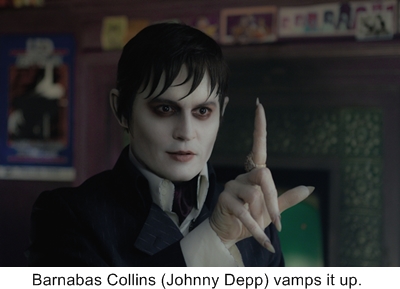
What ails Tim Burton’s Dark Shadows reboot can be summed up in three words: Jonny Lee Miller. Not that there’s anything wrong with him. He is a fine actor let down by movie in which his character Roger Collins – a sleazebag descendent of vampire Barnabas Collins (Johnny Depp) – is so thin that he’s practically translucent. There’s no real point to the character or to casting a recognizable name to play him. There are many more missteps in this uninspired horror comedy, but the misuse of Miller is symbolic of the whole sorry enterprise. This eighth collaboration between Burton and Depp ought to be grounds for their divorce. At this point, they are only bringing out the worst in each other.

Unlike the recent 21 Jump Street – in which Depp shines in a cameo role – that simply took the premise of the original TV series of cops masquerading as high school kids and spun it into a completely new story, Dark Shadows hews closer in some aspects to the Gothic TV soap opera that inspired it. Freed from his coffin after 200 years, Barnabas returns to his Maine estate Collinwood and discovers that his once powerful family has fallen into such a state that they cannot even afford the upkeep on the mansion. The town, Collinsport, might still bear the family name, but it is Angelique Bouchard (Eva Green), the witch who cursed the family in the first place, who rules it.

Replacing the melodrama of the original series is weak comedy. The story is credited to two writers, frequent Burton collaborator John August (Big Fish, Corpse Bride, Charlie and the Chocolate Factory, as well as the upcoming Frankenweenie) and Seth Grahame-Smith (who also wrote the screenplay) and it’s an incoherent mess that appears to take a checklist approach to the supernatural elements of vampire, witch, ghost and werewolf. The tale is set in the 1970s, apparently for the sole reason of mining weak jokes from the 18th-century vampire’s fraught interactions with lava lamps, Alice Cooper, The Carpenters and Roger’s double-knit polyester leisure suits.

Talented actors like Miller, Michelle Pfeiffer as lady of the manor Victoria Collins Stoddard, Chloe Grace Moretz as Victoria’s surly daughter Carolyn, and Burton’s partner Helena Bonham Carter as the Collins’ drunken live-in psychiatrist Dr. Julia Hoffman are on hand to decorate the scenery, but this is Depp’s show. Once again, he’s that guy, the willful eccentric, the lovable rapscallion ever ready with a quip, and catnip for the ladies, this time despite Barnabas’ deathly pallor, ridiculous haircut and claws so lethal looking it seems apparent that the good-natured bloodsucker spends a lot of his free time sharpening them on the lid of his coffin. Barnabas is less a character than a cartoon and in Depp’s universe, only too familiar. Depp has become his own stereotype, self-consciously odd and overly broad. It’s a lazy abuse of genuine talent and it stopped being cute at least three Pirates of the Caribbeans ago.

Perhaps what is most shocking about Dark Shadows is how little imagination seems to have gone into it. At his worst, Burton’s films have always at least offered dazzle. While at times that means the movies seem more art directed than directed, they’ve also been gorgeous eye candy. Dark Shadows is downright dowdy. It’s a sad thing when the most memorable image in a Tim Burton film is Bonham Carter’s red wig.

It’s been twenty-two years since Burton and Depp first collaborated on Edward Scissorhands, a film with overflowing with visual panache and just as much heart. Dark Shadows has neither. Perhaps a vampire had at it. The movie has certainly been sucked dry of any reason for being. – Pam Grady

Share this:

  • Share on Facebook (Opens in new window) Facebook
  • Share on X (Opens in new window) X
  • Email a link to a friend (Opens in new window) Email
  • Print (Opens in new window) Print
  • Share on LinkedIn (Opens in new window) LinkedIn
  • Share on Tumblr (Opens in new window) Tumblr
  • Share on Reddit (Opens in new window) Reddit
  • Share on Pinterest (Opens in new window) Pinterest
Like Loading...
← Older posts
Newer posts →

Categories

  • Interviews
  • News
  • Reviews
  • Short Takes
  • Uncategorized

Recent Posts

  • A Stamp of Approval
  • Life is messy & so is ‘Megalopolis’
  • A star discovers too late there are worse things than aging in the black comic body horror ‘The Substance’
  • A young teen nurses a crush when he finds himself among ‘Big Boys’
  • The stunt man becomes the star as Ryan Gosling becomes THE FALL GUY

Archives

Blog at WordPress.com.

  • Subscribe Subscribed
    • Cinezine Kane
    • Join 48 other subscribers
    • Already have a WordPress.com account? Log in now.
    • Cinezine Kane
    • Subscribe Subscribed
    • Sign up
    • Log in
    • Report this content
    • View site in Reader
    • Manage subscriptions
    • Collapse this bar
 

Loading Comments...
 

    %d