The time Robert Chartoff saved John Boorman’s bacon

Tags

, , , , ,

point blankProducer Robert Chartoff passed away last Wednesday, June 10, and left quite a legacy, nearly 40 films, a list that includes They Shoot Horses, Don’t They?, the Charles Bronson thriller The Mechanic, The Gambler (both 1974 and 2014 versions), Rocky, Raging Bull, and The Right Stuff. His first credit was on John Boorman’s classic revenge neo-noir Point Blank. It was the start of a lifelong friendship. The pair collaborated two more times on the director’s 1970 comedy drama Leo the Last and his 2004 drama In My Country.

Boorman also dedicated his last film, the recent Queen and Country, to his old pal. It wasn’t purely an act of sentiment, but an acknowledgement of Chartoff’s importance as a friend and collaborator, as well as a thank you. Without an act of kindness and generosity on Chartoff’s part, Queen and Country might not exist.

The subject came up during an interview with Boorman for a piece that ran in the San Francisco Chronicle. Why the dedication? Why now, nearly 50 years since their first collaboration?

“Bob’s been a dear friend for 40 years and more,” Boorman said. “We see each regularly. We talk on the phone at least once a week. I’m very devoted to him.

“When I was trying to make this film, some of the money fell out at the last moment, about a week before we were supposed to start shooting. Bob asked me how I was doing and I said, ‘Oh, I’m a bit depressed. The money’s fallen out.’ He said, ‘How much?’ And I told him. The next day he put that money in my account. He saved the film. I’m glad to say that he’s got it back from Fox picture. He just sent it. He didn’t ask for a contract or anything. The money just appeared in my account.”

Condolences to Mr. Boorman on the loss of his friend. –Pam Grady

Trailer: THE STANFORD PRISON EXPERIMENT promises unexpected results

Tags

, , , , , , , ,

One of the standouts from this year’s Sundance Film Festival, where it won the Alfred P. Sloane Feature Film Prize and the Waldo Salt Screenwriting Award is Kyle Patrick Alvarez’s The Stanford Prison Experiment, a riveting drama based on a real-life psychological experiment. Twenty-four young men are assigned to be either prisoners or guards in a pretend jail on the Stanford University campus where play-acting and reality quickly begin to blur. Billy Crudup is the ambitious professor who designed the experiment, starring alongside a kind of supergroup of up-and-coming talent that includes Ezra Miller, Michael Angarano, Tye Sheridan, James Frecheville, Thomas Mann, Moises Arias and Chris Sheffield.

Intriguing TRUE DETECTIVE, SEASON 2 teaser

Tags

, ,

The best of the teasers and trailers for HBO’s True Detective, Season 2. Colin Farrell welcomes judgement. In two weeks, when the new season begins, it will be rendered.

5 Questions with INSIDIOUS: CHAPTER 3’s Hayley Kiyoko

Tags

, , ,

cyb102ravenbHayley Kiyoko is having a busy 2015. In February, the 24-year-old actor and singer/musician released an EP, This Side of Paradise, in February. In October, she’ll be seen as Aja in Jem and the Holograms, a live-action adaptation of a beloved 1980s cartoon series. She also plays a former black-hat hacker turned hacker for the FBI on the CBS series CSI: Cyber, starring opposite Oscar winner Patricia Arquette. Currently, she can be seen on movie screens as the best friend of a teenager stalked by demons in Insidious: Chapter 3. It was that horror thriller that brought her to San Francisco along with the “Into the Further 4D Experience,” a virtual reality/oculus rift haunted house installed on the grounds of a Mission district high school for Carnival weekend.

Q: How did the Insidious 3 script strike you when you first read it?

Hayley Kiyoko: I had to skip through a lot of it, ‘cause it was so scary. I definitely had to read it during the day. You can’t read those kinds of scripts at night. You end up reading them at night. You’re lying in bed and you’re like, ‘Are you kidding me? Why did I just read that? I’m about to go to bed. Now I’m going to have nightmares.’

Q: You’re a musician as well an actor. Which came first?

HK: Music was always the first thing, but music, as anyone knows, is such a long journey. You’re constantly trying to find your sound sonically, and so now I’m finally where I want to be, as well as now the acting thing is blowing up. It’s really cool. They’re kind of surfacing together.

I was a drummer since I was little, so I’m very into rhythm. I’m doing a tour on the East Coast this summer, which will be really fun. I love playing music. I’m always doing that when I’m not acting.

Q: When did you know that you wanted to do both?

HK: I never planned on being an actress. When I was little, I planned on being a performer, whatever that was, whether it was a dancer or a drummer or a singer. I knew I wanted to perform. The acting thing happened through music. I would do commercials playing guitar, doing music stuff, and then it just evolved and I started building my resume. Then I took a shot in the dark and got a great offer to do a movie, Scooby-Doo, way back when. That started the bug of loving to act. It was so different and it was such a challenge. I’d done musical theater when I was younger and stuff. It’s such a different way of performing and exuding that artistic expression from music.

Q: You’re also a regular on CSI: Cyber.

HK: I’ve never really had such a steady job as a network show before, so I’m looking forward to the challenge. I’m actually kind of nervous. It’s just such a long thing, that I’m very excited. And my character is fun. And I’m working with a Golden Globe/Oscar winner, that’s kind of cool. That’s a plus.

Q: You’re Aja in this fall’s Jem and the Holograms movie. Can you tell me about it?

HK: It’s crazy hair and makeup and wardrobe. It’s not a remake of the cartoon. It’s definitely just inspired by the cartoon and placed in a modern time. It’s going to be great for the new Jem fans. It’s really geared toward the new generation, but I think old Jem fans will really enjoy it. The trailer’s out and they’re all going, ‘It doesn’t have this and this and this.’ Well, you’re going to have to see the movie. Don’t be too scared. Go check it out.

Portraits of the Artist: LOVE & MERCY’s dazzling evocation of a troubled life

Tags

, , , , , , , ,

LM_00304.CR2

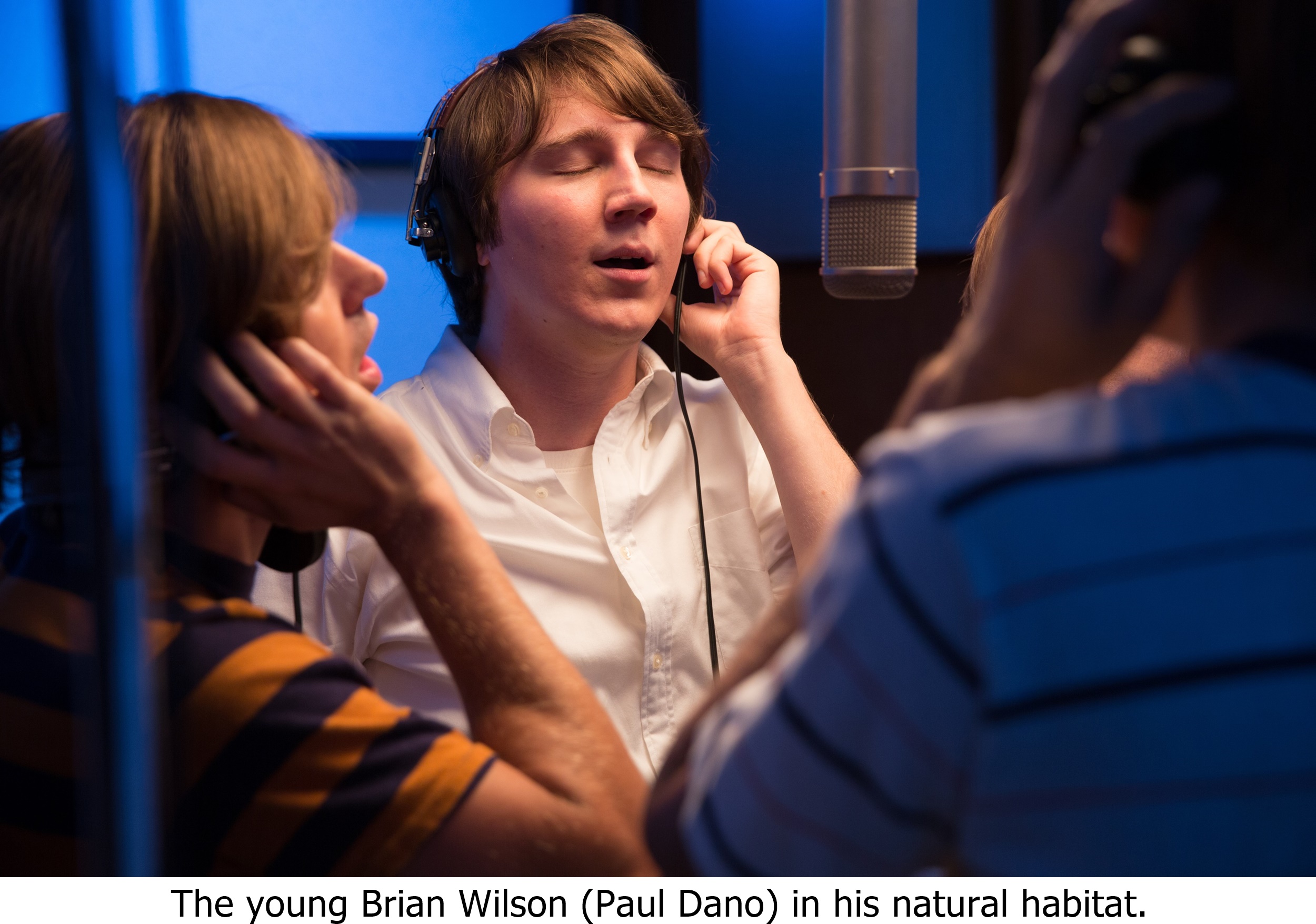
There are moments of transcendence in Love & Mercy, Bill Pohlad’s sensational depiction of two discrete chapters in Beach Boy Brian Wilson’s life. When a 1960s era Wilson (Paul Dano) is in the studio recording first Pet Sounds and then Smile, collaborating with legendary studio band The Wrecking Crew and transforming the sounds he can hear in his head into music, his joy is palpable. That makes all the more tragic scenes of a 20 years older Brian—now played by John Cusack—a shambling wreck living in terror of Dr. Eugene Landy (Paul Giamatti), the psychiatrist who controls him. As these two threads weave in and out of the drama, two portraits of Wilson emerge of a young man at the height of his creative powers able to keep the darkness at bay long enough to produce some of a singular decade’s most brilliant music and of an older man practically a walking ghost who finds a foothold in life through the intervention of a wise woman. Love & Mercy is one of the best films of the year.

This is longtime producer Pohlad’s (Into the Wild, 12 Years a Slave) only second directing job in nearly 25 years and with a brilliant assist from screenwriter Oren Moverman, he delivers a remarkably assured feature. In a way, the two sides of Love & Mercy are almost like bookends. The younger Brian’s slide toward mental illness is most obvious when he is home with his family and the other Beach Boys. His house high in LA’s hills is idyllic, but his discomfort in his own skin is apparent at the best of times. At the worst, the glimmers of a bleak near future are only too apparent. He’s stopped touring with the band by now, which can be taken as a sign, but then when he’s in the studio collaborating with the best session musicians in the business, all of that falls away. Wilson’s genius comes to the forefront and so does the happiness that eludes him in everyday life.

By the time Melinda Ledbetter (Elizabeth Banks) meets Brian in the 1980s in the Cadillac dealership where she works, the satisfaction that music gave him has long since evaporated. Landy has separated Brian from his family and his band. The doctor controls every aspect of his patient’s (and meal ticket’s) life, even arranging for chaperones when Brian starts dating Melinda. Medicated out of his gourd, Brian is no shape to protest, but as Love & Mercy morphs into a romantic drama, he has found a fierce advocate in Melinda.

The intertwining of the two parts of Wilson’s story is flawless. If the 1960s Brian’s story has more energy, well, it is the tale of a younger man and it extracts that much more oomph from all of the recording scenes between both Brian and The Wrecking Crew and Brian and the rest of The Beach Boys. The older Brian is slower and a lot sadder with a vulnerability that tugs at Melinda’s heart. Dano and Cusack look nothing alike, but nevertheless are convincing playing the same person. The two Brians possess the same sweetness. The two actors deliver among the finest performances of their careers and so does Banks.

Beach Boys fans will lap up Love & Mercy, and the film certainly adds to the mythology surrounding some of their most iconic recordings. But while the music features heavily in the soundtrack, it is not essential to be familiar with it or even necessarily like it. The drama is about the man, not his art. Love & Mercy delivers what all those old VH1 shows used to promise. It really does get behind the music. –Pam Grady

Review: A not so bright TOMORROWLAND

Tags

, , , , , , , ,

Tomorrowland

“Tomorrowland and Tomorrowland and Tomorrowland…It is a tale told by an imagineer, full of sound and fury, signifying nothing.” Sorry, William Shakespeare, couldn’t resist the appropriation. Brad Bird is an enormously talented filmmaker as he proved with The Iron Giant, The Incredibles, Ratatouille, and even Mission Impossible: Ghost Protocol. But his gifts fail him with his latest, a libertarian fantasy of a better world that only the best and the brightest can access and where they will be free to perfect the future. The problem isn’t that Tomorrowland is a libertarian fantasy—although that is problematic—it is that there is precious little wonder to be had in a silly saga inspired by the Disneyland attraction in which a teenage girl’s optimism is the one thing that might prevent apocalypse.

Britt Robertson (Under the Dome, Cake) has the thankless task of playing the gee-whiz kid herself, Casey, the daughter of a NASA engineer, who spends most of the movie in constant amazement, her eyes so wide it’s a miracle that her eyeballs don’t pop out. Counterbalancing Casey’s sunny disposition is sour Frank Walker (a gruff George Clooney), one-time boy genius turned embittered recluse. Athena (Raffey Cassidy), an old friend of Frank’s, puts them together. Casey’s had a glimpse of Tomorrowland and is eager to visit. Frank spent part of his childhood there, but his sense of wonder is long gone. Athena knows the sands of time are running out for the world and senses that Casey is the key to reversing the situation—but only if she and Frank can make it to Tomorrowland.

Naturally, there are forces determined to keep Casey and Frank from making their way to this eden. Nix (Hugh Laurie), who runs things in this sleek, futuristic world, doesn’t even want the ne plus ultra of humanity darkening Tomorrowland’s doors, since even the elite aren’t immune to humanity’s self-destructive pathologies. Not that he’s one talk, based on how he defends his realm. For a Disney movie, there are a lot of explosions.

Most dispiriting of all is Tomorrowland itself. While Casey insists that the place is “amazing,” bits of it resemble a well-appointed airport, parts of it evoke an oil refinery, and even the sections of it that are genuinely spectacular are still a little antiseptic. It’s a museum world, not a living one. The film’s recreation of the 1964 World’s Fair and vision of the Eiffel Tower with a couple of special additions are much more awe-inspiring than this utopian world. And it’s not nearly as amusing as the junk shop Casey visits presided over by Ursula (Kathryn Hugo) and Hugo (Keegan-Michael Key)—the two best reasons to see the film, hilarious in their cameo performances—two more characters obsessed with Tomorrowland. After all the trouble, Casey and Frank take to get to the place, it is a letdown. Kind of like the movie itself.—Pam Grady

Much too giddy about MINIONS

Tags

,

The best part of the Despicable Me movies—by far—were the banana-colored, gibberish-spouting minions. So it was only a matter of time until they got their own movie. Will all minions, all the time be too much of a good thing? We’ll all find out when Minions opens on July 10. The trailer has cameos by Dracula, Queen Elizabeth II, and a corgi and it’s hilarious. So far, so good. —Pam Grady

Ewe-phoria: SHAUN THE SHEEP MOVIE gets US release date

Tags

, , ,


Aardman Animations’ little sheep’s prank leads to a grand adventure in one of the most purely delightful films of the year from the folks behind Wallace & Gromit and The Pirates! Band of Misfits. The whole flock, the farmer, and his dog all end up in the Big City where animal control and fancy hair salons await. American distributor Lionsgate has set the US release date: August 7, wide. Mark your calendars. Bonus points if you use one of those cute little lamb stickers. –Pam Grady


Review: Journalist becomes part of the TRUE STORY

Tags

, , , ,

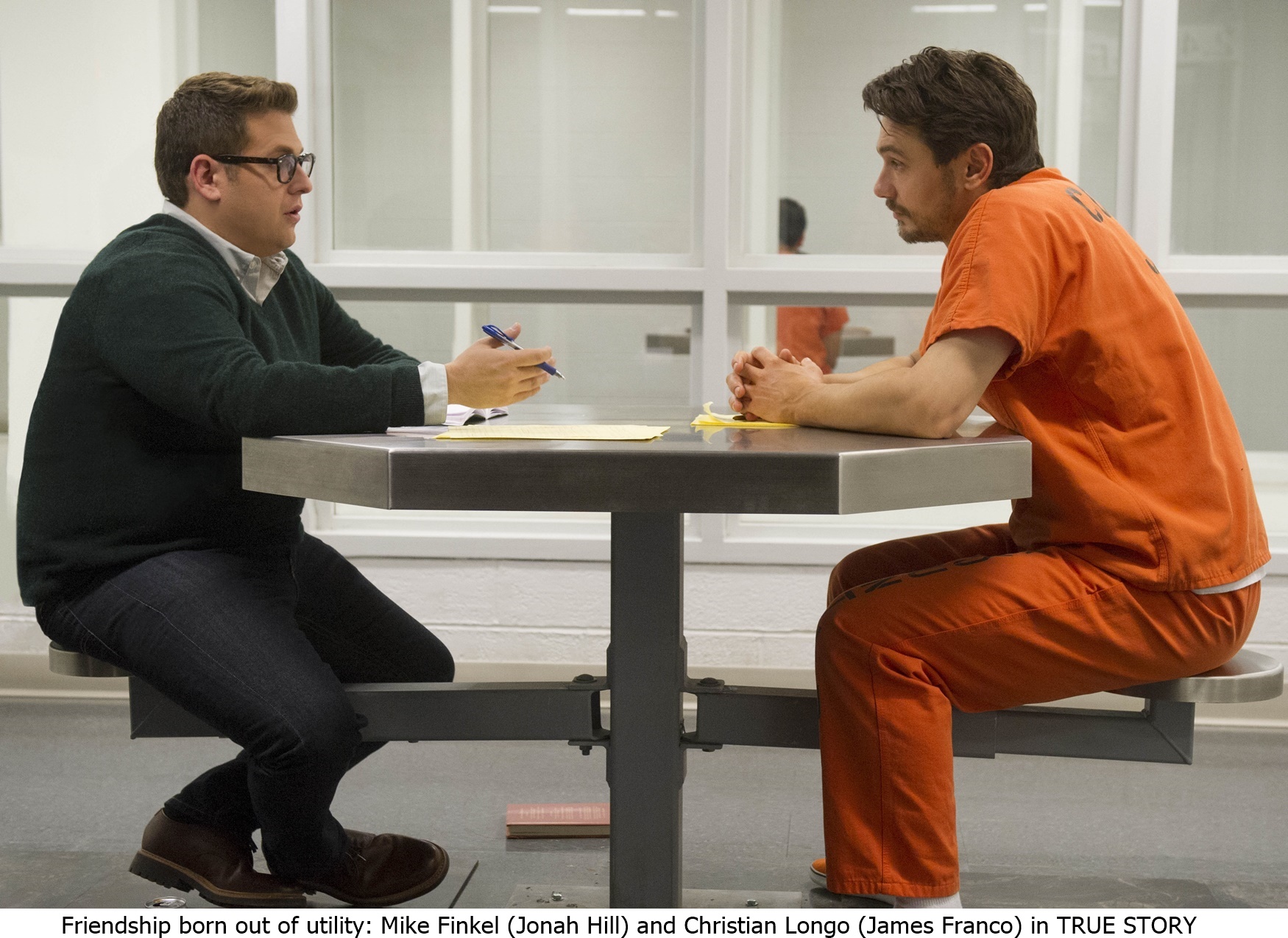
true storyIf nothing else, True Story reminds us that when he is not preciously playing at being a modern-day renaissance man, James Franco is one of the finest actors of his generation. Playing family annihilator Christian Longo, an Oregon man who killed his wife and three children, in Rupert Goold’s adaptation of journalist Michael Finkel’s memoir to chilling effect, Franco’s performance is his best since 127 Hours and the one compelling reason to see this drama that remains too firmly in Finkel’s corner to tell an effective story.

A New York Times reporter, Finkel (Jonah Hill) thinks he’s headed for a Pulitzer Prize with his latest feature, a Times magazine cover story on exploited boys in Africa. Instead, when his editors find out that he conflated characters and otherwise “improved” his story in ways that cross over into fiction, he’s fired, making him virtually unemployable as a journalist anywhere else. Retreating to his girlfriend Jill’s (Felicity Jones) Montana home to lick his wounds, the first ray of light in his new life is a phone call asking him comment on the Longo story. After his crimes, Longo lit out for Mexico where he claimed to be the NYT reporter until his capture. Intrigued, Finkel arranges to visit the alleged killer. A weird friendship is born. Finkel sees that there is a book to be gotten out of their meetings that might restore his reputation. Longo, too, realizes that there are things to be gained from continuing to see Finkel. It is a relationship of mutual utility.

Certainly, there is charm to Longo as Franco plays him, but with his dead eyes, evident narcissism and unlikely explanations for what happened to his family, the police, the prosecutors and even Jill see right through him. But not Finkel, who may think he’s about to write the next In Cold Blood, but for too long buys into Longo’s unlikely explanations. Is he fooled by Longo’s flattery (Longo claims to be a fan and asks Finkel to help him become a better writer)? Or is he fooling himself in his focus to fulfill the terms of his book deal?

Hill’s baby face, large blue eyes behind thick glasses, and Finkel’s gentle (if arrogant) demeanor suggest someone who could be duped, but is he really? The real Finkel has suggested that he became too involved in the story, but would that really make him buy into Longo’s version of events as much as he does? True Story’s major flaw is that while Longo comes into sharp focus, Finkel never does. That’s a limitation perhaps in adapting FInkel’s book, but it would have made for a sharper, richer drama if Goold and his co-screenwriter David Kajganich had thought more about what motivated Finkel. The man fired by The New York Times for writing fiction titled his comeback True Story, but is it? Is this a story of one man’s heinous crimes leading to another man’s redemption or is it a tale of two unreliable narrators seeing in each other the means to an end? –Pam Grady


Review: Alex Garland’s Turing test EX MACHINA

Tags

, , , ,

Caleb (Domhnall Gleeson), a coder at BlueBook (think Google) is enjoying quite the heady week. Invited to BlueBoook founder Nathan’s (Oscar Isaac) remote mountain home, he has been tasked with performing a Turing test on the boss’s pride and joy, Ava (Alicia Vikander), the latest iteration in ongoing experiments in artificial intelligence. But having now interacted several times with the comely robot with a woman’s beautiful face, voice and shapely, metallic body, he wants to know why Nathan made Ava humanoid at all. Artificial intelligence doesn’t need a body to exist, after all. With that question, Caleb gets to the one of the flaws in writer Alex Garland’s (The Beach, 28 Days Later) tense, creepy directorial debut Ex Machina. It’s the wrong question, though. The correct question is why would a man clearly interested in building himself a high-tech blow-up doll bother with granting it intelligence at all?

Isaac suppresses his considerable charm to play the poster child of a tech overlord divorced from humanity. Nathan’s chilly, impersonal home, filled with surveillance equipment that lets him watch everything that goes on inside his house, reflects the personality of a man who knows how to say the right things (social cues no doubt gleaned from his endless spying on BlueBook’s users) to appear that he’s just a regular guy who just happens to be a billionaire genius—“appear” being the operative word. As Caleb’s week with him wears on, it’s is increasingly clear that Nathan has little use for the world the rest of humanity inhabits and for all his assertions that it is great to converse with an actual human being for a change, his contempt for Caleb is never far from the service. It is no wonder that Caleb becomes confused as he tests Ava: In a wig and with clothes to mask her robotic parts, she seems far more human than his host.

Stephen Hawking is among those that have expressed reservations about where the development of AI might lead. That question simmers beneath Ex Machina’s sleek surface as Caleb and Ava interact during the “tests.” But despite stunning visual effects that transform Vikander into a mechanical being, the vibe is less sci-fi than neo-noir. Gleeson is brilliant as a man seemingly in way over his head. But is he really the classic chump he appears to be, and if so, who is playing him: Nathan, Ava or both? And why?

The whys are what is problematic about Ex Machina. Nathan’s explanation for why he wanted Caleb to visit and perform the Turing test rings hollow. And his experiments in artificial intelligence don’t compute not only in the form they take with his female models but also in the fact that a guy with this man’s ego is not going to risk not being the smartest being in the room.

Looking past that, the film is a nifty thriller. The remote location, the sterile house where the rooms can only be accessed by key cards (and not all cards work for all rooms), the wild card that is Ava, and the growing distrust between Nathan and Caleb keep the tension humming even in the quietest scenes. Garland delivers the goods with this stylish and suspenseful first feature. –Pam Grady