• About

Cinezine Kane

Cinezine Kane

Category Archives: Reviews

Review: A very HAPPY CHRISTMAS

31 Thursday Jul 2014

Posted by cinepam in Reviews

≈ Leave a comment

Tags

Anna Kendrick, Happy Christmas, Joe Swanberg, Lena Dunham, Mark Webber, Melanie Lynskey

Happy christmas

Chaos arrives in a petite package in Happy Christmas, the latest improvisational dramedy from indie auteur Joe Swanberg that is currently in theaters and VOD. The filmmaker himself stars in one of his finest movies to date as a man not unlike himself, a married father and movie director, who welcomes his little sister into his home after her latest breakup, her Yuletide visit creating a stir far beyond merely breaking up the household routine. Populated by a nimble cast, this fresh, funny look at family life is a charmer.

Jenny (Anna Kendrick) is a mess when she arrives on Jeff (Swanberg) and Kelly’s (Melanie Lynskey) Chicago doorstep, as she embarrasses best friend Carson (Lena Dunham) with her behavior at a party her first night in town, blows off a promise to babysit Jeff and Kelly’s toddler son Jude (Jude Swanberg, Joe’s own ultra-adorable child), and tries to rebound into a new relationship with amiable pot dealer/babysitter Kevin (Mark Webber). But it’s Jenny’s presence that also spurs Kelly, a novelist turned stay-at-home mom, to realize that it’s time to reclaim that part of her life again.

Happy Christmas makes astute observations about how families works, both on a sibling level and in couples. Jeff clearly adores his baby sister and has probably been acting as her protector since they were children. But where he once might have protected her from bullies on the playground, he now offers a soft landing for one of life’s emotional blows. That may not be the best thing for her, since she takes it as tacit permission to act out. At the same time, as Jeff and Kelly find themselves in the odd position of feeling almost like Jenny’s parents instead of a brother and sister-in-law, it shakes them out of a complacency that has crept up without their awareness.

Swanberg shot Happy Christmas in his own home, including in his fabulous tiki bar basement, apparently a remnant from the original homeowner. That just adds another layer of realism to a film that plays a lot like life, only with better dialogue.—Pam Grady

San Francisco Bay Area residents: Joe Swanberg is participating in a Skype Q&A after the 7pm screening at San Francisco’s Roxie Theater on Friday, August 1. For more info, visit http://www.roxie.com.

Share this:

  • Share on Facebook (Opens in new window) Facebook
  • Share on X (Opens in new window) X
  • Email a link to a friend (Opens in new window) Email
  • Print (Opens in new window) Print
  • Share on LinkedIn (Opens in new window) LinkedIn
  • Share on Tumblr (Opens in new window) Tumblr
  • Share on Reddit (Opens in new window) Reddit
  • Share on Pinterest (Opens in new window) Pinterest
Like Loading...

I WAKE UP DREAMING 2014: Noir returns to the Roxie

15 Thursday May 2014

Posted by cinepam in Reviews

≈ Leave a comment

Tags

Elliot Lavine, film noir, I Wake Up Dreaming 2014, Roxie Theater

SONY DSC

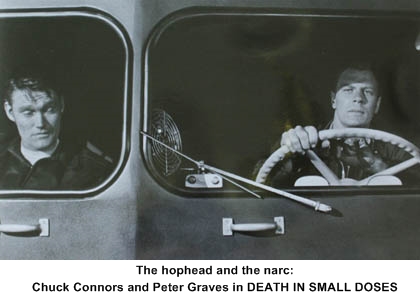
A decade before all those tapes started self-destructing when he played American spy Jim Phelps in Mission:Impossible, Peter Graves played a different kind of secret agent in the 1957 crime thriller Death in Small Doses. One of the 30 film noirs that Elliot Lavine is screening at San Francisco’s Roxie Theater as part of I Wake Up Dreaming 2014, Phelps is Tom Kaylor, an FDA agent sent undercover as a big-rig truck driver to get the scoop on the truckers’ “co-pilots,” amphetamines, in the wake of yet another fiery crash chalked up to demon Benzedrine. Kaylor’s driving partner Wally Morse (Roy Engel) warns him not to try the stuff. His boarding house roommate and fellow rig jockey Mink Reynolds (ex-major league baseball and NFL star and future Rifleman Chuck Connors) can’t get enough of the stuff, a jittery hipster who can’t sit still. Boarding house landlady Val Owns (Mala Powers) Kaylor sees as a victim of Benny, the widow of the dead trucker that inspired the investigation. There is big money to be made in pushing pills and before too long murder enters the picture.

All of the films in I Wake Up Dreaming 2014 are part of the Warner Archive, culled from the pre-code 1932 to 1965 when the production code was on its way out, and comprised of titles from Warner Bros., RKO, Monogram, MGM, and Allied Artists. Death in Small Doses is only one of the highlights, a nasty, atmospheric little thriller with not an ounce of fat on its lean 79-minute frame. Connors is a standout as the pixelated hophead Mink, scary and charismatic, in a role a world away from Lucas McCain, the quiet, upstanding sharpshooter that would come to define the actor during his five-year run on The Rifleman.

If Death in Small Doses is indicative of anything in I Wake Up Dreaming 2014, it is of the slate’s pure entertainment value. These movies, a mix of rarities and classics, are fun to watch and even more fun to watch on the big screen in a theater full of people. Among the highlights in the 2014 roster are:

The Stranger on the Third Floor (1940)—The opening night film along with 1947’s The Unsuspected, this offbeat B-thriller is thought to be America’s first noir. As a reporter (John McGuire) finds himself on the fast track to the electric chair for a murder he didn’t commit, it is the police and the American judicial system that are revealed as bigger heavies than the killer—a sentiment that won’t be lost on 21st century film goers. Peter Lorre and Elisha Cook Jr. costar.

When Strangers Marry (1944)—Future horror maestro William Castle helms this taut romantic thriller starring Kim Hunter as a woman who impulsively marries Dean Jagger, a man she just met. When she travels to New York to meet him and he fails to turns up, but Robert Mitchum, a charming old flame, appears, she wonders if she made a mistake. Her uneasiness turns to fear when she discovers that Jagger is suspected of murder. But did he really do it? This sleek suspense yarn keeps the audience guessing and gets a boost of adrenalin from the smoldering Mitchum.

The Locket (1946)—Mitchum stars as well in this Rashomon-like noir as one of Laraine Day’s past loves. Gene Raymond is about to marry her when a former husband (and her one-time psychiatrist) Brian Aherne turns up to warn the groom away from his troubled bride, telling a tale in flashbacks of kleptomania and murder.

Split Second (1953)—One-time Philip Marlowe Dick Powell makes his directing debut with this tense slice of nuclear paranoia. Stephen McNally is the leader of a group of escaped prisoners who hide away with a group of hostages in a Nevada ghost town. One of the cons is wounded, but that’s not the worst of it: the place is an A-bomb test site that is about to be vaporized. For the hostages, it becomes a desperate race not just to escape McNally and his men, but also the coming explosion. This tight, nail-biting relic of the Atomic Age costars Jan Sterling, Alexis Smith, Arthur Hunnicutt, and Richard Egan.

The Rise and Fall of Legs Diamond (1960)—Western auteur Budd Boetticher detours into noir with this thrilling and stylish biopic of the Depression era gangster. Ray Danton is Diamond, hoofer turned hood, who begins as Arnold Rothstein’s (Robert Lowery) bodyguard and rises to the top of the mob food chain—but not for long. Gorgeously lensed by legendary cinematographer Lucien Ballard, this compelling period drama also stars the great Warren Oates as Danton’s consumptive brother Eddie.

Miracles for Sale (1939)—Robert Young stars as an ex-magician, manufacturer of magicians’ tricks and a debunker of the supernatural in Freaks director Tod Browning’s final film. When he’s called upon to protect Florence Rice, a young woman in peril, Young is pulled into a murder mystery involving mediums and illusionists. Full of magic tricks and comic banter, this lighthearted proto-noir also stars William Demarest as a crotchety police detective and Frank Craven as Young’s visiting dad.

Brainstorm (1965)—Actor William Conrad steps behind the camera to direct this remarkable late noir starring Jeffrey Hunter as a scientist who plots to murder his lover Anne Francis’ husband Dana Andrews, believing that his history of mental illness will help him elude punishment. Viveca Lindfors costars as Hunter’s psychiatrist and the one person who knows for sure whether or not he is really mad.—Pam Grady

I Wake Up Dreaming 2014 runs Friday, May 16, through Sunday, May 25, at the Roxie Theater, 3117 16th St., San Francisco. For tickets and further information, visit roxie.com.
Share this:

  • Share on Facebook (Opens in new window) Facebook
  • Share on X (Opens in new window) X
  • Email a link to a friend (Opens in new window) Email
  • Print (Opens in new window) Print
  • Share on LinkedIn (Opens in new window) LinkedIn
  • Share on Tumblr (Opens in new window) Tumblr
  • Share on Reddit (Opens in new window) Reddit
  • Share on Pinterest (Opens in new window) Pinterest
Like Loading...

A Purr-fect Day: The First Annual San Francisco Intergalactic Feline Film and Video Festival For Humans

12 Monday May 2014

Posted by cinepam in Reviews

≈ 1 Comment

Tags

Bonnaroo Music and Arts Festival, Cat Agent, First Annual San Francisco Intergalactic Feline Film and Video Festival For Humans, Jay Wertzler, Kent Osborne, Lil BUB, Mike Keegan, Mike Shoun, Owlbert, Roxie Theater

Lil Bub1

So this is what Lou Reed was singing about. SFIAFFAVFFH1 is but a memory, along with a handful of photos, an All Cat-cess pass badge, and a couple of balls of yarn. The program that started as a “kitty porn” joke on the Roxie Theater calendar morphed into something much grander when founders Mike Keegan and Jay Wertzler decided to see if they could stage a full two-week film festival with all its moving parts—opening, closing, centerpiece, sidebar, awards, red carpet arrivals, celebrities (in this case, celebri-cats), world purr-mieres, etc.—in 12 hours. What the pair came up with was pure catnip, something the cat lover or the movie lover or the cat-worshiping movie lover could really sink her claws into.

Held Caturday, May 10, SFIAFFAVFFH1 began with the red carpet arrival of internet feline superstar Lil BUB—the recipient of the festival’s First Annual Lil BUB Award for Outstanding Achievement in CAT–and her human Mike Bridavsky. In between that and a closing night that included an appearance by the video collective Everything Is Terrible and—in keeping with the “intergalactic” portion of the festival—a screening of the 1978 Disney comedy The Cat from Outer Space was a cata-copia overflowing with the feline cinema of one’s dreams. Cats rule the internet 24/7. On Caturday, they sunk their claws into the big screen.

SAMSUNG CAMERA PICTURES

Jason Willis’ 2012 faux (fur?) documentary short Catnip: Egress to Oblivion​?, a hilarious send-up of 1960s era educational videos, a stylish animated Three Blind Mice, multiple episodes Kent Osborne’s cartoon series Cat Agent (along with a Skype Q&A with Osborne), and a section entitled New Directors’ New Films and featuring works submitted by budding cat-eurs were among the highlights in a day full of them.

A special shout out goes to musician Mike Shoun for his evocative new score performed live to Alexander Hammid and Maya Deren’s 1944 ode to their pets, The Private Life of a Cat. Wertzler and Keegan were congenial hosts, supplemented by video segments, the highlight of which was Keegan complaining about his cat allergy, a bit that required him to handle Owlbert—the fluffy winner of the First Annual Colonel Meow In Memoriam Award for Exquisite Grooming and Style—to make the joke work. Suffering congestion for one’s art, that’s a trouper.

SAMSUNG CAMERA PICTURES

Perhaps the most impressive facet of SFIAFFAVFFH1 is that an All Cat-cess pass holder, free to come and go, chose to stay all day. This after spending two weeks at the San Francisco International Film Festival followed by a Midnites for Maniacs double bill of Speed and the 1974 original Gone in 60 Seconds. That’s a lot of movie watching and way too much sitting, but SFIAFFAVFFH1 was too much fun to leave. San Francisco cat film lovers are not the only ones to think so. Wertzler and Keegan have been invited to take a petite version of the festival to Tennessee’s Bonnaroo Music and Arts Festival. (“Our festival’s having a litter!” laughed Keegan in a conversation shortly before SFIAFFAVFFH1.)

So how will Wertzler and Keegan top themselves in 2015? On Caturday, they sought audience suggestions for what the next “first annual” festival should be. It should be obvious, shouldn’t? Hedgehogs, porcupines, and honey badgers—the cute, the chatty, and nature’s bad ass. Or maybe not. Whatever they decide, sign me for a 2015 all ___-cess pass. —Pam Grady

Share this:

  • Share on Facebook (Opens in new window) Facebook
  • Share on X (Opens in new window) X
  • Email a link to a friend (Opens in new window) Email
  • Print (Opens in new window) Print
  • Share on LinkedIn (Opens in new window) LinkedIn
  • Share on Tumblr (Opens in new window) Tumblr
  • Share on Reddit (Opens in new window) Reddit
  • Share on Pinterest (Opens in new window) Pinterest
Like Loading...

Review: LOCKE’s riveting drama on wheels

02 Friday May 2014

Posted by cinepam in Reviews

≈ Leave a comment

Tags

Andrew Scott, Locke, Ruth Wilson, Steven Knight, Tom Hardy

LockeSafety experts recommend staying off the phone while driving, even with hands-free devices, because of the distraction calls represent. Tom Hardy’s construction foreman character learns that lesson the hard way in Steven Knight’s Locke. Hardy earned a Best Actor Independent Film Award nomination and Knight won a BIFA for Best Screenplay (beating out Philomena and Le Week-end, among others), a testament to this involving drama’s power.

Hardy plays Ivan Locke, who leaves his work site the evening before the concrete is to be poured for the foundation of his latest project. It’s a massive undertaking, the pour said to be the biggest in Europe for a non-military installation and one that he has been eagerly anticipating. But he is going to miss it, just as he is going to miss watching a football match with his wife Katrina (Ruth Wilson) and sons Eddie (Tom Holland) and Sean (Bill Milner). Instead of going home, he hits the highway and the evening becomes a series of phone calls with Katrina; the kids; Gareth (Ben Daniels), his angry boss; Donal (Andrew Scott), the overwhelmed subordinate he expects to take his place during the pour; Bethan (Olivia Colman), the woman whose phone call started him on his journey; and others. When Ivan isn’t on the phone, he holds angry imaginary conversations with his late father. He never stops talking.

A longtime screenwriter, Knight, who received an Academy Award nomination for his screenplay of Stephen Frears’ Dirty Pretty Things and also penned Eastern Promises for David Cronenberg, takes risks in directing only his second feature (his debut was the Jason Statham-starring Redemption). The drama takes place entirely within the confines of Ivan’s car, with closeups of Hardy alternating with shots of the road. Hardy’s costars are all but voices coming through his Bluetooth. It is a set-up that could get old fast, but instead it is riveting, a character study on wheels of a man trying to do the right thing and failing miserably.

Adopting a crisply enunciated Welsh accent, Hardy is terrific as a man who courts personal disaster, but sees no other alternative. He is too conscientious to lie his way out of the situation, or maybe he lacks the imagination for invention. He isn’t stupid, but he is as dense as the concrete he pours. It is admirable that he is trying to do the right thing. The effect of his effort, though, is brutal. His clear conscience comes at a price and he is not the only one paying it.

The voices on the other end of the calls are so strong that it scarcely matters that people talking are never seen. Especially effective are Wilson, as Katrina’s anger grows with each phone call, and Scott. So slippery and smart as Holmes’ nemesis Moriarty on Sherlock, Scott is brilliant playing the other end of the spectrum in Locke, a simple man who is comfortable in his minor role at the construction site. The thought of filling Locke’s shoes sends him into a dazed panic. Donal is the film’s comic relief, but he is also touching, particularly in his loyalty to Ivan when it would simply his life tremendously to simply ignore Ivan’s calls and let Gareth sort it out. The strength of Knight’s writing and the performances of the voice cast are such that even the smallest parts—such as that of a drunken bureaucrat angered at being disturbed at dinner—are actual characters rather than simply disembodied voices.

Dickon Hinchcliffe’s evocative score and Haris Zambarloukos’ moody cinematography capturing the lonely allure of the road at night underline Ivan’s growing isolation. The longer he stays on the phone, the longer he stays on the road, the more distance he puts between himself and the life he has known. He is so distracted that he doesn’t notice that he is driving further and further into uncharted territory. Locke is not a big drama. This is a small, personal tragedy unfolding in real time and all the more moving because of it. —Pam Grady

For more about Locke, read Steven Knight’s SUV-driven ‘Locke’ set amid grip of technology.

Share this:

  • Share on Facebook (Opens in new window) Facebook
  • Share on X (Opens in new window) X
  • Email a link to a friend (Opens in new window) Email
  • Print (Opens in new window) Print
  • Share on LinkedIn (Opens in new window) LinkedIn
  • Share on Tumblr (Opens in new window) Tumblr
  • Share on Reddit (Opens in new window) Reddit
  • Share on Pinterest (Opens in new window) Pinterest
Like Loading...

Review: Jim Jarmusch finds true romance in ONLY LOVERS LEFT ALIVE

17 Thursday Apr 2014

Posted by cinepam in Reviews

≈ Leave a comment

Tags

Anton Yelchin, Jim Jarmusch, John Hurt, Mia Wasikowska, Only Lovers Left Alive, Tilda Swinton, Tom Hiddleston

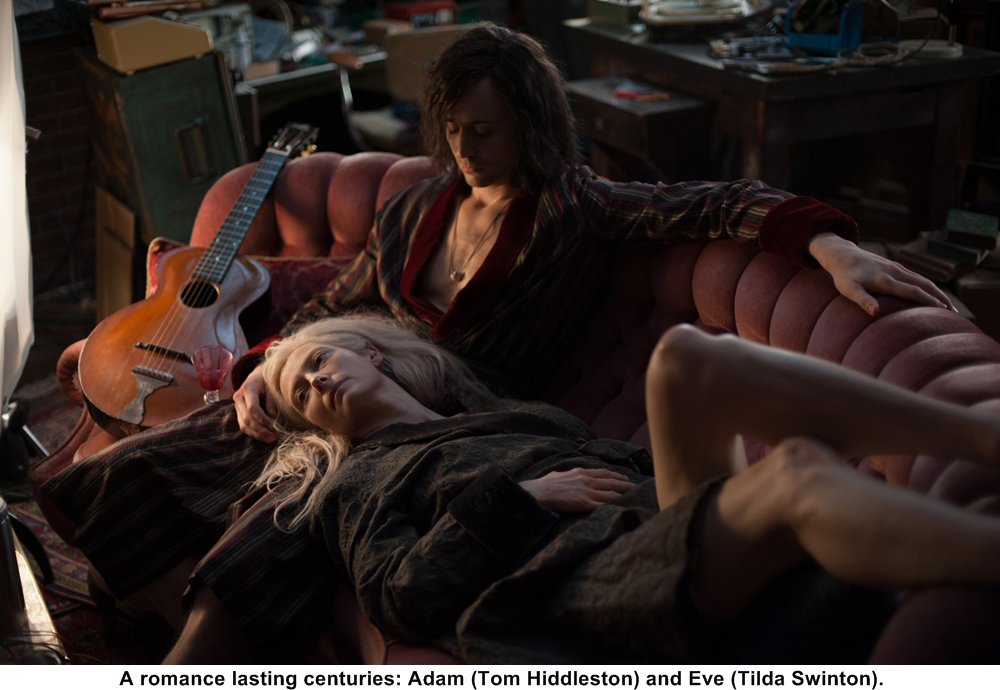
"only lovers left alive"Beneath Jim Jarmusch’s cool, hipster veneer beats the heart of a romantic and he proves it with Only Lovers Left Alive, a paean to the constancy of love wrapped in the tale of a vampire couple, soul mates for centuries. Horror nibbles at the edges for the ethereal twosome played by Tom Hiddleston and Tilda Swinton, but what resonates in this gorgeously photographed, often darkly funny drama is their unconditional devotion to one another.

Jarmusch says he took inspiration for this tale from Mark Twain’s The Diaries of Adam and Eve. Somehow from that congenial author’s fables about the biblical first humans, he glimpsed these ultimate outsiders. And while they may be bloodless, undead creatures, they also may be the warmest in the filmmaker’s universe. Adam (Tom Hiddleston) is a morose, reclusive rock musician, living among a huge vinyl record collection and a pile of vintage guitars in the ruins of Detroit. The more exuberant Eve (Tilda Swinton) resides in luxury in a beautifully appointed, book-filled home in Tangier. Though separated by geography, these opposites are as one.

Adam and Eve are also living in a dangerous time for their kind. Their food source, human blood, is no longer reliable. What runs through the zombies’ (as Adam derisively refers to mankind) veins is too often tainted. Eve has a reliable supply of the good stuff from the couple’s friend, playwright Christopher Marlowe (John Hurt). Adam’s connection is a doctor (Jeffrey Wright). But when Adam and Eve come together again in Detroit, a reunion they celebrate with a night out clubbing with Eve’s wild child sister Ava (Mia Wasikowska) and Adam’s human friend Ian (Anton Yelchin), their well-ordered lives fall apart, and along with it their connections. The couple is soon on the run and thirsty, very thirsty.

That need to feed prompts fear, but also soul searching for these creatures of the night. Is it time, at last, to reclaim their mortality? Ava calls them snobs, and they are. Scrounging for blood is at odds with the sophisticated images they present to the world. Death as an option would satisfy their vanity. Shuffling off the immortal coil together would be one last grand romantic gesture. It’s something to consider, anyway, on a long night in Tangier.

There is a lot of beauty in Only Lovers Left Alive, starting with the ravishing leads and Yorick Le Saux’s shimmering cinematography. Even Detroit’s desolation looks alluring in the film’s evocative nightscapes. More than its pretty stars and beautiful photography, it is Adam and Eve’s enduring passion that makes this Jarmusch’s most appealing film in years. The vampire trappings, the deadpan humor and the dangerous situation that threatens them are almost beside the point. One gets the feeling that if Adam and Eve’s hearts could still beat, upon seeing each other, they would beat a little faster – even after hundreds of years. –Pam Grady

Share this:

  • Share on Facebook (Opens in new window) Facebook
  • Share on X (Opens in new window) X
  • Email a link to a friend (Opens in new window) Email
  • Print (Opens in new window) Print
  • Share on LinkedIn (Opens in new window) LinkedIn
  • Share on Tumblr (Opens in new window) Tumblr
  • Share on Reddit (Opens in new window) Reddit
  • Share on Pinterest (Opens in new window) Pinterest
Like Loading...

Review: A role he was born to play: Jude Law in DOM HEMINGWAY

11 Friday Apr 2014

Posted by cinepam in Reviews

≈ Leave a comment

Tags

Dom Hemingway, Jude Law, Richard Shepard

dom hemingwayDom Hemingway begins with an uproarious monologue, an ode to the titular safecracker’s anatomy delivered with profane bravado by an actor clearly relishing his role. After nearly two decades of playing the pretty boy – Dickie Greenleaf in The Talented Mr. Ripley, Errol Flynn in The Aviator, Alfie’s incorrigible womanizer, etc. – Jude Law comes into his own as a character actor in Richard Shepard’s (The Matador, The Hunting Party) screwball Brit crime comedy delivering a performance that is a bawdy beauty to behold.

With 20 pounds added to his normally lean frame, terrible prosthetic teeth, a misshapen nose, horrible sideburns, a disco era wardrobe, and pugnacious gait, Law looks every inch what Dom Hemingway is supposed to be: a working-class criminal with flamboyant tastes and an even more extravagant personality. After serving 12 years in prison, he is eager to collect his best mate Dickie (the wonderfully deadpan Richard E. Grant) and head to France to collect money owed to him by crime boss Mr. Fontaine (Demian Bichir). He would also like to reconnect with his estranged daughter Evelyn (Emilia Clarke), who equates her father’s imprisonment with abandonment.

Standing in Dom’s way, whether it’s in his interactions with Mr. Fontaine and Evelyn or in his attempt to slide back into a life of crime, is Dom himself. He is an alcoholic with a volcanic temper and absolutely no filter. Even in the most favorable situation, he finds a way to give offense, vulgarities and insults tumbling out of his mouth with zero regard for how they will be received. To be sure, Dom is hilarious. He is one witty, vulgar and weirdly erudite guttersnipe, a kick to watch, but clearly his own worst enemy.

After spending the last several years directing TV shows, such as Criminal Minds and Girls, and making the documentary I Knew It Was You: Rediscovering John Cazale, writer/director Shepard makes an impressive return. Dom Hemingway does not rise to the level of Brit crime classics like Get Carter or Sexy Beast, but it is a pleasure to watch. Shepard’s hilarious; raunchy dialogue; Lawrence Dorman’s gaudy production design; an ’80s soundtrack; and a wonderful supporting add up to some really big fun. It is Law, though, inhabiting the soul of this goodhearted but completely bonkers not-so-master criminal that makes Dom Hemingway such a treat. This is a role he was born to play. —Pam Grady

Share this:

  • Share on Facebook (Opens in new window) Facebook
  • Share on X (Opens in new window) X
  • Email a link to a friend (Opens in new window) Email
  • Print (Opens in new window) Print
  • Share on LinkedIn (Opens in new window) LinkedIn
  • Share on Tumblr (Opens in new window) Tumblr
  • Share on Reddit (Opens in new window) Reddit
  • Share on Pinterest (Opens in new window) Pinterest
Like Loading...

The CAPTAIN (AMERICA, that is) and the CONDOR

07 Monday Apr 2014

Posted by cinepam in Reviews

≈ Leave a comment

Tags

Captain America: The Winter Soldier, Chris Evans, Robert Redford, Sydney Pollack, Three Days of the Condor

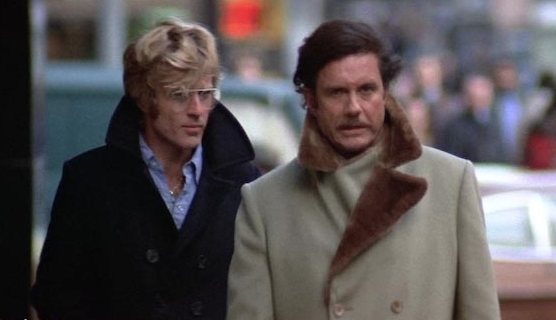
Captain-America-The-Winter-Soldier-Captain-America-and-Alexander-PiercePlus ça change, plus c’est la même chose. The more things change, the more they stay the same. Robert Redford’s very presence in the blockbuster Captain America: The Winter Soldier lends truth to that 19th-century epigram, coined by writer Jean-Baptiste Alphonse Karr. Not because that august actor has spent much time among superheroes, spandex, CGI, and larger-than-life combat. In fact, Captain America is a first in a career that is now into its sixth decade. But in taking part in this mammoth entertainment Redford inadvertently calls forth memories of one of his classic ’70s movies, Sydney Pollack’s Three Days of the Condor.

At a glance, Captain America: The Winter Soldier and Three Days of the Condor would appear to have little beyond Redford in common. The latter is a 1975 paranoid thriller, short on action but high in suspense as Redford plays Joseph Turner, a CIA member – not a spy, but a reader whose job it is to ferret out whatever intelligence can be gleaned from poring over books, newspapers, and magazines – who becomes a target after his entire section is killed while he’s at lunch. The stakes are higher in Captain America as the titular superhero Steve Rogers (Chris Evans) fights to save humanity from those who would enslave it in vicious battles that range from urban warfare to skirmishes in the sky against hordes of committed killers and one seemingly unstoppable Winter Soldier (Sebastian Stan).

Three Days of the Condor (1975)

For all the films’ surface differences, the similarities are striking. In both, the guiding principle is “Trust no one,” advice explicitly given Rogers by his boss Nick Fury (Samuel L. Jackson) and quickly understood by Turner when his attempt to come in from the cold goes awry. The CIA, for which Turner toils, has been compromised from within, and so has SHIELD, the agency that employees Rogers.

Three Days of the Condor, adapted from James Grady’s 1974 novel Six Days of the Condor, reflects the cynicism of the Watergate era. Coming out in the aftermath of WikiLeaks’ many exposés and Edward Snowden’s revelations about NSA spying, Captain America: The Winter Soldier, adapted from the Marvel comic book series, expresses this era’s distrust of institutions in a plot that ups the ante: The duplicitous faction of the CIA in Three Days of the Condor only mean to wreak havoc in part of the world, while the criminal elements in SHIELD want to take over the entire planet.

Redford’s presence ties the two films together. Joseph Turner is not the idealist that Steve Rogers is, but his honest skepticism makes him a hero for his times just as Captain America is for his. More intriguing is the part that Redford plays in Captain America, Alexander Pierce, the head of the World Security Council and a former SHIELD leader, a man as slippery as they come and a character that resembles J. Higgins (Cliff Robertson), Turner’s tricky CIA superior. Both men make a stab at projecting honesty and moral authority. Yet, it’s hard to imagine buying a used car from either one of them, let alone trusting them with your life as Rogers and Turner are asked to do. Redford’s role has changed, but the shady bosses haven’t. The more things change, the more they stay the same. —Pam Grady

Share this:

  • Share on Facebook (Opens in new window) Facebook
  • Share on X (Opens in new window) X
  • Email a link to a friend (Opens in new window) Email
  • Print (Opens in new window) Print
  • Share on LinkedIn (Opens in new window) LinkedIn
  • Share on Tumblr (Opens in new window) Tumblr
  • Share on Reddit (Opens in new window) Reddit
  • Share on Pinterest (Opens in new window) Pinterest
Like Loading...

Review: Wes Anderson evokes a lost era in the magnificent GRAND BUDAPEST HOTEL

14 Friday Mar 2014

Posted by cinepam in Reviews

≈ 1 Comment

Tags

Bill Murray, F. Murray Abraham, Jason Schwartzman, Jude Law, Ralph Fiennes, The Grand Budapest Hotel, Tilda Swinton, Tony Revolori, Wes Anderson

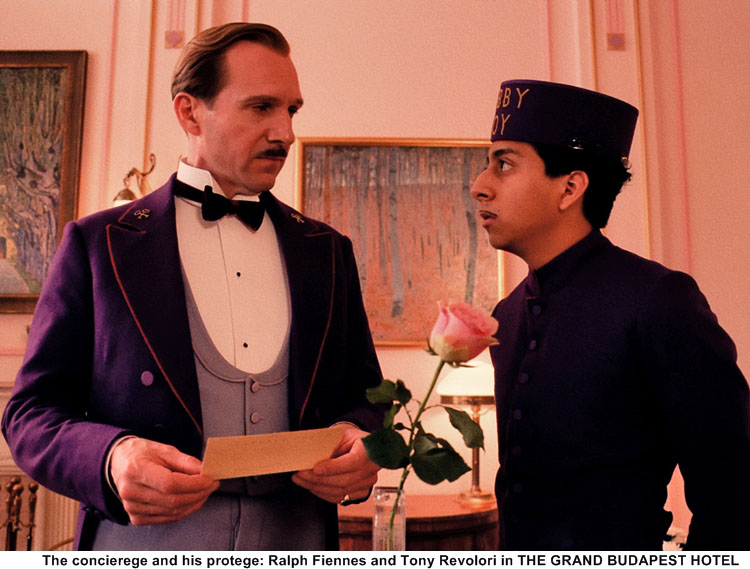
Fiennes_RevoloriPastry looms large in Wes Anderson’s The Grand Budapest Hotel, the product of Mendl’s, the most sublime bakery of all in the kingdom of Zubrowka, its treats packaged in pretty pink boxes. In a way, those baked goods stand as symbols of the whole movie: absolutely gorgeous, irresistible and completely delicious. Set in two opposing eras—the opulent years between the two world wars and the drabness of the Cold War—The Grand Budapest Hotel is Anderson’s most ambitious work to date, evident in his attention to every detail.  It is hilarious, but also a film of great heart as he once more visits the relationship between a father and a son.

Or a faux father and a son, as the case may be.  Like Bill Murray and Jason Schwartzman in Rushmore,   Grand Budapest Hotel concierge M. Gustave (Ralph Fiennes) and his new lobby boy Zero (Tony Revolori) are not related. Yet, once the older man takes the teenager under his wing, it doesn’t take long for that relationship to develop.  It seems unlikely at the outset. M. Gustave is an excellent concierge, always willing to provide extra service to his guests—particularly the elderly ladies—but he is also  vain, imperious and shallow. If he barely noticed Zero at all, it would be unsurprising. Instead, he responds to the boy’s loyalty, respect and work ethic. By the time, aged Madame D. (Tilda Swinton) dies, earning M. Gustave the enmity of her vicious son Dmitri (Adrien Brody) when she remembers the concierge in her will, M. Gustave and Zero share a solid bond. Nothing can break it, not Dmitri’s machinations, separation or even a fascist invasion.

It is the elderly Zero (F. Murray Abraham), the 1960s-era owner of the Grand Budapest—now long gone to seed—who tells the story to a curious guest, a writer (Jude Law). In the old man’s memories, his youth is almost a fairy tale. Certainly, Zubrowka resembles someplace out of a fable, its luxury exaggerated, the hotel exterior and the mountains surrounding it made of miniatures. At key points, Anderson turns to Fantastic Mr. Fox-style animation. Adam Stockhausen’s (Moonrise Kingdom) production design is exquisite. Anderson’s films are always jewels, but The Grand Budapest Hotel is the most glittering one of them all.

A huge ensemble populates Zubrowka, including Murray, Schwartzman, Jeff Goldblum, Willem Dafoe, Léa Seydoux, Mathieu Amalric, Saorise Ronan and Edward Norton, yet it is an intimate comedy, focused on Fiennes and Revolori. The movie is a gift to Fiennes, an actor whose looks and manner have stood him well in such films as Quiz Show, The English Patient, The End of the Affair and his own recent The Invisible Woman. He was built for period pieces and The Grand Budapest Hotel hits his sweet spot.

Anderson’s love for classic films is evident throughout The Grand Budapest Hotel. Somewhere Ernst Lubitsch is smiling. But in evoking a lost era, Anderson does not pay mere homage, he instead applies his unique humor and sensibility to that time.  What emerges is something magnificent. In fact, it’s pretty grand, this Grand Budapest Hotel. –Pam Grady

Share this:

  • Share on Facebook (Opens in new window) Facebook
  • Share on X (Opens in new window) X
  • Email a link to a friend (Opens in new window) Email
  • Print (Opens in new window) Print
  • Share on LinkedIn (Opens in new window) LinkedIn
  • Share on Tumblr (Opens in new window) Tumblr
  • Share on Reddit (Opens in new window) Reddit
  • Share on Pinterest (Opens in new window) Pinterest
Like Loading...

Review: Redford battles the elements in ALL IS LOST

25 Friday Oct 2013

Posted by cinepam in Reviews

≈ Leave a comment

Tags

All Is Lost, J.C. Chandor, Robert Redford

photodazastills_1774.CR2

Call it The Old Hunk and the Sea. With All Is Lost, matinee idol for the ages Robert Redford sheds all vanity to play a man struggling to survive against long odds in J.C. Chandor’s first feature since he burst on the scene with 2011’s acclaimed talk fest Margin Call. The writer/director veers into a completely different direction with this thriller, a near-silent drama that offers Redford a solo spotlight. The actor answers with one of his finest performances in years.

The credits refer to the 76-year-old Redford’s character as simply “Our Man.” Apparently a well-off retiree who heeded the siren song of the sea, he is sailing alone in the Indian Ocean when catastrophe hits and his boat is damaged. There is worse to come with bad weather and even worse luck. With electrical systems down, a busted radio and no GPS, Our Man’s best chance for survival is to set a course the old-fashioned way using the sun, moon, stars and nautical charts to find a shipping lane where a passing freighter might spot him. The pleasure cruise turns into a constant battle to stay afloat so that he might make it that far.

Shot in the Pacific Ocean, the Caribbean Sea and the huge Baja, Mexico filming tank that James Cameron built when he made Titanic, All Is Lost derives plenty of suspense from the imagery alone of a small vessel against a great expanse of water. Add to that all the things that befall the boat and the advanced age of the sailor and the ingredients are in place for a first-class thriller. But Chandor takes a big risk with a story that is almost dialogue-free and a character who can’t help but remain an enigma with no name and no back story. We know little about Our Man other than that he’s elderly, still athletic and competent. It is up to Redford to make us care and he does that beautifully with a graceful performance that quietly expresses equal measures of vulnerability, strength, heart and a will to live that cannot be quenched even in the most dire of circumstances. All Is Lost is a suspenseful thriller, but what makes its special is its human drama of one man pitted against the merciless sea. – Pam Grady

Share this:

  • Share on Facebook (Opens in new window) Facebook
  • Share on X (Opens in new window) X
  • Email a link to a friend (Opens in new window) Email
  • Print (Opens in new window) Print
  • Share on LinkedIn (Opens in new window) LinkedIn
  • Share on Tumblr (Opens in new window) Tumblr
  • Share on Reddit (Opens in new window) Reddit
  • Share on Pinterest (Opens in new window) Pinterest
Like Loading...

Review: ESCAPE FROM TOMORROW’S Wild Ride

10 Thursday Oct 2013

Posted by cinepam in Reviews

≈ Leave a comment

Tags

Disney World, Disneyland, Escape from Tomorrow, Randy Moore, Roy Abramsohn

When Escape from Tomorrow premiered at January’s Sundance Film Festival the assumption was that the Park City screenings and maybe a handful of appearances at other festivals would offer audiences the only opportunity to ever see this sinister take on the Happiest Place on Earth. You just don’t mess with The Mouse and in making his film on the sly at Disneyland and Disney World, writer/director Randy Moore courted an almost certain cease-and-desist order. Apparently, miracles do happen. Escape from Tomorrow is out in theaters and available VOD, affording everyone the chance to visit one suburbanite’s visit to hell, Disney-style.

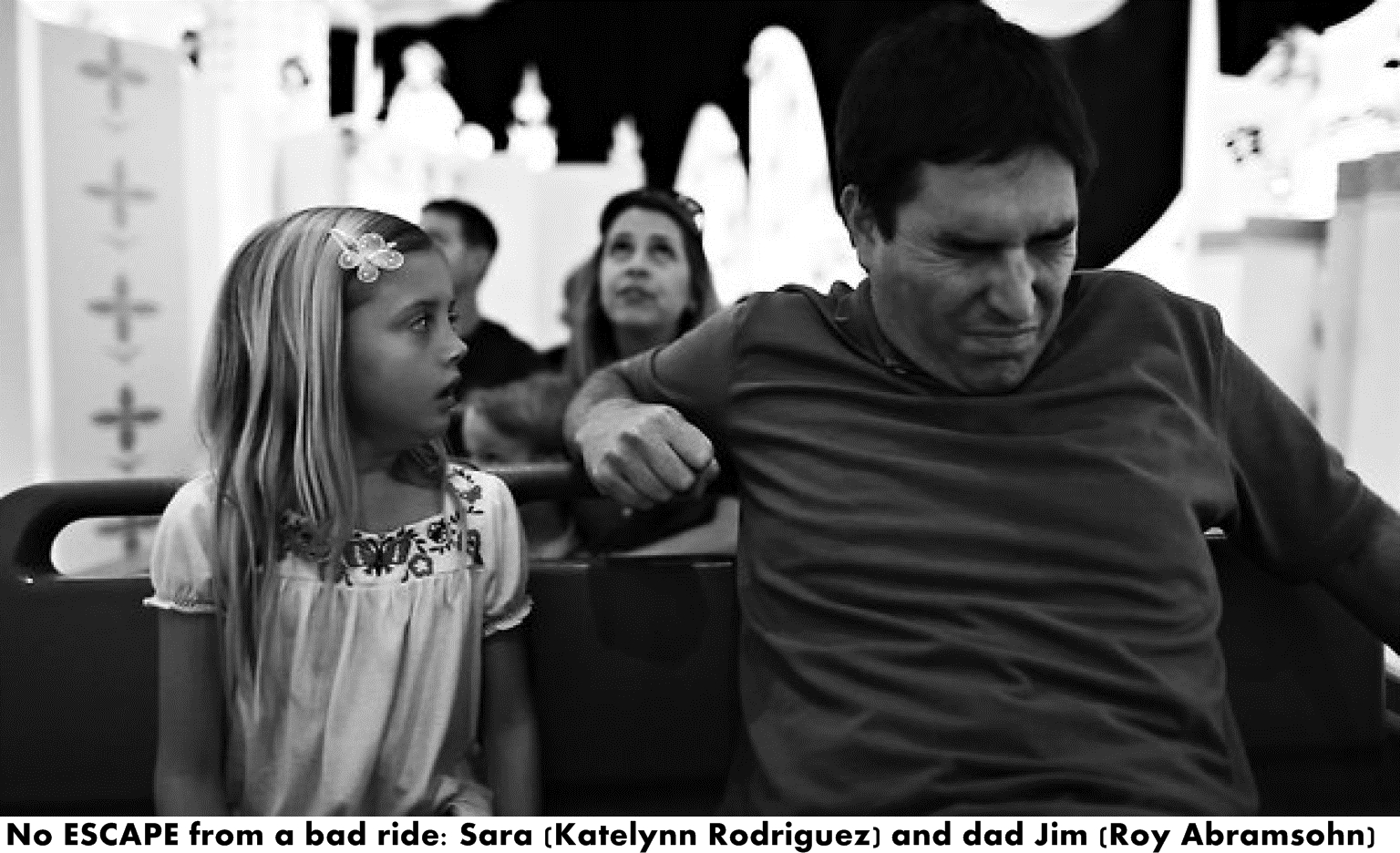
Escape from TomorrowMoore may be onto something here, finding none of the warm, family fun the Disney marketing machine promises. Instead, middle-class dad Jim (Roy Abramsohn) stumbles onto a kind of theme park noir on a visit to Disney World with his wife Emily (Elena Schuber) and young children Sara (Katelynn Rodriguez) and Elliot (Jack Dalton). Some of what befalls him is undoubtedly his own fault. Stalking French teenagers is not the wisest move and getting distracted by shiny things, like the necklace worn by an aging and tawdry former princess (Alison Lees-Taylor), can only lead to trouble. But the entire day takes on a surreal and horrifying vibe when rides turn out to be far less placid than they appear, Epcot has its own resident mad scientist (Stass Klassen) and even little Elliot appears to have malevolent intentions.

The film’s black-and-white cinematography is gorgeous, but further adds to the unease. The world of Disney robbed of color simply does not compute except maybe in Jim’s head. The genius of Escape from Tomorrow is that Moore has a finger on the pulse of something very real: The place that is a magical paradise for so many is pure torture for others, especially parents trying to make their kids happy by sacrificing themselves on the altar of long lines, endless crowds and rampant consumerism that is presided over by that squeaky-voiced pitchman Mickey. Jim’s situation is exaggerated to be sure, but part of the horror (and fun) of the movie is that at its core it is also highly identifiable. It is easy to relate to his pain. It is a small world, after all. – Pam Grady

Share this:

  • Share on Facebook (Opens in new window) Facebook
  • Share on X (Opens in new window) X
  • Email a link to a friend (Opens in new window) Email
  • Print (Opens in new window) Print
  • Share on LinkedIn (Opens in new window) LinkedIn
  • Share on Tumblr (Opens in new window) Tumblr
  • Share on Reddit (Opens in new window) Reddit
  • Share on Pinterest (Opens in new window) Pinterest
Like Loading...
← Older posts
Newer posts →

Categories

  • Interviews
  • News
  • Reviews
  • Short Takes
  • Uncategorized

Recent Posts

  • A Stamp of Approval
  • Life is messy & so is ‘Megalopolis’
  • A star discovers too late there are worse things than aging in the black comic body horror ‘The Substance’
  • A young teen nurses a crush when he finds himself among ‘Big Boys’
  • The stunt man becomes the star as Ryan Gosling becomes THE FALL GUY

Archives

Blog at WordPress.com.

  • Subscribe Subscribed
    • Cinezine Kane
    • Join 48 other subscribers
    • Already have a WordPress.com account? Log in now.
    • Cinezine Kane
    • Subscribe Subscribed
    • Sign up
    • Log in
    • Report this content
    • View site in Reader
    • Manage subscriptions
    • Collapse this bar
 

Loading Comments...
 

    %d