• About

Cinezine Kane

Cinezine Kane

Category Archives: Interviews

Hillbilly Hero: Tucker and Dale director Eli Craig

01 Saturday Oct 2011

Posted by cinepam in Interviews

≈ Leave a comment

Tags

Alan Tudyk, Eli Craig, Tucker and Dale vs. Evil, Tyler Labine

When writing partners Eli Craig and Morgan Jurgenson started work on their script for what would become Tucker and Dale vs. Evil, both only had to think back to their childhoods to imagine the country setting of their story about a pair of good-natured hillbillies who find themselves under assault by a group of college kids who are certain the pair are serial killers. Jurgenson grew up in a cabin in the woods with no TV or running water. Craig, who is the son of actress Sally Field and her first husband Steven Craig, divided his childhood between urban Southern California and his father’s rural Oregon home. Just how much that influenced the pair’s screenplay wasn’t evident to Craig – who makes his feature directing debut with Tucker and Dale – until after the horror comedy that stars Alan Tudyk and Tyler Labine as the bemused bumpkins was finished.

“We built this cabin in the middle of nowhere by this lake,” he recalls during a recent phone call. “I remember he was using a chainsaw to clear out brush – I was maybe nine years old, using this bulldozer to clear out this gravel driveway – and I hear this scream.

“I hear my dad going, ‘Bees! Bees!’ He’s running with the chainsaw overhead, down toward the lake, as fast as he could, warning me about the bees. He chucked his chainsaw to the side and dove into the lake. I didn’t think of that until my fifth watching and I thought, ‘Oh my God, it’s my dad! Alan Tudyk with the chainsaw is my dad.’”

One day six years ago, Craig and Jurgenson were batting around ideas for screenplays when they came up with a simple proposition, what if The Texas Chainsaw Massacre villain Leatherface was really a good guy, just misunderstood? When Craig heard his wife, Sasha, snicker, he knew they were onto something, but at first all they had were a few elements and the basic idea.

“It wasn’t a movie. It was a funny idea to flip the typical presentation, which is the college kids go out to the woods and get slaughtered by backwoods freaks,” he says, adding that the story really began to develop when he and Jurgenson came up with the notion that Dale and one of the coeds, Allison (Katrina Bowden), should fall in love.

“I think I made a new twist on the romantic comedy genre. I even wanted the tag line to be, ‘The perfect romance, aside from the minor woodchipper incident.’ ” chuckles Craig.

“That was the key to this, selling the relationship in a way that was genuine and that the emotional context of it felt real. All this absurdity, all the chaos, comes back to the love story. To me, that was the most important element, whereas I think a lot of people focus on the gore and the horror.”

Starting with its world premiere at the 2010 Sundance Film Festival, Tucker and Dale vs. Evil was a popular draw on the festival circuit. It won the Midnight Audience Award at SXSW, the Best First Feature jury prize at Montreal’s Fant-Asia Film Festival, and Best Film at Spain’s prestigious Sitges International Film Festival. But distributors were slow to catch the growing buzz and for a while Craig despaired that the movie would ever have a chance to widen its reach. Then Magnet Releasing came through with a theatrical and VOD release. In its first weekend in theaters, the film’s positive rating stands at a healthy 88%. It’s the little movie that could, and it’s left Craig feeling like a proud papa.

“It feels a little bit like having a child,” he laughs. “In some ways it’s like parenting where you just try to aid the little guy to grow up and be himself and be himself fully. It’s really exciting to see. This film has had no opportunities. It’s had no help from anybody. It’s had no advertising. It’s had no real promotion and yet it’s found an audience.

“I’m just so proud of it. It has a voice that people have grabbed onto and made it somewhat successful, as least as an underground film. I’m very proud of it, as if it were a person.” – Pam Grady

Share this:

  • Share on Facebook (Opens in new window) Facebook
  • Share on X (Opens in new window) X
  • Email a link to a friend (Opens in new window) Email
  • Print (Opens in new window) Print
  • Share on LinkedIn (Opens in new window) LinkedIn
  • Share on Tumblr (Opens in new window) Tumblr
  • Share on Reddit (Opens in new window) Reddit
  • Share on Pinterest (Opens in new window) Pinterest
Like Loading...

Visions of a Mole Man

31 Wednesday Aug 2011

Posted by cinepam in Interviews

≈ Leave a comment

Tags

John LaFlamboy, Justin DiGiacomo, Mike Bradecich, Robert Englund, The Mole Man of Belmont Avenue, Tim Kazurinsky

Mike Bradecich remembers the day his writing and filmmaking partner John LaFlamboy came to him with the idea for what would become the pair’s debut feature The Mole Man of Belmont Avenue.

“The first thing he ever told me was the two of us are landlords in this building and all the pets are disappearing, because there’s a monster in the basement,” recalls Bradecich during a June visit to San Francisco where the movie screened at Another Hole in the Head, a film festival dedicated to horror, sci-fi, and fantasy.

Bradecich laughs, “I said, ‘That’s the dumbest idea for a movie I’ve ever heard in my life.’ I was a little slow to see the potential in the idea. We kind of worked it out slowly, then I got excited.”

The partners wrote and directed the horror comedy, but also star as brothers who have inherited a Chicago apartment house from their mother. Well-meaning but incompetent, they already have their hands full just trying to keep the lights on in the building when they realize they have a problem with vermin in the form of a man-sized mole creature. They also cotton onto the fact that missing animals will be the least of it if they can’t figure out some way to vanquish this most disagreeable house pest.

“It started with the building,” says Bradecich. “John had been using the building. It’s sort of been acting as an artists’ commune. There’s also a second-hand clothing shop on the ground floor. It’s this really interesting sort of transient but very artistic place. John rented out the main room for parties and different events on a few occasions. Just being there that often and the building having such an identity  and such a flavor I think is what was the original inspiration for turning it into this residence where the pets are disappearing.”

Robert Englund, A Nightmare on Elm Street‘s Freddy Kreuger, costars as one of the tenants. Saturday Night Live  alum Tim Kazurinsky also appears as a homeless man the brothers recruit as part of their quest to conquer the Mole Man. Justin DiGiacomo, a Southern Illinois University classmate of LaFlamboy and Bradecich, plays the titular monster, his head encased in latex for 12-14 hours at a time during a sweltering July summer and fitted with white contact lenses that made him blind.

“He was literally a mole man,” says Bradecich, who adds that DiGiacomo got so far into the character that he developed a back story that explained how the Mole Man came to live underground and how the Mole People’s distinctive look evolved.

Next up for Bradecich and LaFlamboy is Haunted House: The Movie, a story based on LaFlamboy’s work as designer, director, producer, actor, and co-owner of Statesville Haunted Prison and City of The Dead, a Chicago haunted house. (“He’s the haunted house mogul of the Midwest,” says his partner.) For now, though, they are busy traveling with The Mole Man of Belmont Avenue on the festival circuit. Upcoming appearances includes stops at the Atlanta Horror Film Festival and the Chicago Horror Film Festival.

Exuberant and funny, Mole Man demonstrates the pair’s talents as actors, writers, and directors, but it is also represents the next evolution in their partnership. Friends since college where Bradecich was an English major who acted and LaFlamboy majored in theater, the two began making shorts together in 2005 with one thought in mind.

“The whole point was because we wanted to act,” Bradecich says. “The best parts we could possibly get would be the ones we were writing for ourselves.” — Pam Grady

Share this:

  • Share on Facebook (Opens in new window) Facebook
  • Share on X (Opens in new window) X
  • Email a link to a friend (Opens in new window) Email
  • Print (Opens in new window) Print
  • Share on LinkedIn (Opens in new window) LinkedIn
  • Share on Tumblr (Opens in new window) Tumblr
  • Share on Reddit (Opens in new window) Reddit
  • Share on Pinterest (Opens in new window) Pinterest
Like Loading...

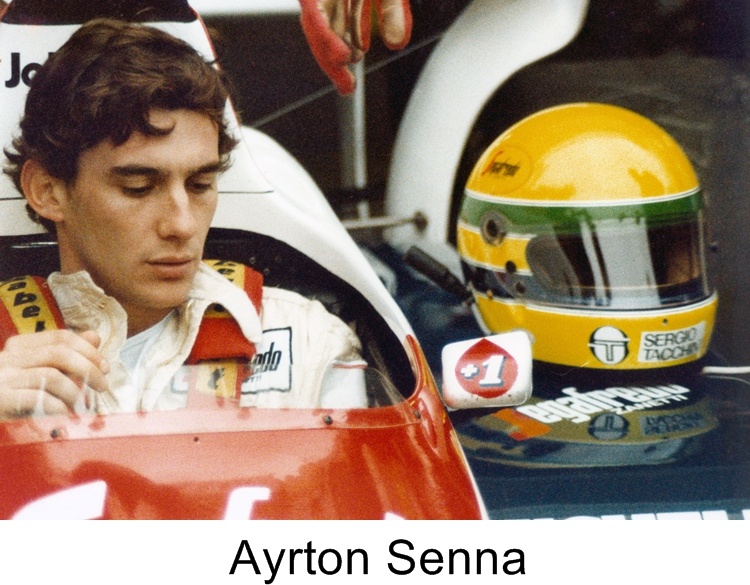
Revving Up a Doc: Asif Kapadia Takes on Ayrton Senna

25 Thursday Aug 2011

Posted by cinepam in Interviews

≈ Leave a comment

Tags

Alain Prost, Asif Kapadia, Ayrton Senna, Formula One, Senna

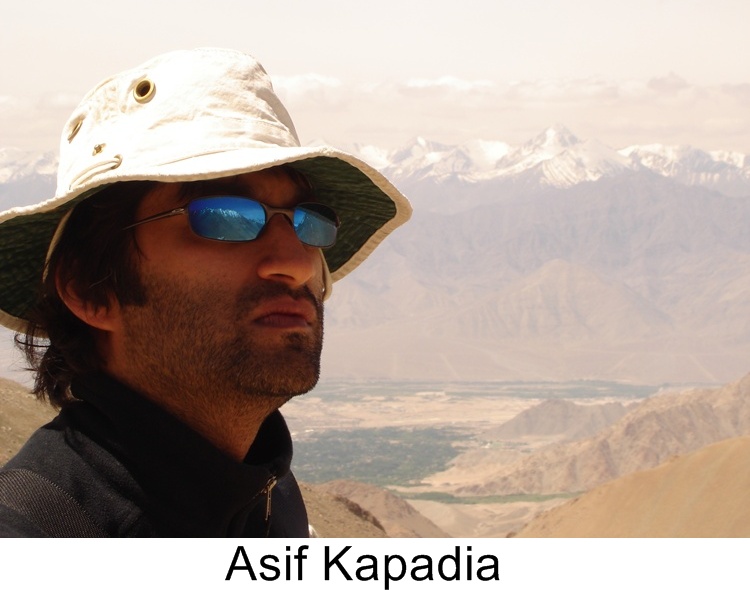
When Asif Kapadia signed on to make a documentary about three-time Formula One world champion race car driver Ayrton Senna, he and everyone else involved assumed they were going to make  the typical doc. The ratio they worked out was that Senna would include 14 minutes of archival footage of the Brazilian racing legend. The rest would be talking heads.  That was before anyone really looked at the wealth of archival material.

“There’s so much and it’s so strong,” marvels Kapadia during a promotional pit stop in San Francisco. “It seemed crazy to have someone with a plant and bookshelf behind him saying, ‘Well, Senna he was really good.’ I thought, ‘Why do we need him? We’ll just show you.”

Good call. Senna unfolds with the tension and immediacy of a Formula One race careening through the movie theater, bringing the iconic driver’s career to vivid life. Sneaking into January’s Sundance Film Festival for its US premiere with little fanfare, it was quick off the blocks, winning the Audience Award for World Cinema Documentary there. Since then, it won the Best International Feature audience prize at the Los Angeles Festival and it had the biggest theatrical opening of any documentary this year. And while it might be expected that Formula One fans would flock to it, the film’s appeal is crossing over to people with no interest in the sport and to whom the name “Ayrton Senna” previously meant nothing. To Kapadia, this success dates back to the decision to lose the talking heads.

“There came a point when it was so obvious, if in doubt, just let Senna tell you what is going on,” he says. “He should be the narrator of his own life story, not somebody else. He’s more intelligent, more eloquent, more good-looking. He can drive the car like nobody else can drive. He’s the one fighting corruption.  He’s the one who’s got the whole of Brazil following his every move. He’s perfect. He’s the perfect movie star.”

Researchers around the globe chased after material on Senna, but what really made a difference was the unprecedented access to the Formula One archive given to the production by Formula One head Bernie Ecclestone.

“We were the first people to actually set foot in his archive to get all the exclusive footage that you see in the film,” Kapadia says. “By the time we get to the last race in Emilia, there are 30 cameras on Senna everywhere he is. From one race, there are thousands of hours of material. You multiply that by a season and multiply that by 10 seasons.”

With or without that wealth of footage, Senna’s story is a compelling one with multiple facets, beginning with his rise through the Formula One ranks.

“In Formula One, the cars are not the same. They are totally different. They are totally unequal,” observes Kapadia. “The richest ones start at the front with the best of everything. The weakest ones start at the back and you’re meant to race. It’s obvious who’s going to win. The guy with the most money and the best car is up front.

“Senna’s job coming into the sport was to prove himself in a bad car to get a chance at a better car to get a chance to get into the best car. That’s what the sport is all about. It’s a really tough sport. You’ve got to be tough to make it.”

There is much more to Senna’s story than his ability to win races. He was a devout Catholic. He was a passionate advocate for safety and unafraid to take positions that put him at odds with the racing establishment. In Brazil, he was a national hero, that love affair reaching its apex at the 1991 Brazilian Grand Prix, a race he won despite problems with his gear box that forced him to drive the last laps of the race stuck in sixth gear.

“That’s the bit that still makes me cry,” says Kapadia. “There’s something about that moment where he has to do it. He cannot give up. He cannot quit, because he has to do it for everyone, all of his Brazilian fans. You just see what he means to them.”

Then there was his rivalry with his McLaren teammate Alain Prost. Every hero needs a villain and Senna found his in the Frenchman, a four-time world champion with whom he repeatedly locked horns both on and off the track. Kapadia compares their relationship to Muhammad Ali’s with George Frazier and George Forman or Bjorn Borg’s with John McEnroe.

“They’re so different as people,” he says. “They have different ways of driving, different ways of winning, different ways of dealing with people.

“Their faith made them different,” he adds. “Senna would talk about God and Prost didn’t like that. Everything about them. It was amazing to have two brilliant guys at the top of their game at the same time on the same team.”

Rivalry with Prost or any other driver could only motivate Senna so far, Kapadia believes. After spending two and a half years wading through the Formula One archive and putting the film together, gradually winnowing a seven-hour assembly to a 106-minute final cut, he has come to a conclusion about what drove Senna toward racing superstardom.

“He had to do it. He had to drive on the limit and find new limits. Push it further and further and further,” he says. “A lot of the time he wasn’t racing other people, ’cause he kind of knew he was better than them. He was racing himself, he was finding the kind of level he could achieve, in a way to get closer to God almost. It was a spiritual thing for him, to drive. It put him in a place there is no other way to be in that moment, to feel what he was feeling. He couldn’t help it. He had to do it.” – Pam Grady

Share this:

  • Share on Facebook (Opens in new window) Facebook
  • Share on X (Opens in new window) X
  • Email a link to a friend (Opens in new window) Email
  • Print (Opens in new window) Print
  • Share on LinkedIn (Opens in new window) LinkedIn
  • Share on Tumblr (Opens in new window) Tumblr
  • Share on Reddit (Opens in new window) Reddit
  • Share on Pinterest (Opens in new window) Pinterest
Like Loading...

Vigilante Vigilante: Playing Tag with the Buffers

11 Thursday Aug 2011

Posted by cinepam in Interviews, Uncategorized

≈ Leave a comment

Tags

Max Good, Nathan Wollman, Roxie Theater, Vigilante Vigilante

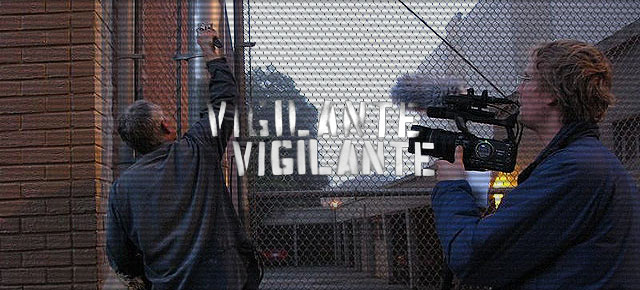
Max Good has been making graffiti for more than 15 years. He’s been aware of the “buffers” – self-appointed protectors of walls and posts who come by after the artist has gone and covers up his work, often with splashes of gray or black paint that creates a kind of graffiti of its own – from the start. When he lived in New York, he had a buffer of his own , a kind of stalker who specifically targeted Good’s stickers. He tried to stake him out, but never caught him. Then three years ago, Good moved back to Berkeley and became aware of a buffer known as the Silver Buff.

“I decided I was going to stake him out and find him, no longer how long it took,” says Good.

This time, though, to relieve the boredom of the stake out, Good who has several shorts to his credit, decided to make a film. Like his other work, it would be a short. Producing it would be Nathan Wollman, with whom he’d previously collaborated on a 2006 short Ungonquieños. But as their investigation grew, so did the film, evolving into a full-fledged feature Vigilante Vigilante.

“The process of trying to discover the identity of the Silver Buff was actually a pretty mystical process,” says Wollman. “Our imaginations got carried away so much. There were all these things we thought might have been going on or could be happening. It almost reminded me of being a little kid and playing with toys and imagining what the characters were.”

The film grew to encompass commentators on graffiti, both pro and con, graffiti artists, and other vigilantes, including Joe Connelly, a motor-mouth Los Angeleno who claims that he actually like graffiti even as he works assiduously to remove it, and Fred Radtke, an intense former Marine who patrols New Orleans and is so offended by street art that he’s actually gotten in trouble for covering up sanctioned work. But the focus remains on the Silver Buff with Good and Wollman becoming characters in the film as they hunt for and eventually confront the vigilante, a man named Jim Sharp who turns out to live in the Berkeley hills, nowhere near the area he patrols daily with his can of silver spray paint.

“He’s taken ownership over the central part of Berkeley. He sees this as his territory and he is going to police it,” says Good. “Telegraph, which is home to the Free Speech Movement and which is supposed to be a funky, populist area where people are communicating – there’s events and there’s liveliness. He comes down every morning and strips every single pole of every poster and stops the flow of communication. It’s actually pretty damaging.”

“What’s going on there is his own fantasy vision of what it is that his city should look like and it’s not a very fair vision,” adds Wollman.

To Good, Sharp and his fellow buffers are control freaks, who – while claiming that what they are doing is enforcing law and order — essentially place themselves above the law. While decrying graffiti artists for their temerity in leaving their tags on walls, they essentially behave the same way. They, too, stock up on cans of illegal spray paint. They, too, write on walls, their “erasures” of what was there forming another kind of tag.

“It’s the expression that bugs them, not the law breaking, that somebody thought they could express themselves and break the rules,” observes Good. “Yet they can do the same thing to eliminate it. It’s really confused. It’s really paradoxical and insane in a way.

“They don’t want any sign that people are questioning things or in fact are expressing themselves freely. I hate to get too out there and talk about Zen state of mind, but part of living in a society of any kind at any time in history, I believe, is dealing with the fact that you can’t control all the things that are going on in your environment.”

Wollman sees a bigger picture behind the graffiti wars, one he and Good have done their best to capture in Vigilante Vigilante. The film is a kind of discussion about class warfare, individual expression, and that need some people have to somehow master their domain.

“It’s about control,” he says. “Erasing someone’s tag off a wall is one small accomplishment for these people where they could say, ‘That was me. I did something. That’s gone now. I got rid of that. That was me.’

“I think the taggers are saying the same thing. They put up that mark and they say, ‘That was me. I did one small thing today.’ If that’s what it take to stay sane, then more power to you on either side. If that’s what your passion is, then you’re going to have to live with the consequences that those passions involve law-breaking activity. Then so be it.” – Pam Grady
_____________________________________________________________________________
Vigilante Vigilante plays the Roxie Theater, 3117 16th St, San Francisco, Friday, August 12-Thursday, August 18. Max Good and Nathan Wollman will be in attendance on Friday and Saturday evening. For showtimes, tickets, or other information, visit http://www.roxie.com.

Share this:

  • Share on Facebook (Opens in new window) Facebook
  • Share on X (Opens in new window) X
  • Email a link to a friend (Opens in new window) Email
  • Print (Opens in new window) Print
  • Share on LinkedIn (Opens in new window) LinkedIn
  • Share on Tumblr (Opens in new window) Tumblr
  • Share on Reddit (Opens in new window) Reddit
  • Share on Pinterest (Opens in new window) Pinterest
Like Loading...
Newer posts →

Categories

  • Interviews
  • News
  • Reviews
  • Short Takes
  • Uncategorized

Recent Posts

  • A Stamp of Approval
  • Life is messy & so is ‘Megalopolis’
  • A star discovers too late there are worse things than aging in the black comic body horror ‘The Substance’
  • A young teen nurses a crush when he finds himself among ‘Big Boys’
  • The stunt man becomes the star as Ryan Gosling becomes THE FALL GUY

Archives

Blog at WordPress.com.

  • Subscribe Subscribed
    • Cinezine Kane
    • Join 48 other subscribers
    • Already have a WordPress.com account? Log in now.
    • Cinezine Kane
    • Subscribe Subscribed
    • Sign up
    • Log in
    • Report this content
    • View site in Reader
    • Manage subscriptions
    • Collapse this bar
 

Loading Comments...
 

    %d