• About

Cinezine Kane

Cinezine Kane

Category Archives: Interviews

KILL YOUR DARLINGS’ Ben Foster taps his inner Burroughs

31 Thursday Oct 2013

Posted by cinepam in Interviews

≈ Leave a comment

Tags

Beat Generation, Ben Foster, Dane DeHaan, Daniel Radcliffe, Jack Huston, John Krokidas, Kill Your Darlings, William S. Burroughs
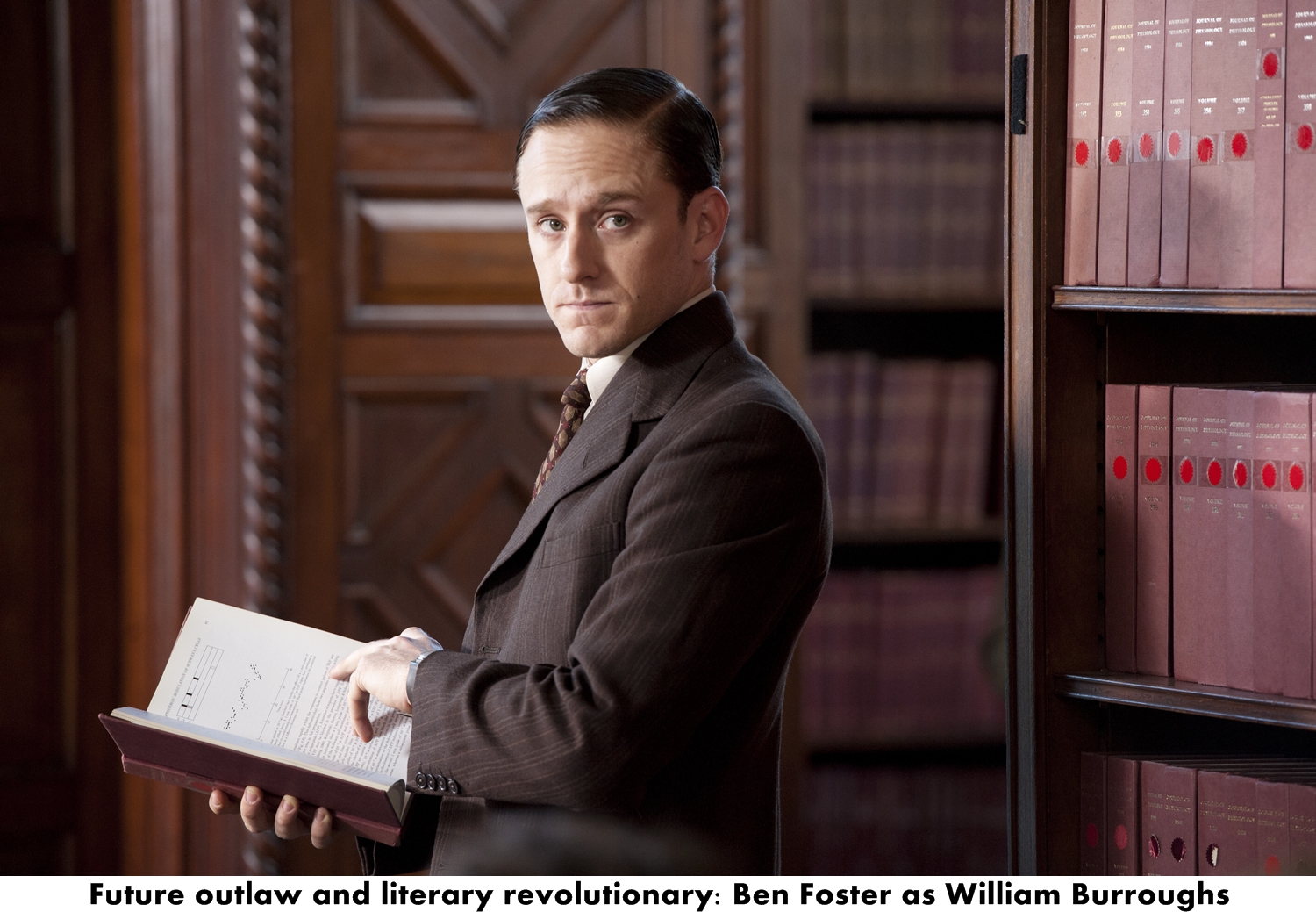
Ben Foster_Darlings1The most striking entrance in John Korkidas’ pre-Beat Generation saga Kill Your Darlings belongs to Ben Foster. Playing William S. Burroughs, the slightly older member of the Beat crowd who would go on to notoriety as an outlaw, a drug addict and the influential author of Naked Lunch, Queer and Junky, he is introduced to the teenage Allen Ginsberg (Daniel Radcliffe) inhaling from a gas mask, courtly mannered and clearly high.

“He designed his character,” says Foster at the Toronto International Film Festival where Kill Your Darlings screened as a gala presentation. “He was an awkward, shy man with an unusual appetite to question cultural norms. He was interested in the identity of explorers and philosophers and doctors and psychologists in his young period. He was constantly seeking. I think from a very fragile sense of a heart and mind, he created the character of William Burroughs, the detective, the man of authority. He created this persona.

“He was one of the most forward-thinking minds we have had. We can feel the waves of his influence today.”

Since making his big-screen debut while still a teenager in Barry Levinson’s nostalgic 1999 comedy-drama Liberty Heights, Foster has gone to forge a singular career with such memorable turns as the mute angel Cod in Michael Polish’s Northfork; sensitive, sexually ambiguous Russell on TV’s Six Feet Under; an out-of-control meth head in Alpha Dog; the mutant Angel in X-Men: The Last Stand; Russell Crowe’s vicious confederate in 3:10 to Yuma; a troubled Iraq war veteran on death-notification duty in The Messenger; and most recently as a smitten sheriff in Ain’t Them Bodies Saints. Earlier this year he made his Broadway debut replacing Shia LaBeouf as a volatile street thug in Lyle Kessler’s Orphans.

“I just like telling stories,” Foster says. “I like interesting minds. There are some good people out there. We’re all kind of, ‘Send us a smoke signal of something that doesn’t feel like it’s going to cost our hearts.’

“Korkidas is a special filmmaker,” he adds. “You find your clique. High school sucks, but you find your clique. It’s the same thing.”

Signed on a few months before Kill Your Darlings started shooting, Foster threw himself into researching the role. He was already familiar with Burroughs’ writing; now he had to get to know the man.

“As a fan, a great admirer, an appreciator of Burroughs, there is an inherent responsibility and fear that you’ll disappoint him,” Foster says. “It was a thrill, just as a human, just saying, ‘I’m going to spend some time considering this man and his life and work.’”

In addition to reading biographical material, Foster also spoke to Burroughs’ friend and literary executor James Grauerholz, who offered the actor valuable insight into the writer, particularly his sense of playfulness. More vital still was Burroughs himself captured on film in performance and interviews.

“I was more interested in the documentary footage,” Foster says. “That felt very intimate. The stuff with Warhol was wild. He’s so discontent, sitting at the table making pleasantries, trying to be an aristocrat. He is an aristocrat in a vapid world. You can see it eating his guts.

“I wish there was more film. It was a nice excuse to fall in love with him.”

Foster shares the screen with actors that in addition to Radcliffe include Jack Huston as Jack Kerouac; Dane DeHaan as Lucien Carr, Ginsberg’s Columbia University classmate and the friend who brings future Beats Ginsberg, Kerouac and Burroughs together; and Foster’s Six Feet Under costar Michael C. Hall who plays the Carr-obsessed David Kammerer. The cast is impressive; and Foster is as taken by Krokidas, whose dedication to a film that took years to get off the ground he admires and whose energy on the set he enjoyed being around.

“It’s fun to participate with someone who’s had the endurance to fight for a project,” he says. “It feels good.

“It’s a crush. It’s like falling in love, making a movie, or like camp, however you want to frame it. It’s very intimate. I wouldn’t call it hard work, but you have to be dogged in your focus, which is great. If you’re working with like minds, it’s a wonderful experience. We were fortunate to work with people like Mr. Radcliffe and Dane and Jack. We got lucky on this one. These guys are top drawer, really sweet, thoughtful, caring, intelligent young men, these guys and Michael – what I like to call lunch-pail guys, guys who bring their lunch, ready to work.” – Pam Grady

Share this:

  • Share on Facebook (Opens in new window) Facebook
  • Share on X (Opens in new window) X
  • Email a link to a friend (Opens in new window) Email
  • Print (Opens in new window) Print
  • Share on LinkedIn (Opens in new window) LinkedIn
  • Share on Tumblr (Opens in new window) Tumblr
  • Share on Reddit (Opens in new window) Reddit
  • Share on Pinterest (Opens in new window) Pinterest
Like Loading...

Angelheaded hipster: Daniel Radcliffe on KILL YOUR DARLINGS

30 Wednesday Oct 2013

Posted by cinepam in Interviews

≈ Leave a comment

Tags

Allen Ginsberg, Beat Generation, Dane DeHaan, Daniel Radcliffe, John Krokidas, Kill Your Darlings, Lucien Carr

dehaan_radcliffe1“Can I claim this?” Daniel Radcliffe asks rhetorically when questioned about working with stage veteran John Cullum, stern English teacher Professor Stevens to Radcliffe’s rebellious Columbia University freshman Allen Ginsberg in John Krokidas’ pre-Beat Generation saga Kill Your Darlings. The diminutive actor bounces out of his chair and rushes across the room to confer with with the director, who is in the middle of his own interview. After a short conference, he’s back.

“John Cullum was my idea,” he says proudly. “He’s amazing.  My friend had worked with John Cullum on Measure for Measure, Shakespeare in the Park. He was raving about him. John was looking for Professor Stevens and my friend had literally just finished working with him, so I said, ‘I saw him on stage last summer, what about him?’

“It was basically a selfish excuse, because then they got him in and I was just able to ask him about working with Richard Burton on [Camelot and Hamlet] for over 1000 performances. So it was asking him about all of that and picking his brain. Me and Dane DeHaan had a really lovely time with him. And he’s fantastic in the movie.”

That the 24-year-old Radcliffe would be so keen to hear theater lore from half a century ago is hardly surprising given the path he’s chosen since the curtain came down on Harry Potter, the franchise that made him a household name while he was still a child. On stage, he’s been the boy who blinds horses in Equus, go-getter J. Pierrepoint Finch in the musical How to Succeed in Business Without Really Trying, and most recently the titular character in the recent London revival of Martin McDonagh’s The Cripple of Inishmaan. On television, he stars opposite Jon Hamm (playing his older self) as a tyro physician in the pre-revolution Russian countryside in A Young Doctor’s Notebook.

In film, his tastes run toward the independent, as evidenced by the three films that he is promoting at the Toronto International Film Festival. In Horns, Alexandre Aja’s adaptation of Joe Hill’s novel, he plays a man suspected of murder who sprouts devil horns. Michael Dowse’s buoyant romantic The F Word, casts him as a lonely Brit in Toronto who falls hard for platonic friend Zoe Kazan. Radcliffe was a teenager and still playing Harry Potter when Krokidas cast him in Kill Your Darlings.

“The tough thing was this movie took forever to get made,” Krokidas says. “I had so many stops and starts. It was a real struggle, but the upside of that was Dan being in my life and being part of this project at some varying degree for four-and-a-half years. It let us have the time to become collaborators and really get to know each other and trust each other. This is his movie as much as it is mine.”

Based on real incidents, the drama is kind of a Beat Generation pre-history as it charts Ginsberg’s friendship with fellow Columbia student Lucien Carr (DeHaan), who profoundly influences the young poet’s approach to writing and introduces him to his eventual partners in literary revolution, William S. Burroughs (Ben Foster) and Jack Kerouac (Jack Huston). Carr also threatens all of the futures when his volatile relationship with an older man, David Kammerer (Michael C. Hall), takes a darker turn.

Radcliffe was already familiar with Ginsberg’s poetry, but knew less about the man. He found a key into the character through the diaries Ginsberg kept from a very early age. The writer’s self-assurance impressed him and also gave him insight into the friendship Ginsberg would later forge with Carr.

“He’s so confident, as a 14-year-old, in his writing about his own mind,” Radcliffe says. “When he keeps his diary, you sort of almost feel like he’s keeping it for posterity. You feel like he’s writing so that people can read it after he becomes a great man. He’s very much aware of his intellect.

“I think that’s what’s interesting about the character of Allen, he’s very confident,” he adds. “He feels like he can hold a conversation with anybody about anything. He’s hugely confident, and yet in his interactions with people and his social life, he’s incredibly shy and reserved and there’s no semblance of that very, very confident person that writes in that diary until they start talking about poetry or about books. Then he feels confident. He can enter into that conversation.

“I think that’s one of the reasons he falls in love with Lucien. He meets Lucien and Lucien is this loud, brash, outgoing, incredibly confident guy, but actually has none of the inner confidence. Lucien has no confidence in himself as a writer and that’s why he knows he has to sort of attract these other people around him. I think we’re always attracted to the qualities in other people that sometimes we don’t have ourselves and Lucien is everything Allen wants to be but isn’t.”

Whatever Kill Your Darlings‘ fortunes are at the box office, for Radcliffe it is already a significant film in his career. In a way, his situation mirrors his character’s as he made new friendships during the course of making the movie.

“Relationships are forged so quickly in the kiln of filmmaking,” he says. “ Dane’s probably the best friend I’ve made through acting … I think building chemistry with people is just a matter of being curious about them and being interested. Dane and I, we got on very well immediately and then we worked on it. You have to work to build chemistry, even stuff as simple as sitting down and sharing stupid stories from your teenage years about shit you did. You build a relationship. It involves being open with people. That’s really exciting. I only filmed with John and Dane for 24 days – although I’ve known John for a long time before that – and they’ve become two of my best friends.” – Pam Grady

Share this:

  • Share on Facebook (Opens in new window) Facebook
  • Share on X (Opens in new window) X
  • Email a link to a friend (Opens in new window) Email
  • Print (Opens in new window) Print
  • Share on LinkedIn (Opens in new window) LinkedIn
  • Share on Tumblr (Opens in new window) Tumblr
  • Share on Reddit (Opens in new window) Reddit
  • Share on Pinterest (Opens in new window) Pinterest
Like Loading...

The silence of survival: J.C. Chandor on ALL IS LOST

24 Thursday Oct 2013

Posted by cinepam in Interviews

≈ Leave a comment

Tags

All Is Lost, J.C. Chandor, Robert Redford

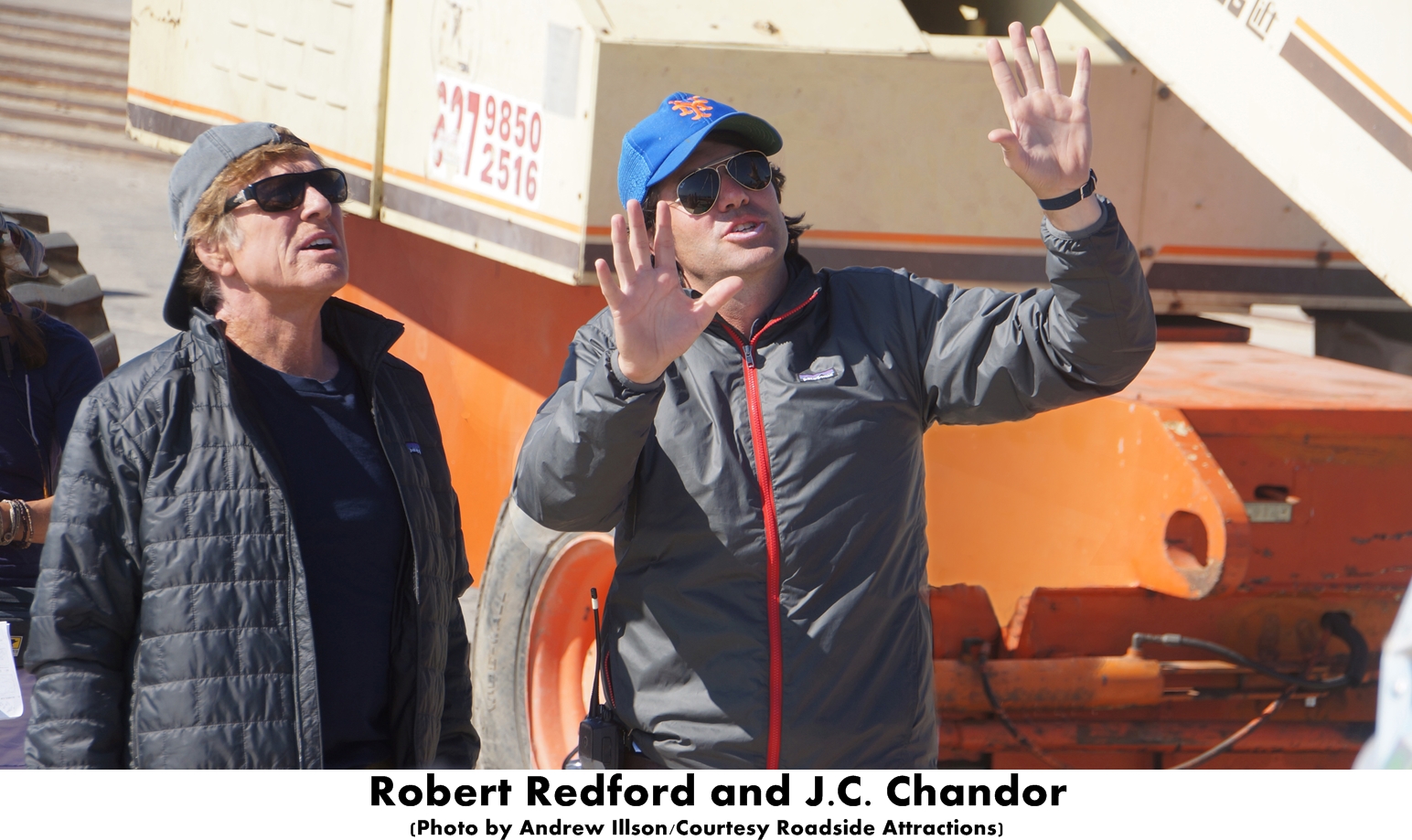
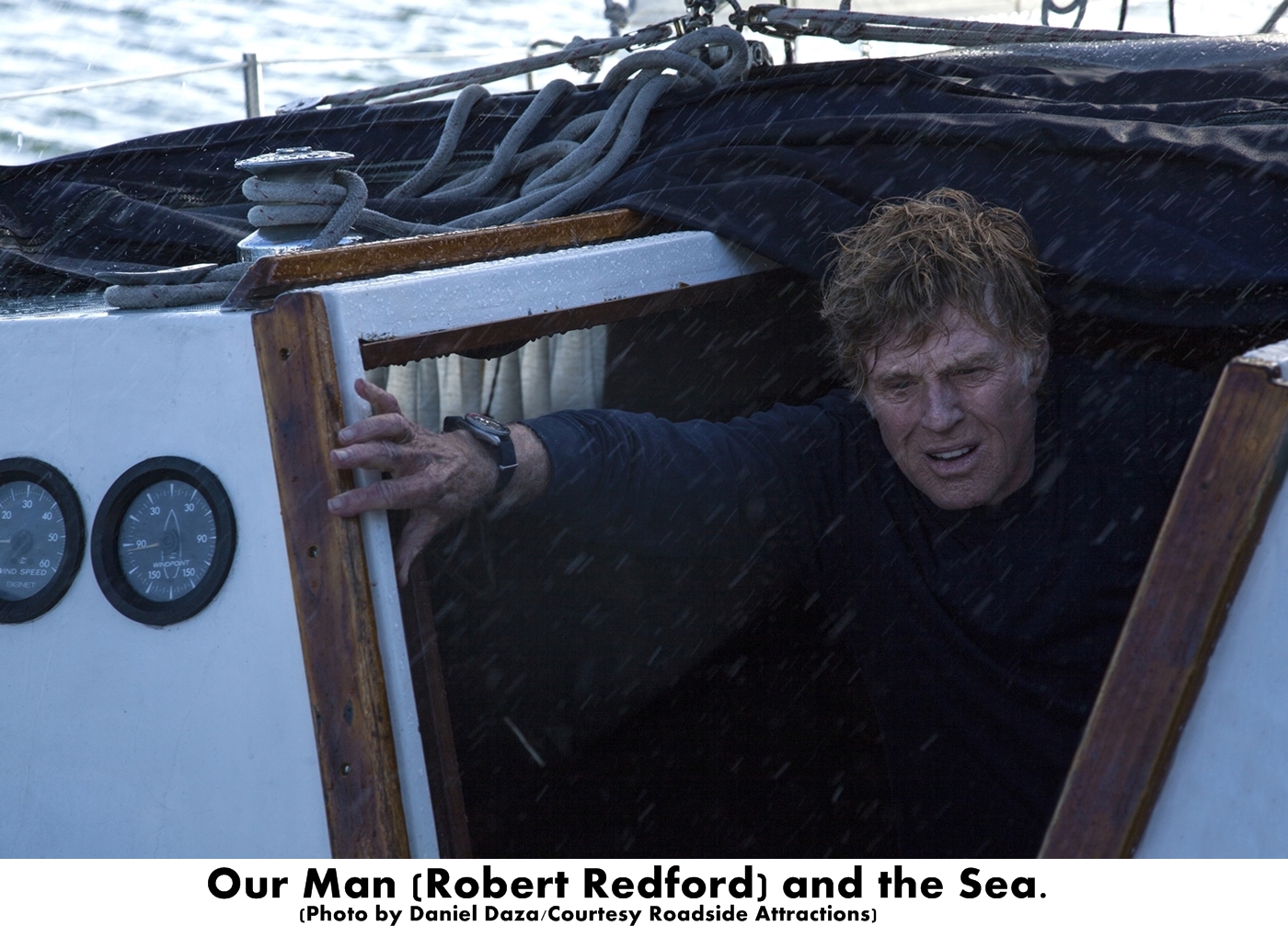
photodazastills_3569.CR2J.C. Chandor’s last film Margin Call was all talk as a large voluble ensemble that included Jeremy Irons, Kevin Spacey, Zachary Quinto and Simon Baker played Wall Street masters of the universe caught in the panic of the 2008 financial crisis. That drama went on to win the Best First Feature and Robert Altman prizes at the Independent Spirit Awards and Chandor also snagged a Best Original Screenplay Oscar nomination. How to follow-up such success? If you’re Chandor, you make a near-silent thriller, All Is Lost, focused on one man – Robert Redford in one of the great performances of his long career – battling bad luck and the elements in a quest to survive.

“It was just one of four or five ideas that I was batting around,” says Chandor during a Bay Area visit where All Is Lost screened at the Mill Valley Film Festival. “That idea became a snowball rolling down the hill. It started to gather more and more stories and pieces and visual elements. You sort of pick which one to do next based on which one’s got the most momentum.

“The way that I write is I usually see most of the movie first and then over a very short period of time, I put it down on paper. Once I had this one down on paper, it was very specific. I saw the movie from beginning to end and it was a movie that I thought I could make.”

AIL-Credit-Andrew-Illson-00303A

Redford, 76 when the film was shot, plays a man on a solo sail who runs into catastrophe in the middle of the Indian Ocean. A damaged boat and stormy weather transform what was undoubtedly a pleasure cruise into a waterlogged hell.

“It’s all of this world of this earth, but yet water is so foreign,” says Chandor, who got to know the sea well over the course of shooting in the Pacific Ocean and the Caribbean, as well as the manufactured waters of Baja Studios, the world’s largest filming tank. “Humankind over the last 6,000 years has been figuring out how to move around the world using the oceans. In a way, the sailboat had become kind of a relic of that.”

Chandor realized from the beginning that casting would be key to the success of the movie. He knew from the start that the project would only work with an actor of a certain age.

“This move with a 35-year-old, it’s sort of like, ‘Of course, he or she is fighting, they still have 70 years of good living left on the planet. They’d better be fighting,’” he says. “But Redford’s character at this point, that’s what’s so amazing. He’s fighting harder than you could imagine and presumably it’s a pretty significant uphill climb.”

Once he decided that the character called for an older man, the filmmaker was left with a very short list of names. The actor would have to be fit enough to handle the physical requirements of the role, which included climbing a 65-foot mast, lots of swimming and even more demanding stunts that would not be performed by a double. He would also have to be a gifted enough actor that he could hold an audience’s attention and convey what the character is going through without the crutch of dialogue. An outdoorsman all his life as well as a skilled performer, Redford quickly zoomed to the top of Chandor’s wish list.

“He had this perfect balance of a longstanding relationship with the audience with this belief almost that I had that there were a couple of great performances still to give, that he still had a lot to give, which is, I think, why he said yes in a way,” the filmmaker says.

“And then most importantly this kind of knife’s edge balance between being old and so fragile but also still so physically able to pull this off. Really what the film is struggling with is this character kind of coming to grips with the fact that life on earth is finite. The more and more I got into it, it started to be that there wasn’t anybody else to play the part.

“Redford can communicate in-depth thoughts and emotional kind of growth and emotional transitions non-verbally, which is an art form in itself,” he adds. “It’s not just fear or perseverance, but it’s his ability to actually communicate this sort of path from fear to perseverance, which most actors would have trouble with non-verbally. He has that gift.”

With the film about to open in theaters, the writer/director recently re-read his script for the first time in many months and realized how close the film he made came to the one he envisioned as he worked on his screenplay.

“The script is almost identical to the movie we ended up making,” Chandor says. “I just felt that there was something there that was worth telling and it could be a pretty intense emotional ride. I had some family members that thought I was a little crazy in the process of doing it, but it certainly is nice that it seems to be working. It’s exciting that we managed to pull that off.” – Pam Grady

Share this:

  • Share on Facebook (Opens in new window) Facebook
  • Share on X (Opens in new window) X
  • Email a link to a friend (Opens in new window) Email
  • Print (Opens in new window) Print
  • Share on LinkedIn (Opens in new window) LinkedIn
  • Share on Tumblr (Opens in new window) Tumblr
  • Share on Reddit (Opens in new window) Reddit
  • Share on Pinterest (Opens in new window) Pinterest
Like Loading...

Cumberbatch’s Men of Character: Assange & Tietjens

17 Thursday Oct 2013

Posted by cinepam in Interviews

≈ Leave a comment

Tags

Benedict Cumberbatch, Julian Assange, Parade's End, Rebecca Hall, The Fifth Estate

cumberbatch1It is the day after The Fifth Estate opened the 2013 Toronto International Film Festival with a premiere screening at Roy Thomson Hall and Benedict Cumberbatch is doing his duty as the film’s star promoting it. He is as thoughtful and passionate as one would expect on the film’s subject and the man he plays, WikiLeaks founder and guiding light Julian Assange.

“The guy sacrificed a lot,” Cumberbatch says. “It’s possible to have a great idea, but true sacrifice that takes real courage. That takes guts. That’s the unique thing. And he has done that. He’s in the Ecuadoran embassy still doing that.”

But while he is enthusiastic about The Fifth Estate, when the subject turns to Cumberbatch’s apparent affinity for playing offbeat characters, whether it be Assange; Sherlock Holmes; Stephen Ezard, an antisocial mathematician drawn into conspiracy in The Last Enemy; or even Dr. Frankenstein’s Creature, the actor pauses when the name Christopher Tietjens comes up as part of the list.

Cumberbatch received an Emmy nomination and won a Broadcasting Press Guild Best Actor prize for playing the character in the 2012, five-part BBC/HBO miniseries adaptation of Ford Madox Ford’s tetralogy Parade’s End. Tietjens is an aristocratic landowner and government statistician who makes a disastrous marriage with frisky socialite Sylvia (Cumberbatch’s friend and Starter for Ten costar Rebecca Hall) and who prefers to serve in the trenches rather than behind a desk during World War I. He is a man of principle at the cost of his own happiness and at risk to his own life.

“Tietjens, I love that man,” Cumberbatch says. “I’d like to be like him, I really would. I get very happy thinking about him. He’s an old-fashioned man in a modern era run by very old-fashioned people. It’s a very odd conjunction. His wife is modern, ahead of her time. The people ruling over him are just in a mess and he’s somewhere in the middle.

“I think he has such a great soul, such integrity, such true love for life, for those living around him, for his family. He has respect for those above and below his social status and class. He has respect for those above and below him in age. He loves his son, who may or may not be his, because it’s a young life. He loves his men, no matter where they’re from, because they are men spilling their blood on foreign fields for this ludicrous war that he gets drawn into on a statistical level, but he sacrifices his brain to be a body in the way of bullets, because he knows that he’s been asked to propagandize a war that’s being fought for ridiculous reasons.

“He’s a truly noble character. And he loves a woman who loves him but both of them love each other in the wrong way and he cannot escape that. He tries to be honorable to the detriment of himself. It’s sort of tragic comedy in a way. I loved playing him. I loved that experience.”

Cumberbatch is rhapsodic on the subject of Tietjens and more thoughtful and circumspect when talking about Assange. The two characters do have things in common. Neither man fits into his society (although Tietjens only becomes the subject of scandal, not an enemy of the state) and while the fictional character risks his life on the battlefield, the very real Assange risks his freedom in his pursuit of truth.

“He has a sense of humor,” the actor says of Assange. “He has to forefront some of the most potent and shattering stories of our era with those leaks. There’s not much room for comedy when you’re talking about the deaths of civilians and death squads and everything that was revealed in those war logs. And yet that was part of the dimension I wanted to bring in, that he has a sense of humor and a sense of the ridiculousness of his situation, somebody that is aware of the fact that the message has to be separate from the messenger, how the cost of what he’s done means those lines have blurred a lot.

“I wanted to give him a fair representation, really,” he adds. “I wanted to give him a three-dimensional portrait of him. It wasn’t just the mimicry. That’s the only thing I’m nervous about being criticized about is not going that distance with him.” – Pam Grady (Click here for more on Benedict Cumberbatch and The Fifth Estate.)

Share this:

  • Share on Facebook (Opens in new window) Facebook
  • Share on X (Opens in new window) X
  • Email a link to a friend (Opens in new window) Email
  • Print (Opens in new window) Print
  • Share on LinkedIn (Opens in new window) LinkedIn
  • Share on Tumblr (Opens in new window) Tumblr
  • Share on Reddit (Opens in new window) Reddit
  • Share on Pinterest (Opens in new window) Pinterest
Like Loading...

Q&A: INEQUALITY FOR ALL’S Robert Reich & Jacob Kornbluth

30 Monday Sep 2013

Posted by cinepam in Interviews

≈ Leave a comment

Tags

Inequality for All, Jacob Kornbluth, Robert Reich

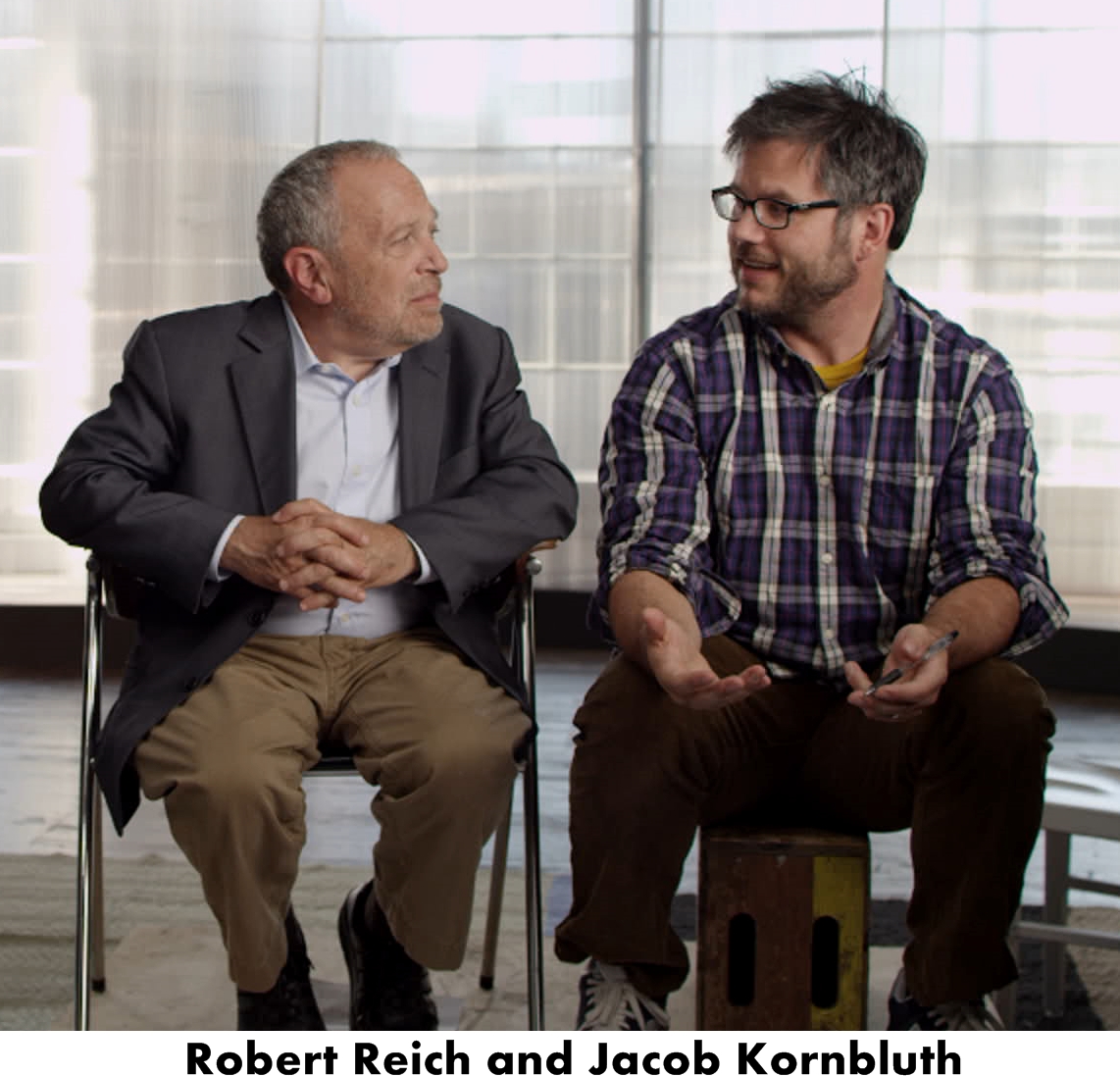
A dark, noisy nightclub may seem like an unlikely venue to find former Secretary of Labor, present UC Berkeley Chancellor’s Professor of Public Policy Robert Reich, but this is the Sundance Film Festival where actual interview suites are in short supply. Music bleeding in from upstairs and a deep bass line shaking the walls lend a surreal atmosphere as Reich and filmmaker Jacob Kornbluth talk about their documentary Inequality for All, in which the diminutive, amiable Reich diagnoses what ails the American economy and offers his prescription to fix it. The doc, which recently opened in theaters, took home a Special Jury Prize from the festival, the Sundance jurors declaring, “With clarity, humor and heart, this timely film reveals the underpinnings of an urgent threat to American democracy.” That heart is on ample display as director and subject talk about their collaboration and what they hope it accomplishes.

Q: You two started working together on short videos. How did that come about and how did that lead to the feature?

JK: What happened was I met a girl and that moved me from L.A. back to the Bay Area and I started making a film with [my brother] Josh called Love and Taxes and we cast Bob as a former IRS commissioner.

RR: It’s a comedy and I’m a ham! Of course, I just thought it would take about 10 minutes. I didn’t know anything about film, obviously. I didn’t do a very good job, but we met then and subsequently we started making these two-minute videos. Hundreds of thousands of people watched them and I’m enormously impressed with Jake.

InequalityForAll_5

JK: We got along. It was an honor to work with him, and honestly, since we started working together, it’s gotten better and better. He’s a fantastic intellect, but also a great guy. It just sort of seemed like a natural extension of us working together to make a film.

He was writing a book and the book was called Aftershock. Reading that book changed the way I thought about – it changed some of my narrative. It seemed like maybe this is a story that can affect a lot of people. I felt like a movie would make sense, because I knew that he was so good on camera and he had this ability to break down these complex issues in ways that everybody could understand.

Q: What surprised me about the film was how much humor there is in it and how humorous you are, especially since there must be times in trying to get your points across about the economy that you feel like you’re pounding your head against a brick wall.

RR: Comedy is necessary. Humor is necessary. It’s necessary for two reasons in my life: One, because if I took myself too seriously, I really would go completely crazy. I’ve been talking about and worrying about and writing about and screaming about this issue for 30 years. But also because humor is universal. The reason (former Republican Wyoming senator) Alan Simpson and I, for example, became good friends, the way I get conservative audiences to listen to me is through humor. If we can laugh together, we can actually open our minds to what each other says.

JK: And as you may know, my background is in comedy. This is my first documentary. I didn’t come at this from the sense of a serious documentarian, although I think it is a very serious film. I really connected to that area of humor that Bob has very deeply in his personality and his public life.

Q: Your amiability is certainly disarming. What you’re talking about is alarming, but there is none of the rage you’d find in something like a Michael Moore documentary.

RR: This can’t be polemic, it can’t be. Even though it uses my big lecture at Berkeley as one of its anchors, even there there’s humor. Candidly, I’ve always joked about my height. It wasn’t until we were doing this movie that I saw a relationship between my personal history, in terms of my being very short, and what I’ve been doing for the last 30 years. It may seem odd, but I hadn’t really put my own personal pieces together.

Q: You have people in the film who personalize income inequality and its surrounding issues through their life experiences. How did you go about getting those people?

JK: After thinking about that and realizing that we wanted that, what we did was we looked at people that Bob came in contact with.

RR: And several of them are people from my class. Jake was smart enough and insightful enough to know that there is some emotional reality there. These young people are struggling with their families, with balancing a checkbook, and they are also sitting in a class where the subject is the very context of what they’re struggling with.

JK: It felt nice that the people have some interaction with Bob. It made it so that it felt like the whole story was interconnected and tied together. Past that, we were looking for people who surprise you in some way. There’s certainly a story about the struggling middle class, which I feel is a very important one to tell, but also one that is hard to make feel fresh and new in a movie. We wanted people that, frankly, I could relate to, who didn’t feel like they were about to be on street. You felt like they should be making it, but weren’t.

Q: We live in an age in which so many people don’t seem to communicate, they simply shout at each other. Do you hope this film will open up some kind of dialogue?

RR: That’s our hope. We want to change the conversation. Instead of this incessant vitriol and partisanship, I have a deep faith that when people understand what the system looks like, how we got to where we are and stop playing the blame game, that it’s possible for us to have a different kind of conversation.

For years now, I come across people and I ask about what they do and how they’re feeling about their job and sometimes about how much they’re earning and health insurance and everything else, and the fact of the matter is, the typical person in this country is working harder and harder and getting less and less and has less and less job security and is having a harder time paying the bills and having a family than at any time since the Second World War. This is ridiculous, given that this is the richest country in the world and we’re richer than we’ve ever been.

Many people say, “That’s just the way it has to be. That is the way the economy is organized.” What I say in this film and Jake so eloquently conveys is that we don’t work for the economy. The economy ought to be working for us. We make the rules by which the economy functions. There is no economy in the state of nature. These are political decisions and the problem is most people don’t understand that we make the rules. – Pam Grady

Share this:

  • Share on Facebook (Opens in new window) Facebook
  • Share on X (Opens in new window) X
  • Email a link to a friend (Opens in new window) Email
  • Print (Opens in new window) Print
  • Share on LinkedIn (Opens in new window) LinkedIn
  • Share on Tumblr (Opens in new window) Tumblr
  • Share on Reddit (Opens in new window) Reddit
  • Share on Pinterest (Opens in new window) Pinterest
Like Loading...

Twilley Don’t Mind: YOU’RE NEXT finds the power pop “Magic”

22 Thursday Aug 2013

Posted by cinepam in Interviews

≈ 1 Comment

Tags

Adam Wingard, Dwight Twilley, Dwight Twilley Band, Simon Barrett, You're Next

Twilley Don’t Mind, the Dwight Twilley Band’s second album arrived with a thud in 1977, only managing to rise to #70 in the Billboard Charts. A single, “Looking for the Magic,” was not a radio hit, despite an earworm of a pop hook. In the nascent days of music television, the song’s accompanying video got a lot of play – Twilley and his band mate, the late Phil Seymour, were very pretty boys – but that was about the extent of it. But now “Looking for the Magic” is back in a most peculiar place as a recurring theme in Adam Wingard’s wicked new horror thriller You’re Next.

The idea of a song that keeps repeating was written into Simon Barrett’s script, a story about a family that finds itself under siege in an isolated country home when masked intruders attack in the middle of dinner.

youre next“We knew it had to be something that is going to hold up for an entire movie,” says director Adam Wingard. “I knew it had to be a classic rock song, but the problem was our budget wouldn’t allow us to pick something that was – most classic rock songs that are good have already been done in a movie and they already know that they can charge a lot of money for them. It was kind of a challenge trying to find a song that would have that classic rock feel, but it’s something that you haven’t heard before and had sort of a slightly dark atmosphere to it.”

Wingard and Barrett hunted for a song that would fit and when nothing clicked, the director turned to You’re Next‘s composer Kyle McKinnon, a man with an encyclopedic knowledge of rock music, and asked him to send 20 songs. “Looking for the Magic” was among the first McKinnon sent.

“I remember that I played it and I was at Simon’s apartment – I think I was sleeping on the couch at the time, because I was totally broke – and Simon was in the other room doing something,” Wingard says. “I listened to the song once and then I called him in. ‘Hey, listen to this.’ Immediately, when I played it for Simon, we were both like, ‘This is it. This is it.’ We just kind of went for it from that point. Me and my DP we would listen to it every day before going on set.

“There’s a weird darkness to that song, I feel like,” he adds. “There’s the way the vocals are recorded with that weird, slap-back, kind of like suicide-style reverb. It’s a little unsettling, but at the same time, it’s such a poppy song. There’s an underlying darkness. That’s why I feel that it works, because it’s not just totally ironic. It’s not totally out of place. There’s something weird there about that song.”

The song became the theme not just of the movie, but of the You’re Next set. Cast and crew had it on their iPhones. Between scenes, someone or other would be playing it.

“It became ingrained not just with the atmosphere of the movie, but even also the way that we structured all those scenes around that piece of music,” says Wingard. “It’s a very specific build. It has that little interlude to the way it starts and then it just jumps right into it. All those scenes are kind of built around that kind of structure. It kind of became impossible to find another song after that, even if we’d wanted to.”

Getting so attached to the song was a gamble and as scary for the filmmakers as anything in the movie. Wingard and Barrett, who is a producer on You’re Next as well as its writer, were committed to using the song, but licensing it was an issue. They didn’t know if they could afford it; Universal owns it and the filmmakers feared that corporate suits would not necessarily be willing to give a price break on the license to a low-budget, independent production.

“I actually reached out directly to Dwight Twilley and his wife Jan,” says Barrett. “They would call me at two in the morning to play me music while we were shooting, so I was exhausted. They were playing other songs for me and at one point, I was like, ‘We really want ‘Looking for the Magic.’ If you can talk to Universal and get us a lower price.’

“At one point, she shouted at me, “You want ‘Looking for the Magic,’ but you can’t afford the fuckin’ magic!’ That felt like the real theme of our shoot, because when you’re making a low-budget film and things are going wrong every day on set, it’s so stressful.”

Ultimately, the rights issue was worked out and a song integral to the foreboding ambiance that pervades You’re Next took its place within the film’s soundscape.

“That might have been one of the happiest moments in making this film, when we found out that a deal had been reached and we could actually afford “The Magic,’” says Barrett. “Then we we were like, ‘Oh, yeah, the movie’s going to be great.’

“We were trying to make a film that stands the test of time,” he adds.

“That’s the whole reason we wanted a classic rock song in the film,” says Wingard. “It’s something that has already proven itself to stand up. If a song is still good after 20 years, then you know it’s going to be good in another 20 years.” –Pam Grady

Share this:

  • Share on Facebook (Opens in new window) Facebook
  • Share on X (Opens in new window) X
  • Email a link to a friend (Opens in new window) Email
  • Print (Opens in new window) Print
  • Share on LinkedIn (Opens in new window) LinkedIn
  • Share on Tumblr (Opens in new window) Tumblr
  • Share on Reddit (Opens in new window) Reddit
  • Share on Pinterest (Opens in new window) Pinterest
Like Loading...

SAFETY LAST! at SF Silent Film Fest: Q&A with Suzanne Lloyd

19 Friday Jul 2013

Posted by cinepam in Interviews

≈ Leave a comment

Tags

Harold Lloyd, Safety Last!, San Francisco Silent Film Festival, Suzanne Lloyd

harold-lloyd-safety-last-clock12013 marks 100 years since pioneering movie comedian Harold Lloyd made his first appearance on screen as an extra. It is also the 90th anniversary of one of his greatest features, Safety Last!, in which Lloyd plays a genial department store clerk who scales the side of a Los Angeles building. Lloyd, who lost part of his right hand in a prop bomb explosion in 1919, performed his own stunts on the climb up the multistory building, one of the great feats of cinema.

Lloyd’s granddaughter, Suzanne, was a teenager when her grandmother Mildred told her that her grandfather was making arrangements to leave her a fabulous gift. That present turned out to be his legacy and she has honored that wonderful bequest by making a life’s work of restoring Harold Lloyd’s 85 surviving titles and introducing his genius to new generations through DVD, TCM and theatrically.

Suzanne Lloyd will be in San Francisco on Sunday, July 21 as the San Francisco Silent Film Festival presents Safety Last! as its closing night selection. I was lucky enough to catch up with her shortly before the festival to chat about the movie, her grandfather and his wonderful gift.

Q: You’ve been involved in all of the restorations. Your grandmother costarred in a lot of the films, including Safety Last!, along with your grandfather. So when you are working on a restoration, what does that feel like? You are not just working on film history, this is also your family history.

A: I started doing it when they were both alive. I was really young when I started on the film boxes at the estate. I was 15 ½. I was rewinding, wrapping nitrate film, checking it, checking prints, putting labels on cans, just really glamorous film stuff. It’s a responsibility, because somebody gave me their life’s work per se, their masterpieces of art. Film history is very important. It is America’s art form, which is now coveted by every country in the world.

I don’t know how he really did it, but he kind of like trained me up and taught me and had faith in me. He knew his son wasn’t well. My mother wasn’t really well, so there was nobody else to punt to. He started kind of grooming me in a very subtle, but kind of Machiavellian – I’d come home from school and he’d send me down to USC to take classes. I was still in high school and he’d take me to go and see him lecture, then he’d ask my opinion and we’d talk about it. It wasn’t like, “You’re going to do this,” but they gave me a beautiful life and they raised me as their own child. And when someone gives you a gift, you’ve got to take care of it.

Q: Did your grandfather tell you stories about making Safety Last!?

A: From the time he was actually down on the street – and it just goes to show what a filmmaker he was – to see Bill Strother [the “human fly” whose death-defying stunt inspired Safety Last!, and who appears in the movie as Harold Lloyd’s friend and roommate] climb the building and he was so petrified watching that stunt, he knew he wanted that reaction to be transferred to film. He wanted to have people react to it so strongly to say, “Oh my God! I can’t believe that person’s doing that,” and to get the feeling that we were really right there watching it like he was. When he was watching it, he said, “Oh my God, my hands were sweating” – it was exactly how the audience felt when he was shooting it. He said, “I just couldn’t watch. I kept going around the corner. It was just unbelievable to me that this man could just fall off. There was nothing to hold him, he could have died.” Then he said, “I have to film this.”

With Safety Last!, he just had to recopy that emotion that he felt. Isn’t that what movies are about, trying to tell a story and put out your emotions and make people feel it with you?

Q: It’s an amazing stunt. I know he claimed he was only ever in danger of falling three stories, but still –

A: Oh, yeah, three stories and on top of a 12-story building, OK. Let’s not get really crazy here. It’s still pretty dangerous, and for man that has half a right hand. I’ve never heard of an actor, a leading actor, being injured or as handicapped as much as he was. Just mentally, to get through that is amazing.

Q: I can’t imagine him being allowed to even attempt something like that now, “You’re the leading man and we’re not insured for that.”

A: “And you’re also the producer. Oh, and by the way, you’re missing a thumb, a first finger and half a right hand. I don’t think you’re doing any of it!”

Q: What you do you think your grandfather would say if he could see now, 100 years after his screen debut, that his films are still being seen and appreciated?

A: I think he’d be really thrilled. He’d be really thrilled. He’d be more crazy about all the digital technology, about all the computers, about all the 3D stuff that he could get his hands on, all the cameras that he could get his hands on. He wouldn’t have time to talk to us, he would be so busy. We would have to beg to have him take a breath, “Could you please sit down and eat something?” He’d have every computer. He’d just be plugged in. He would be all over the place. He would be so wild about that.

And he’d be thrilled by it. He really would be, because he was always pushing to get to kids, get to college students. He left grants to build a sound stage at USC – I built that in his honor. He gave a great grant to the American Film Institute. He gave a grant to UCLA. He gave a grant to Marymount Loyola. He was always pursuing things like that to go ahead and to see the future and pass on the torch. He was very visionary like that and pushing the edge out.

And especially how he felt about 3D. He loved 3D. He said that would be the next turning point of movies and it is. He shot over 200,000 3D photographs. He was a great photographer. I’ve done two books on his photography [3D Hollywood and Harold Lloyd’s Hollywood Nudes in 3D!].

Q: There are people who have some interests, but it sounds like he had a lot of interests.

A: He painted, too. He was an oil painter. He had a lot of interests. He was a great reader. He loved literature. He loved mathematics. He used to play with the abacus all the time and do math combinations. He loved music. He used to play music so loud in the living room that it would shake the gold leaf off the ceiling.

Q: What kind of music did he like?

A: Any kind. I can’t say he liked any kind, although he did take me to The Beatles’ concert and The Stones’ concert and The Doors, so he progressed. He loved jazz. He loved opera. He loved classical music. That was probably his favorite, but he loved show tunes. He loved singers. All of it. He’d take me to the opera. When we were in Vienna, we’d go to concerts. He loved going to musicals in New York. He loved all of it.

Q: Is there any one thing you always want people to know about your grandfather?

A: I think about how genuinely curious he was about people – I mean people in all walks of life – about what made people tick, what they were interested in, what made them be motivated. He was interested in that. It wasn’t, “I’m famous, so I’m just going to have famous friends.” He liked knowing people and people’s personalities. He came from the Midwest. He came from absolutely no money at all. He came from nowhere and he was incredibly lucky and he knew that. He genuinely had a love of life. — Pam Grady

For more information about the San Francisco Silent Film Festival, visit silentfilm.org. For more information about Harold Lloyd, visit haroldlloyd.com.

Share this:

  • Share on Facebook (Opens in new window) Facebook
  • Share on X (Opens in new window) X
  • Email a link to a friend (Opens in new window) Email
  • Print (Opens in new window) Print
  • Share on LinkedIn (Opens in new window) LinkedIn
  • Share on Tumblr (Opens in new window) Tumblr
  • Share on Reddit (Opens in new window) Reddit
  • Share on Pinterest (Opens in new window) Pinterest
Like Loading...

Can I get a witness? Merry Clayton & company testify about 20 FEET FROM STARDOM

02 Tuesday Jul 2013

Posted by cinepam in Interviews

≈ Leave a comment

Tags

20 Feet from Stardom, Merry Clayton, Morgan Neville, Tata Vega

To sit in a room with 20 Feet from Stardom director Morgan Neville and two of the stars of his irresistible documentary about backup singers, Merry Clayton and Tata Vega, is to feel like a member of the audience in a tent revival show. This is not an interview. This is testifying, which makes sense when one considers that among the things that Clayton, Vega, Darlene Love, Claudia Lennear, Lisa Fischer, Judith Hill and the rest of the 20 Feet from Stardom cast has in common is church.

“I feel the more overriding through line between these singers is the church and that for all of them singing is a calling,” says Neville during a visit to the Bay Area where he screened the documentary at the San Francisco International Film Festival. “It’s something that they would do whether or not they were singing in church for no money or on a stage for 20,000 people and that their careers have been spirituals journeys as much as they are careers.

“That’s the thing I’ve gotten back over and over again from these ladies. A lot of prayers going on during this movie. And there’s something about the church mentality, too, of the humility of serving something greater than yourself, especially in the choir, that is much part of being a backup singer as the talent is. It’s being able to be comfortable in that role where you’re subjugating your ego or losing yourself in a blend, losing your individual identity in a greater singular thing. That’s something that the church prepared all these women for.”

The daughter of a minister, the vivacious Clayton agrees that she found her voice through her faith. As a youth, she would spend four or five day every week in church. Attending services was only a small part of that, as the little girl who would grow up to duet with Mick Jagger on The Rolling Stones’ “Gimme Shelter” and who would originate the role of the Acid Queen on the London stage in The Who’s rock opera Tommy would also go to Sunday school, attend choir practice and take part in other church activities.

“You had a calling on your life through the church,” says Clayton. “There’s a certain vibe that you have, because you know what you know. Everything that I got spiritually, mentally and physically, I got through the grace of God. I knew it was through His grace and His mercy that I’m still here to talk about it. I’m not ashamed to say, ‘Hey, I know what I know and I know what I am and I know whose I am.’ It has been the grace of God that has brought us this far. Had it not been for Him on my side, I don’t know where I would be.

“When you have a craft like Tata and I have and Darlene and Lisa and all the girls have, all of us were immersed, were just plucked right from the church, so our values are different from other female singers,” she adds. “They’re just different. You believe what you believe and you know what you know and you know when your behind gets in trouble, you know who you’re going to bow your knees to pray to. And you know He’s going to hear you. Because why? You were told He’s going to hear you and He’s going to show you exactly what you need to do.”

Neville says 20 Feet from Stardom is “the most prayed over documentary in history.” He isn’t joking. That, too, according to Clayton is part of the backup singer’s creed.

“Being prayed up,” she calls it. “When Tata is in Vegas with Elton John, it’s my job as her sister, in this sisterhood, to say, ‘God, bless Tata. Bless Rose. Bless the girls. Bless Elton. Let them be a blessing to people.’ This is what we do for each other forever. Because why? Because that’s what I know and that’s what I know that works for me and that’s why I’m still here to talk about it. He said, “Amen! Can I get a witness? Hallelujah!’”

Of course, there are different kinds of faith than just the religious and Vega believes that 20 Feet from Stardom offers a wider message and not just to fans of the artists profiled or wannabe singers.

“It’s a movie about everybody, really,” she says. “It just articulates and it just so happens to be about singers. All of us have dreams. Maybe somebody said something negative to us and it shut us down or maybe we just don’t think we can do it or maybe somebody actually told us, ‘You don’t have what it takes.’ So you decide to do something else, but really deep down inside, you really want to do this other thing. It’s saying, ‘You know what, you can do it and miracles do happen. There is time. It’s not too late.’ This offers hope.” – Pam Grady


Share this:

  • Share on Facebook (Opens in new window) Facebook
  • Share on X (Opens in new window) X
  • Email a link to a friend (Opens in new window) Email
  • Print (Opens in new window) Print
  • Share on LinkedIn (Opens in new window) LinkedIn
  • Share on Tumblr (Opens in new window) Tumblr
  • Share on Reddit (Opens in new window) Reddit
  • Share on Pinterest (Opens in new window) Pinterest
Like Loading...

On Marriage and Mystery: Joel Edgerton and Felicity Price WISH YOU WERE HERE

07 Friday Jun 2013

Posted by cinepam in Interviews

≈ Leave a comment

Tags

Blue-Tongue Films, Felicity Price, Joel Edgerton, Kieran Darcy-Smith, Wish You Were Here

wish you were hereOutside the window, white flakes keep falling, a snow day at the Sundance Film Festival, but inside this bar on Main Street, actor Joel Edgerton and screenwriter/actress Felicity Price’s thoughts are on Cambodia and their home base Australia, the locations of Wish You Were Here. Directed by Kieran Darcy-Smith, Edgerton’s friend and partner in the Blue-Tongue Films collective and Price’s husband and co-writer, the film is a hybrid of mystery and melodrama kicked into gear when long-married couple Dave (Edgerton) and Alice’s (Price) Southeast Asian holiday takes an ominous turn.

“I tell you what is weird: playing the husband of one of your best friends’ real-life wife in a movie. That was weird,” says Edgerton. “He was just watching us on the monitor. We didn’t have to do any serious hanky panky, but there was one day when we had a bed scene. It was more about the conversation, but then it was getting kind of a little bit romantic and Kieran just didn’t yell ‘Cut!’ for the longest time.”

“He likes to keep rolling and see what might happen,” laughs Price. “Kieran was just watching as a director. He couldn’t care less how far it went. ‘I’ve got to get this take. Is the lighting right?’”

Life is no picnic for Dave and Alice, but from the outside at least, their marriage looks strong. They are the parents of two with another on the way. The vacation they share with Alice’s sister Steph (Teresa Palmer) and Steph’s boyfriend Jeremy (Antony Starr) is a happy foreign adventure that ends in disaster and sends a jolt through the couple’s relationship.

“I was thinking about writing a film kind of about growing up and having small children and having to take on the responsibility of small children and being torn,” Price says. “Finding yourself loving your family and your children, and your relationship becoming a little more long term, but yearning for a bit of freedom, a bit of partying, a bit of change. I was interested in that kind of discordance. I wanted to explore that in a relationship and how hard you have to fight for a relationship. But then I guess I wasn’t interested in just writing a relationship drama. I wanted to write a mystery thriller. So the second part of it, I mashed together a story that’s kind of based on a true story that I heard about two couples traveling to Southeast Asia.”

“It’s no idyllic Hollywood relationship,” adds Edgerton. “They’re a couple who have two kids and probably spend very little time putting care and energy into each other and more into just the day-to-day pragmatism of looking after the kids. But the relationship is solid; we wanted it to feel like they’re there to stay. Then this situation erupts and upsets their equilibrium.”

Edgerton most recently played Tom Buchanan in fellow Australian Baz Luhrmann’s The Great Gatsby. He has also found success in far from home, appearing in – among other films – Star Wars: Episodes II and III, Kinky Boots, Smokin’ Aces, Warrior, The Thing and Zero Dark Thirty. But he was happy to return to the small-budget world of Blue-Tongue Films, where the partners include, in addition to Edgerton and Darcy-Smith, Luke Doolan (the Oscar-nominated short Miracle Fish), David Michôd (Animal Kingdom), Spencer Susser (Hesher), Mirrah Foulkes (the short Dumpty Goes to the Big Smoke) and Edgerton’s older brother Nash (The Square).

“I love being home,” he says. “I love the movies we’ve been making. I just love working on good things. There was almost a scenario where I wasn’t going to be doing this film, for various reasons. I would be genuinely disappointed if I was seeing the movie at Sundance and I wasn’t in it, particularly with another actor playing my part.

“I love what we’re doing at Blue-Tongue,” he avers. “We’re very proud of that work. It’s interesting. A couple of years ago when I did Animal Kingdom, there was always that thing of, ‘Look, you can work in North America, why not keep doing that? Why go home and make smaller movies?’ But after all my years of working in L.A., Animal Kingdom, that little movie that I made back home, kind of makes the most waves out of any other thing that I’ve worked on. It set a really good precedent. I would never dream of not going home to work, particularly on anything that’s Blue-Tongue-related. When it’s good writing, you just do it.” –Pam Grady

Share this:

  • Share on Facebook (Opens in new window) Facebook
  • Share on X (Opens in new window) X
  • Email a link to a friend (Opens in new window) Email
  • Print (Opens in new window) Print
  • Share on LinkedIn (Opens in new window) LinkedIn
  • Share on Tumblr (Opens in new window) Tumblr
  • Share on Reddit (Opens in new window) Reddit
  • Share on Pinterest (Opens in new window) Pinterest
Like Loading...

Anarchist superheroes: Zal Batmanglij talks THE EAST

06 Thursday Jun 2013

Posted by cinepam in Interviews

≈ Leave a comment

Tags

Brit Marling, politics, The East, Zal Batmanglij

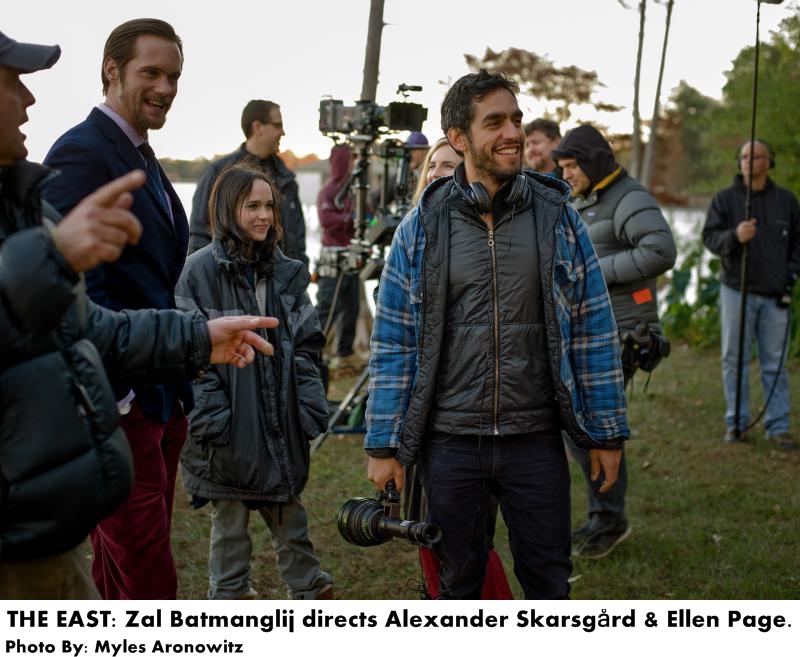
the eastFilmmaker Zal Batmanglij loves superheroes. He grew up a big fan of comic books and characters like Batman, Superman and the X-Men. He loves superhero movies, singling out both Tim Burton and Christopher Nolan’s takes on Batman as among his favorites. But when it came to making his new film, the political thriller The East, co-written with star Brit Marling, Batmanglij had a different kind of superhero in mind.

“I think that those comic-book stories were stories for a different era,” he says during a recent trip to the Bay Area where The East screened at the San Francisco International Film Festival. “Those characters, those superheroes in costumes were for wartime America, postwar America. It’s just not relevant now. I’m interested in who are the superheroes of today? What are the stories of today? How can we make sense of the world we’re living in?”

The new heroes that Batmanglij and Marling came up with are the members of the anarchist collective that gives their film its title, The East. Led by Benji (Alexander Skarsgård), the son of one-percenters who has spit out his silver spoon, the group’s actions – or “jams,” as they call them – are a form of retribution against corporations whose actions bring harm to the world. The East is more than just a nuisance. Their eye-for-an-eye-plus-another-eye quest for revenge is harmful to the bottom line. The corporate world responds by hiring Hiller Brood, a private security firm to deal with the threat. As part of her strategy to neutralize the group, company head Sharon (Patricia Clarkson) sends her latest recruit, former FBI agent Sarah (Marling), into the field to find and infiltrate The East.

“We wanted to start a conversation,” Batmanglij says. “We didn’t have any answers. We still don’t have any answers. We had nothing to preach, so there’s no preach in this movie. We wanted to braid a thriller, the kind of thrillers we grew up loving, 1970s thrillers like The Parallax View or All the President’s Men with issues of today and raising those questions and inspiring conversations.”

Batmanglij and Marling’s previous feature, 2011’s Sound of My Voice, was sci-fi, but they wanted to ground The East in reality. Private firms like Hiller Brood do engage in the type of intelligence work that was once the purview of government agencies. Corporations do pursue the bottom line at the expense of health and safety. The pharmaceutical company that The East targets in the film is based on an actual company that put profits before patients when releasing one of its drugs.

“It’s a real drug,” Batmanglij says. “It’s the most commonly prescribed antibiotic. It causes in some people those side effects. There’s a great NewsHour piece on it. When you see a mom take a couple of pills and end up in a wheelchair – she took it for a suspected infection or something – it’s like, ‘What?’ Who’s accountable for that?

“They’re only accountable to the shareholders, to the bottom line,” he adds. “What’s strange to me about the corporate climate is that no one’s in it for the long game. The long gain is not part of the equation. It’s all about the short term. Literally, it’s the quarter, that’s what it’s about and that causes a society obsessed with fads, obsessed with youth, obsessed with the moment rather than investing in growth, investing in change, investing in transformation.”

The East’s own actions are harsh, inviting questions over whether the collective actually inhabits any kind of moral high ground over the corporate entities they have declared the enemy. Batmanglij does not believe in eye-for-an-eye justice in the real world, but he finds a certain satisfaction in playing it out on screen.

“You want to see – the fantasy, the exorcism is you want to see the people who are making the most profit from that company that is making that drug, you want to see them be held accountable,” he says. “You can’t help but feel a certain sense of satisfaction when it’s done in fiction.

“I recently watched a grandmother being evicted from her home by force after it was foreclosed and I thought to myself, ‘How are we allowing this?’ Then you can imagine The East, Batman-style, coming in and forcing a banker and his wife out of their multimillion dollar mansion by police eviction. I would like to see that. I would like to see the look on her face as she’s holding her yapping puppy as they are being forced out of their home.” – Pam Grady

Share this:

  • Share on Facebook (Opens in new window) Facebook
  • Share on X (Opens in new window) X
  • Email a link to a friend (Opens in new window) Email
  • Print (Opens in new window) Print
  • Share on LinkedIn (Opens in new window) LinkedIn
  • Share on Tumblr (Opens in new window) Tumblr
  • Share on Reddit (Opens in new window) Reddit
  • Share on Pinterest (Opens in new window) Pinterest
Like Loading...
← Older posts
Newer posts →

Categories

  • Interviews
  • News
  • Reviews
  • Short Takes
  • Uncategorized

Recent Posts

  • A Stamp of Approval
  • Life is messy & so is ‘Megalopolis’
  • A star discovers too late there are worse things than aging in the black comic body horror ‘The Substance’
  • A young teen nurses a crush when he finds himself among ‘Big Boys’
  • The stunt man becomes the star as Ryan Gosling becomes THE FALL GUY

Archives

Blog at WordPress.com.

  • Subscribe Subscribed
    • Cinezine Kane
    • Join 48 other subscribers
    • Already have a WordPress.com account? Log in now.
    • Cinezine Kane
    • Subscribe Subscribed
    • Sign up
    • Log in
    • Report this content
    • View site in Reader
    • Manage subscriptions
    • Collapse this bar
 

Loading Comments...
 

    %d