Tags
Billy Budd, Federico Fellini, My Wife Is an Actress, Pier Paolo Pasolini, Teorema, Terence Stamp, The Collector, Toby Dammit, William Wyler
Actor Terence Stamp fondly looks back at four decades in pictures.

Forty years ago, a star was born when Terence Stamp, his dark hair bleached blond, lit up screens for the first time as the doomed, angelic sailor Billy Budd. The drama, directed by Stamp’s co-star Peter Ustinov, was a commercial failure, but a critical success for its young lead. Stamp received a Best Actor Oscar nod, a nomination for Most Promising Newcomer at England’s BAFTA awards, and he shared the Most Promising Newcomer Golden Globe prize for 1962 with Keir Dullea and Omar Sharif.
For the rest of the decade, the blue-eyed actor would become an iconic symbol of the ’60s. He starred for William Wyler in The Collector and won top acting honors at Cannes as the shy butterfly-collector whose latest acquisition is the art student (Samantha Eggar) that he keeps in the basement. He was a happy-go-lucky thief and Monica Vitti‘s partner in the cult spy spoof Modesty Blaise. In John Schlesinger‘s period costume drama, Far from the Madding Crowd, he was a dashing soldier who romanced Julie Christie. In the “Toby Dammit” section of the omnibus Spirits of the Dead, Stamp worked with director Federico Fellini as he inhabited the character of a dissolute actor whose journey to Rome to play Christ in an Italian Western proves fateful. Another Italian directing great, Pier Paolo Pasolini, tapped Stamp to play a seductive visitor who beds an entire household in the erotic and controversial Teorema.
So identified is Stamp with the 1960s that popular legend even has it that he is the lover “Terry” immortalized in the Kinks’ 1967 song, “Waterloo Sunset.” But when the ’60s morphed into the ’70s — the decade that would celebrate double-knit polyester, disco, and pet rocks — Stamp suddenly fell out of a fashion as the times embraced the Method stylings of Al Pacino, Dustin Hoffman, and Jack Nicholson. That might have been the end of it for the actor who embodied cool; Stamp didn’t work for years. But when he was cast as Superman’s nemesis General Zod in 1978’s Superman and especially in 1980’s Superman II, faster than a speeding bullet, Stamp was back.
In the intervening 20 years, Stamp has forged an indelible image on-screen, alternating popcorn fare like Legal Eagles, Young Guns, Bowfinger, and Red Planet with roles in more serious films like Oliver Stone‘s Wall Street and as the transsexual Bernardette in The Adventures of Priscilla, Queen of the Desert, for which he received BAFTA, Golden Globe, and Australian Film Institute Best Actor nominations. In this period, Stamp perhaps gave the two finest performances of his life: In Stephen Frears‘ 1984 crime drama, The Hit, he wowed critics and audiences alike as a man whose equanimity in the face of his impending death unnerves the hit man (John Hurt) sent to kill him. Then in 1999, Stamp thrilled moviegoers with his tough, sardonic performances as a revenge-minded ex-con in Stephen Soderbergh’s The Limey.
Over four decades, Stamp has also found time to pen his memoirs — he’s published three volumes, Stamp Album, Coming Attractions, and Double Feature, and written a fourth that he has yet to submit to his publishers. He also has a novel to his name, The Night, and two cookbooks written with Elizabeth Buxton, The Stamp Collection Healthy Eating Cookbook and The Wheat- and Dairy-Free Cookbook. Stamp and Buxton also operate the Stamp Collection, a line of organic foods sold throughout the United Kingdom. This summer, Stamp makes appearances in two films. In Steven Soderbergh’s latest, Full Frontal, Stamp has a blink-and-you’ll-miss-him cameo aboard an airplane where he resurrects his Wilson character from The Limey. Then in Yvan Attal‘s French romantic comedy, My Wife Is an Actress, Stamp plays John, a Lothario matinee idol who wouldn’t mind seducing Charlotte, his latest co-star. In a case of art imitating life, writer-director Attal takes the role of Charlotte’s jealous husband, while his real-life wife Charlotte Gainsbourg plays Charlotte.
Stamp may be celebrating 40 years in film, but it was a different anniversary that recently induced him to jet the thousands of miles from Sydney to San Francisco. The occasion was the centennial of his Collector director, William Wyler, who would have turned 100 years old on July 1. In Wyler’s honor, San Rafael’s Film Center kicked off a three-week-long retrospective of his work with a July 13 screening of The Collector, while the San Francisco Silent Film Festival screened his 1930 silent classic, Hell’s Heroes at San Francisco’s Castro Theatre on July 14. Stamp was a guest of honor at both events, where local reporters interviewed him on-stage. Reel caught up with the gracious and voluble Stamp just as his long Bay Area weekend got underway. In a wide-ranging interview, he spoke about his three favorite directors (Wyler, Fellini, and Soderbergh), described his encounter with Pasolini, chatted about his latest movies, and recalled other memorable moments as he looked back at a singular career.

Q: Let’s start with why you’re in town — for the William Wyler tribute. Apart from your obvious involvement with The Collector, is there any special reason you were invited for these two events?
Terence Stamp: Many years ago, when I was shooting The Collector, Wyler used to take me to play pool at his house and he had these two little girls — obviously, now they’re grown up. One of them is sort of a patron of the Silent Film Festival, and as they were showing one of Willie’s films, she … they approached me: “Would you … could you be prepared to talk about Dad?,” which, of course, I really always am, because I loved him so. So that was really how I wound up here. I mean, it was a bit of journey, because I was in Sydney at the time. I’ve come a long way, as it were.
Q: That is quite a tribute to him, that you would come that far to introduce a couple of films. I interviewed Charlton Heston about Ben-Hur and he described Wyler as the best director of performance that he ever met. Would you agree with that assessment?
TS: Yeah, I mean, certainly. I think of Wyler … when I think of directors I sort of really got along with, I only ever really thought about Fellini and Wyler until I worked with Soderbergh. I think about those three now as being absolutely wonderful with actors. But, the truth was, to meet, to work with a guy like Wyler early in your career was just an incredible thing, really, because he sort of … the idea that he cast me gave me an amazing amount of confidence, aside from all the things I learned working with him.
Q: What did you learn from him?
TS: Well, it was more really … what was very educational was his … the way in which … the space he made for a young actor like myself. So, in other words, it was rare that he actually directed me, so the main thrust of his direction was just to … I imagine, was casting the right actor and letting him get on with it, which is ideal, really. On those occasions when I was I bit lost, then he just stepped in and said exactly the right thing at the right time.
Q: Do you have any specific memories that really stand out from making The Collector?
TS: You know, it’s all … it’s such an indelible thing on my mind. You know, I’ve heard in the East that they attach such importance to the first impressions of a newborn baby, because the baby is, in a way, like an unexposed negative, so that those very first impressions are the most indelible, because the negative is at its most pristine. So they don’t allow anybody with a bad reputation in the same room with the baby for the first few months. I think about that a lot, because, in a way, it was my first Hollywood movie, it was my second film; I was kind of unformed, really. So I can remember every moment, really, of the experience with Wyler.
TS: The first thing was my first meeting with him. I had been … I had rejected the project for months, because the producers, John Kohn and Jud Kinberg, had given me the galleys of John Fowles’ great [novel]. The more I read it, the more I loved it, the more depressed I became, because I realized that I couldn’t play it. Physically, I couldn’t fold myself into a gray, invisible, spotty bank clerk. I just thought, “It’s the most amazing part. It’s a pity that I’m wrong for it.” And so I just kept turning them down, and they just kept coming back, and I kept turning them down, and then, finally, John Kohn called me and he said, “Look, we’ve got William Wyler. You’re going to turn down Wyler.” And I said, “Does Wyler want me?” And he said, “Yeah, he does.” And I said, “Who’s the girl?” And he said, “We’re going to test some girls. Wyler’s not coming over for the test, but we’re going to test the girls here.” And I said, “Why don’t I do the tests with the girls? No binding deal, I’ll just do the tests with the girls. I’ll think about it; I’ll do the best I can, let Wyler have a look at that. And then we’ll decide.”
So I tested with the girls, Samantha Eggar, Sarah Miles, Julie Christie. Then Wyler flew over to see the tests. I was asked to go and meet him at Columbia. He came out of an office. He walked towards me; he said, “Hello.” I said, “Hello.” It was obvious that we knew who each other was and he just kind of looked at me, and I said, “Have you seen the tests?” He said, “Yeah,” he just nodded. And I said, “Which girl did you like?” He said, “I haven’t been able to look at the girls yet.” And that, eventually, sort of sunk into my brain, and I said, “Do you want me?” And he nodded. I said, “But, you know, in the book …” And he just kind of pulled me to him. I remember being suddenly very close to him — he used to smoke these very strong French cigarettes like Gauloises — and I’m smelling this Gauloises tobacco and he whispers into my ear, “I’m not going to make the book!” And I was, immediately, like an accomplice, you know? There was nothing premeditated about it; that’s what people don’t understand about Wyler.
Also, when you see that film, Directed by William Wyler, there are all these great directors and people talking about him, “We don’t know how he did it. We don’t how he did it.” The truth was, he was completely in the moment, he was totally open to the wealth of inspiration that is only available in the moment. So he was a guy who knew everything, he knew all the technicalities about filming, backwards, he knew everything. So he was just relaxed. He’d walk on the set, a lot of times he’d say, “What do you think? How should we shoot this?” And because I was really, you know, I was totally full of myself, so I’d go, “I come in here and we do this,” and he’d say, “Yeah, that’s great. Okay, Bob,” — [cinematographer] Bob Surtees — “Okay, let’s do it. This is the way Terence thinks we should do it.” This was kind of extraordinary, you know.

Q: You mentioned Fellini and Soderbergh. Along with your performance in Stephen Frears’ The Hit, your performance in The Limey is one of your greatest performances of the latter part of your career. And your work with Fellini in “Toby Dammit” is extraordinary in that your performance is nearly wordless and put across mostly through body language and expression. What is it about Soderbergh and Fellini, along with Wyler, that make those three directors stand out in your mind?
TS: I think … well, each in their own way, they represent for me a huge milestone in my life. First of all, I had only made, they’d only seen one film of me in America, that was Billy Budd. And, although, I was nominated and won a Golden Globe and everything, nobody had picked up on me at all. I’d just been out of work for about a year-and-a-half, and then Wyler came in and said, “Yes.” And so the idea of him wanting me, of somebody like him wanting somebody like me was a kind of … just a landmark thing in my sort of respect of myself, as it were. I mean, all actors are incredibly insecure, and then for him to be … For him to just, he just kind of respected me by intuition enough to go with what I was doing. He just let me run with it, so it was a kind of really extraordinary moment. I often used to feel, later on, I felt, “I wish I could work with him again, now that I understand more.” But the point was, it was a valuable experience. Then, again, my star was kind of fading towards the end of the ’60s and suddenly I got this call from Fellini, who, again, just appeared to kind of love me. [Laughs] And all I had to do was love him back and then we got on just fine. So the idea of him, you know, it was almost like the first British leading man that he’d requested kind of thing. Here, again, the thing that he had in common with Wyler was he was incredibly lovable and incredibly charismatic, so it was just very easy to love guys like that. And even though the Fellini was this odd length and nobody … it wasn’t sort of, I don’t think it was critically well reviewed. It certainly wasn’t commercially successful, you know. But it was just something that was in my canon, I could say, “Well, yeah, I did work with Fellinii.”
And, then, really, again, sort of making one of those big, transitional moments years later, I’d done Priscilla and immediately been out of work for two years. Then suddenly to get a call from Soderbergh, saying, “Yeah, I’ve had this idea. I’ve sort of written it for you and what do you think?” And then to get on the set and find that, indeed, he had this thing in common with Wyler and Fellini that he really, really knew what he was doing. Like you never had to worry about … that his camera angles were wrong or that he didn’t know what he was doing. Those … in common with the other two guys, he never missed a good take. Neither of those three guys ever asked me to do more than one when I got it in one. A lot of young directors, you give them a wonderful take in one, which you know you can’t better, and then they have you there to do another 15, you know? Because they’re not confident; they’re not open to the emotional level of the scene. So, with those guys, they’re great artists, but they are open emotionally and they can feel it when an actor’s delivering, when it’s happening for an actor. So, they’re the guys. Of course, I’ve worked with other amazing guys, but the level of which I aspire to, which is that emotional level, they’re far and above.
Q: What about working with Pasolini in Teorema?
TS: I think … the thing that I mean … Of course, I have to tell you that I get more requests from people writing books about Pasolini than any other director, that’s the first thing. The interesting thing, for me, really about working with Pasolini is that the fact that I worked with him immediately after Fellini. So, with Fellini, I had this kind of … I really blossomed in the Roman sun. I learned to … the fear dropped out of my work when I was working with Fellini, because it was such a happy experience. And hanging out with Fellini, and having pasta on the set with Fellini, and going out with Fellini, “Oh, you come and sleep in my house,” you know what I mean? He was just the most wonderful kind of friend, father, big brother, guy. And then to go immediately to Pasolini, who came to London to meet me and, through an interpreter, said, “This is the story of a boy, a guest who comes to this house in Milan, petit bourgeois. There’s a mother, father, son, daughter, maid, he seduces all of them and leaves; this is your part.” I said, “Okay, [laughs] sounds like me.” And then he never spoke to me again.
Q: Even while you were filming?
TS: No, never spoke to me again. He was an emotionally closed down, very challenging sort of guy, sort of an Italian Communist poet, Catholic, gay guy, who lived with his mother. Loved his mother or whatever. He is somebody that I would really have liked to get to know, ’cause he was a very intriguing, very mysterious guy, and obviously had a lot going on. And I just thought, “This guy just doesn’t …” He didn’t like me; he just didn’t give a toss. I just got the feeling that he’d rather be working with some guy that he wanted to seduce, some guy that he found off the street, which is like the guys that he usually worked with. He wasn’t a great one for professional actors. So it was only interesting like in contrast with Fellini, really. And hadn’t I been made so fearless by the Fellini experience, I probably would have been completely unnerved by Pasolini. But when I was in Rome, I thought, “Well, this guy may be, you know, ignoring me, but I’m one of Fellini’s actors.” [Laughs] At the time, Fellini was tempting me with all kinds of other projects that he wanted to do, so it was sort of … I didn’t get the most out of it, at the time, because it was … He didn’t even seem preoccupied; he just wasn’t really interested. It’s hard to explain.
Q: They showed Teorema recently on the big screen at the San Francisco Film Festival. I have to tell you, he may not have wanted to talk to you, but his camera sure loved you.
TS: What he did that was very unusual — that he did have in common with Soderbergh — he liked to work his own camera. That was the great joy of Soderbergh, ’cause he was the camera and because I work primarily for the camera — it’s not something I really talk about a lot, but it’s part of the way I am as a movie actor, you know, it’s like the camera is my girl, as it were. And Pasolini did like to work his own camera, but what he did that was curious was he would be setting up the number one camera with his operator and everything. And he would be filming me himself unawares, trying to hide the fact that I was being filmed. So when I realized that, it was this sort of game, like I had to sort of pretend [laughs] that I didn’t know that he was filming me, but I was also thinking, “What does he want from me? He wants me…” He wanted this kind of non-performance, you know? So that, also, was interesting, because having been stretched by Fellini, I was then too moist for Pasolini. Pasolini wanted me like one of his boys in the street, so I had to kind of … it was like sort of acting as being, rather than acting as acting. So, in those two films, I really reached my perimeters in both sort of the horizontal and perpendicular.
Q: What I’ve noticed about some of your roles is how often you’ve been called on to embody a moral, not necessarily a viewpoint, but a moral stance. In Billy Budd, you’re angelic and nearly Christ-like in the character’s goodness. In “Toby Dammit,” you play an actor actually hired to play Christ. In Teorema, you could be an angel or maybe the devil, depending on how one looks at you seducing the entire family.
TS: The Pope didn’t think I was angelic! [Laughs]
Q: In The Hit, you’re almost Christ-like in your serenity at meeting this horrible fate. Why do you think directors look to you for that quality?
TS: I’m not sure, really. I know that when I tested for Billy Budd, I was very … I just had that kind of confidence that comes with the certainty that you’re not going to get something, you know? Because I knew about the character, I’d seen the opera or something. I knew that the character was the epitome of goodness and I knew that I was this young spiv. I was just sort of out of the East End, I was just out of drama school, I was very rough around the edges. I thought, “Well, I’ll go and do the test. I’ll get to meet Ustinov. This is great.” I wasn’t thinking I was going to get it. And then I was asked to go to meet the Ustinovs and went to the Connaught Hotel. Almost immediately Peter had to take a call from America, and I was left with Mrs. Ustinov [Suzanne Cloutier], who was a famous actress in her own right and played Desdemona to Orson’s [Welles] Othello, in fact. As soon as Ustinov left the room, she said, [adopting French accent], “Oh, yes, you are going to play this part.” I said, “Well, I don’t think so.” “Oh, yes, yes, I’ve told Peter you are the one for this part.” And I said, “Why do you say that?” And she said, “Because I know and because I had a lover, he was called Gerard Philipe, and on the screen, you remind me of Gerard. I pointed this out to Peter. You’re going to play this part.” [Laughs] And it came to pass.
So, that was really how I got, to my mind, how I got that. There was just some kind of, there was something that I did in the screen test that was sort of without guile. Although I think those parts you’ve named, for me, are the most interesting, the most interesting things in my work, lots of people have the exact opposite view. And, in fact, you know, for a lot of people, The Collector, the impression of The Collector was so indelible that they will only see me as villains. I often … I just lost a part, last year I lost a part at Fox, because the casting director said, “No, we can’t cast him, because everybody will know that he’s the villain.” [Laughs] It was supposed to be a mystery who the villain was. “Everybody who knows Terence will know he’s the villain.” It’s two schools of thought, frankly, and never the twain shall meet. There’s those who see me as the young, the first serial killer and then there’s those who see me as this angelic creature.
Q: Well, you do both very well.
TS: Yeah! I know, I’m very pleased with myself. I did The Collector immediately after Billy Budd, because I thought, “Well, then, I’ll let everybody know: This is my range. I can do this if I lean to the left and I can do this if I lean to the right, and then everybody will understand I’ve got it covered in between.” But it didn’t really work out like that. At the beginning of my career, I thought that the angelic characters were going to be tedious, because there’s not much play within innocence, there’s nowhere to go kind of thing. It’s just whites, you know. Whites on whites, there’s not much you can do with it. But, in truth, how it’s turned out is that, generally speaking, the villains are the parts that aren’t well-written. They’re like very low down on the totem pole. There’s the lead and then there’s the romance and then there’s the child star, then there’s heist, you know, and then, “What about the villain? We’ve got to have somebody around who this all spins.” So, when I get asked, when I’m asked to play these badly written villains, I always have to bring a tremendous sort of subtext. And, that, as the years go by, gets more difficult, really.

Q: You also have a new film opening here, My Wife Is an Actress, which kind of call on you to use both aspects. Your John is a womanizer, but, at the same time, he has this tremendous charm.
TS: I have to confess, it was kind of fun, really, because I gathered from the director that it was based on a true story. Somebody that he thought had seduced his wife, and he wasn’t absolutely sure, so he wouldn’t tell me who it was. [Laughs] But I had a lot of fun, thinking, “What actor could I do in here?” It was just fun, it was just fun to do something light and to know that, you know, I could do it without being self-conscious, ’cause a lot of newspapers say, “Well, Terence Stamp is playing himself and we’re as bored as he is,” kind of thing, which is absolutely not true. [Laughs] I was having a really good time playing that.
Q: You looked it. What was it like being on the set with the husband and the wife, Yvan Attal and Charlotte Gainsbourg, playing characters more-or-less based on themselves? It’s such an odd little family film in a way.
TS: The thing that was curious, really, was not so much being on the set with the husband and the wife as that — I didn’t, but I could have — there was a point where I could have gotten into a lot of trouble with her mother! [Laughs] I mean, I hasten to admit she was one that got away, but …[Laughs]
Q: That’s right! Jane Birkin is Charlotte Gainsbourg’s mother.
TS: Yeah, exactly. But it wasn’t as odd as you would imagine, you know, because it was really like a Svengali relationship that he had with her. And when he was on the set, I think, the last thing he was … he really wanted me to appear like … In fact, it was kind of odd, because I think he was in a … his feelings were ambivalent. And very often … and one of the things that made it uncomfortable for me, was not that he was you know, sort of upset with Terence, it was just that he really confused Terence with John, because sometimes he was really nasty to me and I was totally blameless. I thought, “I’m not the guy who shagged her when she was on location,” you know what I mean? [Laughs] I’m just trying to do the best, get it one take, you know. [Laughs]
Q: You’re also in Full Frontal playing your Limey character, Wilson, again. Is that just a cameo?
TS: Yeah, it’s just … the thing is a lot of it takes place on an airplane, Full Frontal. And I just got this call from Steven and he said, “Would you come and be Wilson?” Sit in the plane kind of thing. As I couldn’t refuse him anything, I said I would. And I’ve got no idea what he’s doing, I’ve just go no idea. But you never have. I didn’t have any idea with The Limey. And not anybody, the other actors were sort of really concerned, “What’s he doing? What’s he doing?” It doesn’t matter what he’s doing. He’s Soderbergh, we’re working for him. It doesn’t matter what he’s doing; we’ll see it at the premiere.
Q: You’ve had an extraordinary career. It’s been 40 years since Billy Budd. Has it been the career you envisioned it would be when you were starting out?
TS: When I saw Gary Cooper in Beau Geste, that sort of ruined me for life, really, because for the next 14 years I wanted to be like Gary Cooper, I wanted to be doing what Gary Cooper was doing. Really, it wasn’t until I saw James Dean that I began to think seriously about maybe, maybe I could actually do this. Movies didn’t have to be just this fantasy with this impossibly handsome guy. It had to be a fantasy with Gary Cooper, do you see? No young man could actually stack up against Gary Cooper. When it became James Dean, I thought, “Well, that’s how I am. I don’t look like that, but that’s how I feel. Maybe there’s a chance for me.” So that’s when it became, I stepped up to the plate. Now, the way I enabled myself to step up the plate, I had to tell myself, “Probably nothing’s ever going to happen to me, but unless I try, I’m never really going to be at ease with myself.”
In other words, I have to know what would’ve happened if I tried to get into show business. And, frankly, I would’ve been more than content just to be in show biz, you know what I mean? The last thing I was expecting was to have the kind of career I’ve had. Having said that, on the night of the screening of The Limey, which was a cast and crew screening at the wonderful Director’s Guild cinema on Sunset, a friend of mine, a writer called Richard LaPlante happened to be in L.A. — he’s a New York guy. And I invited him. He’s a rather strong guy; he’s a writer, but he’s a martial artist. He’s sort of real macho. I thought, “Yeah, it’ll be a bit of a backup to have him with me.” [Laughs] So, we rocked up there and it was supposed to be little. It was supposed to be 50 people and it was packed. It was one of those occasions where nobody wanted to go home, it was such a buzz. And, eventually, we left. And on the way home — I hadn’t had a chance to talk to him, he was busy chatting up Bridget Fonda and Peter Fonda and all the faces there — he said, “Listen, this is the best thing you’ve ever been in.”
And I was a bit taken aback, because I’m thinking, when somebody says that, I’m thinking, “Yeah? What about The Hit? What about The Collector?” But that was what he said. Then he dropped me off at the hotel. I got undressed, got into bed. And I was just sort of going through the day, which is just something I do before I go to sleep, and the thought occurred to me that if it had to end here, if this was the last movie I made, in truth, from Billy Budd to The Limey was more than I would have ever dreamt of. And if it had to end, if that had been the last thing that I made, it would have been okay. I would have felt that I’ve earned my spurs, you know.
Q: But you have gone on. Where do you see yourself now? You don’t just act. You write books. You have your food company.
TS: My cookbook’s a bestseller. Our cookbook, 35,000 sold in the U.K. That’s a big seller in the U.K. [Laughs]
Q: That would be a big seller here. We live in the era of the microwave oven.
TS: Yeah, exactly, exactly. It’s a lost alchemy.
Q: So unlike many actors, you have a life that exists outside of show business. So where do you see yourself?
TS: Well, really, at this point, it’s either for fun or it’s for money. I don’t really … when I, if I’ve got money, I don’t take movies that I don’t really like. What I’m really looking for are movies that are fun. I don’t mean comedies, I mean they’re fun for me. There’s something there that’s going to be fun for me to do. Having said that, there’s a kind of … I have always had this energy, which I think of as like overdrive, and it’s something that … It’s always been there. I remember in Billy Budd, I remember when it happened, the first time it happened on Billy Budd, I was suddenly … I sort of transcended myself in some way in front of the camera. When I say I transcended myself, it wasn’t really personal, it was just some kind of feeling, some kind of emotion that came while the camera was turning, that couldn’t have been planned for. Can’t be reproduced, you can’t rehearse for it, it’s just like a little bit of grace, a little bit of sparkle that drops down on you. And that has happened sort of intermittently over the last 40 years and it’s not … there’s no way I really have of knowing.
But I think that the quality of the screenplay has to be of a certain grade for there even to be any possibility of that, of that overdrive, of that extra gear kind of thing. So I guess when I’m reading things, at the back of my mind, I’m thinking about that. Because, obviously, that’s for me, that is the get-off at this point. And it can happen in things like Priscilla and it can happen in things like The Limey. It’s not a type of script. It’s just that the script has to be, generally speaking, the script has to be of a certain quality for it to be possible.
Q: Well, there has to be a real character for you to …
TS: Well, yeah, in some way, I have to be stretched in some way. It has to be something I haven’t done before or I haven’t sort of addressed too many times before. Having said that, I genuinely would like to work more. It’s just that I can’t, because I don’t get offered enough … there’s not enough things that come my way that I fancy. —Pam Grady
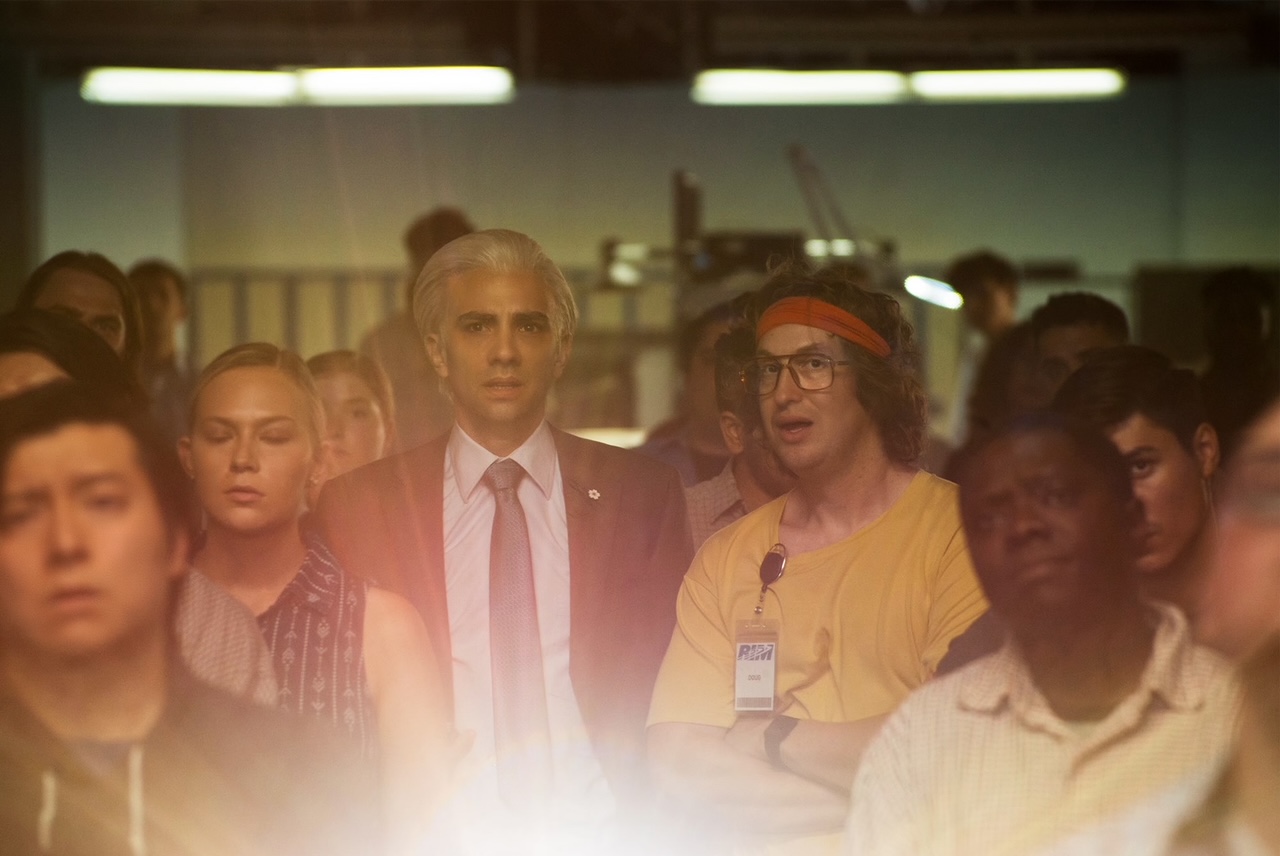


 Note: This interview was conducted in June 2000 and originally appeared on Reel.com. Then the interview ran in conjunction with the DVD release of Jazz on a Summer’s Day. Twenty years later, it is running as the 4K restoration of the 1959 documentary opens in virtual cinemas.


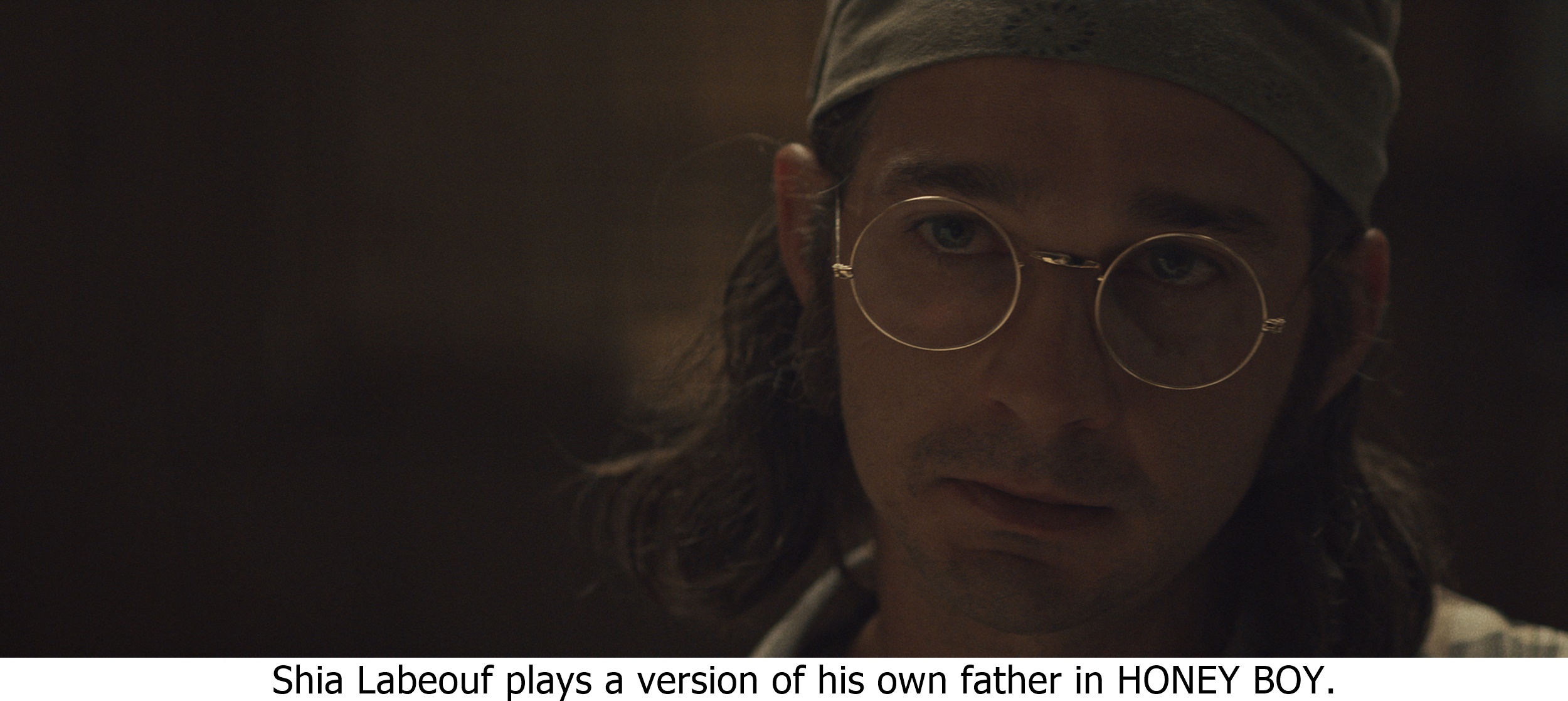 Shia LaBeouf came into the Sundance Film Festival last year a scandal-plagued actor with something to prove. The former child star and one time face of the Transformers franchise announced a career rebirth with Honey Boy, an autobiographical drama he not only stars in but wrote.
 The meeting with Japan’s great auteur Takashi Miike takes place in the conference room of a Marriott Residence Inn in Toronto where Miike has come to screen his latest genre exercise, First Love, as the Toronto International Film Festival’s Midnight Madness program. The bland anonymity of the space is at odds with the man who makes a vibrant entrance in a ruched leather coat, beaded bracelets on both wrists. At 59, Miike describes himself as an “elderly” man, but the spring in his step, the fashion-forward duds, and First Love belie that assertion.
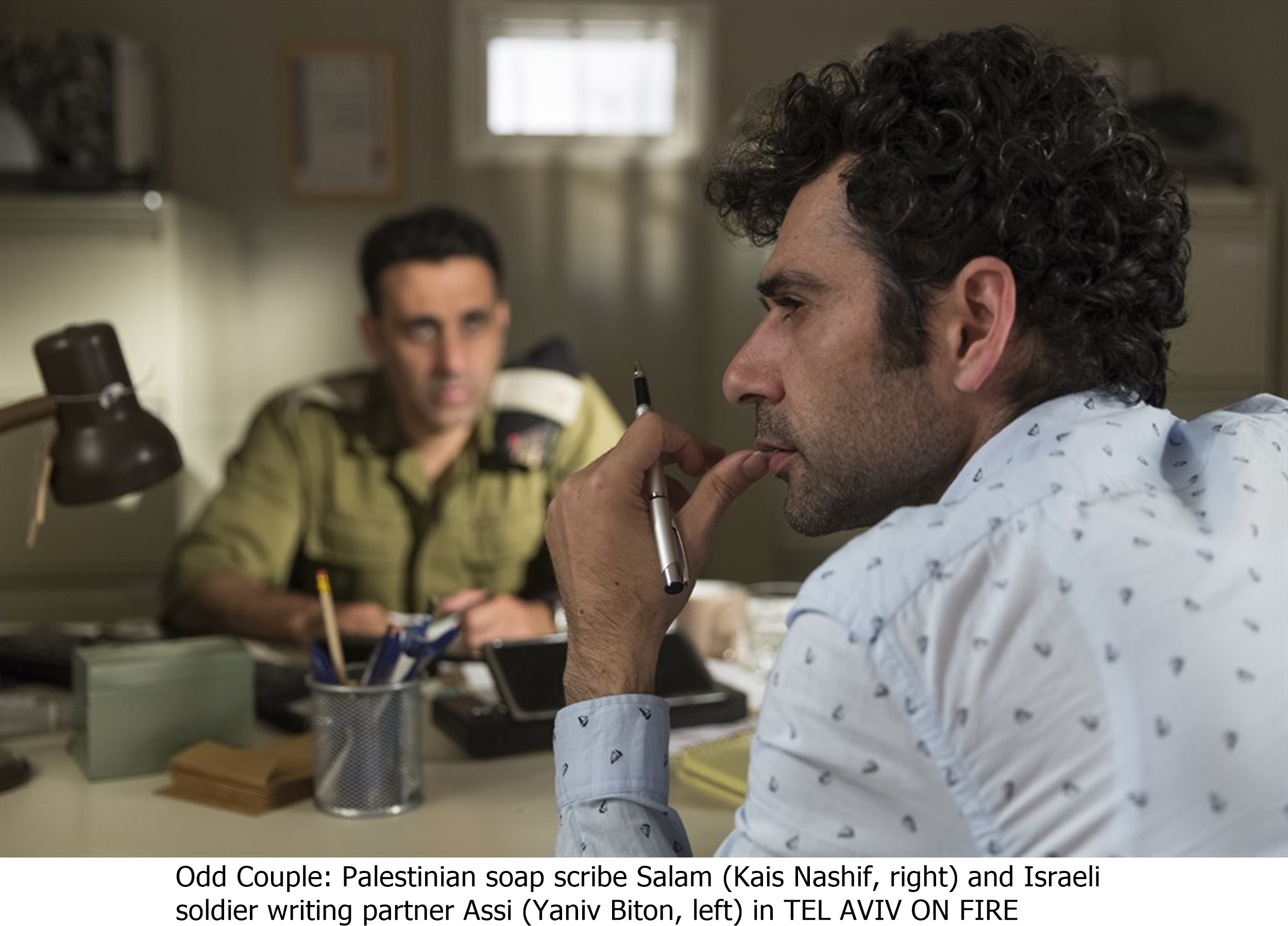 Tel Aviv on Fire is the name of a film. It is also the name of a soap opera within the film that has become appointment TV in Israel, Gaza, and the West Bank, set in 1967 in the months before the Six Day War and revolving around the affair between an Israeli officer and the gorgeous Palestinian spy sent to seduce him. Salam (Kais Nashif), a Palestinian who is the show’s Hebrew translator, gets bumped up to writer, a position he advances with covert help from Assi (Yaniv Biton), an Israeli border guard and superfan of the show.
 Over the course of the past seven years, Irish actress Aisling Franciosi has amassed quite a resume, counting among her characters Marie in Ken Loach’s 2014 drama Jimmy’s Hall, an award-winning turn as a serial killer-obsessed teenager in the British series The Fall (2013-2016), and Lyanna Stark, mother to Jon Snow, on Game of Thrones. In The Babadook filmmaker Jennifer Kent’s savage revenge thriller, The Nightingale, Franciosi steps into her first starring movie role. Delivering a resonant performance as Clare, a 19th-century convict of the penal colony on the Australian island of Tasmania, Franciosi convinces as a woman pushed over her limits. Forming a partnership with similarly vengeful aboriginal Billy (dancer Baykali Ganabarr in his screen debut), Clare goes on the hunt for Hawkins (Sam Claflin) and other Australian officers who have done her wrong.

 Cinezine Kane