Tags
Alison Brie, Dan Stevens, Dave Franco, Jeremy Allen White, Joe Swanberg, Sheila Vand, The Rental, Toby Huss
Rental_AR_05.23.19_234.ARW
There is such a thing as “too good to be true.” That is the terrain actor-turned-director Dave Franco explores in his feature directing debut, The Rental, a chameleon of a film that morphs from relationship drama to edge-of-your-seat thriller in a compact 88 minutes. What The Shining did for isolated mountain lodges, The Rental stands to do for luxury home shares. Be afraid, very afraid of what might be lurking just below sleek surfaces and a host’s five-star rating.
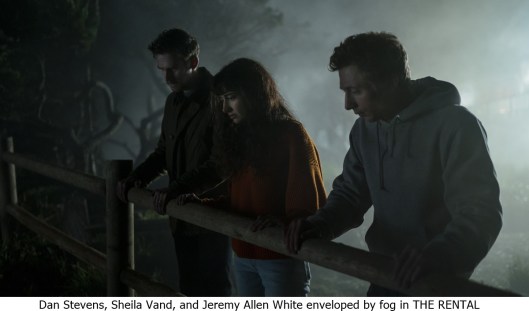
The house is huge, really too big for two couples, Charlie (Dan Stevens) and Michelle (Alison Brie), and Charlie’s brother, Josh (Jeremy Allen White), and Mina (Sheila Vand), on a short weekend getaway. But the home’s beauty and its placement on a bluff overlooking the ocean are the perfect backdrop for the celebration of business partners Charlie and Mina’s latest success. At least, that is the theory.
Mina’s immediate dislike of Taylor (Toby Huss), the property’s caretaker, and faint but evident fissures in both couples’ relationships cast discreet shadows over the trip, but part of the beauty of the script that Franco wrote with mumblecore veteran Joe Swanberg (Drinking Buddies, Happy Christmas) is that he spins a yarn where the audience is far more clued in than the characters.
The weekend never quite goes as either couple plans – Michelle is on a different wavelength than everyone else when it comes to having fun, Charlie and Mina both have reasons to question their relationships, and Josh has a troubled past that affects his relationships with his sibling and his girlfriend. So far, so mundane, but Franco privileges the viewer with another point of view, one that hints of malevolence in the offing, Someone is watching. The question that hovers is whether the trouble in the offing will come from within or outside of the house?
Performances are uniformly excellent, even if it is hard to work up much sympathy for characters that are whiny, entitled, and sometimes downright awful. The plot is set at a low simmer, only coming to a full boil in the last half hour or so. The sedate tempo, Danny Bensi and Saunder Juriians’ eerie score, and the pea-soup fog that surrounds the house at night blend into a menacing atmosphere. The tension slowly ratchets up until at last the house reveals its horrifying secrets. For this sleek, suspenseful film’s director, it is quite a calling card. –Pam Grady
The Rental is playing in drive-ins, theaters, and digital and cable VOD platforms.
 Charles Bukowski would recognize the habitués of Las Vegas dive bar the Roaring 20s. So, would you if you put in any time in a bar that is welcoming enough and has been around long enough to attract a dedicated family of regulars. One of those places that doesn’t call itself a “cocktail lounge” and doesn’t employ mixologists, but a joint for a beer and a shot among strangers who become friends. And for the regulars at the Roaring 20s in Bill and Turner Ross’ shambling, engaging documentary, it is time to spend one last night together there as “last call” really is just that for a watering hole about to close forever.
 What if aliens really did walk among us? What if they brought us technology that could solve the world’s thirst for energy without destroying the planet? What if there were government entities whose sole mission, going back decades, was to keep all of this a secret in order to preserve the status quo? What if every American president was in on it, but was prevailed upon to never reveal the truth? What if a gadfly reporter stumbled upon all this? These questions are the starting point for writer/director Christopher Munch’s sometimes intriguing, sometimes silly sci-fi drama The 11th Green.
 Bruno Ganz famously played Hitler in Downfall. Now, in one of his final roles in Nicolaus Leytner’s The Tobacconist, he steps into the role of Sigmund Freud, a man who might have been one of the Fuhrer’s victims had he not been to flee to England. Ganz’s delightful performance portraying the warm, soft side of the father of psychoanalysis is a ray of light in this otherwise dark drama set in pre-war Vienna.
 An icon plays an icon as Catherine Deneuve steps into the role of a French cinema legend who reunites for a rocky reunion with her screenwriter daughter (Juliette Binoche) in Hirokazu Kore-eda’s elegant drama The Truth. The Japanese master delivers his first film made outside his home country, in French and English – two languages not his own, and loses not a step in an intimate drama that unfolds between the family home and a Paris soundstage.
 The situation for gays and lesbians in Chechnya is beyond harrowing. They face arrest, torture, and sometimes execution. If they survive that, they are delivered back to their families with the suggestion that their kin finish the job of killing them. Some have joined the ranks of the world’s disappeared. This special project of strongman president Ramzan Kadyrov “to cleanse the blood” of the country’s LGBTQ population has been under way since 2016 with barely any notice from the rest of the world. Oscar-nominated filmmaker David France’s (How to Survive a Plague) tense, devastating documentary reveals the depth of an ongoing genocide and the efforts of Russian activists to rescue the victims of the atrocities.
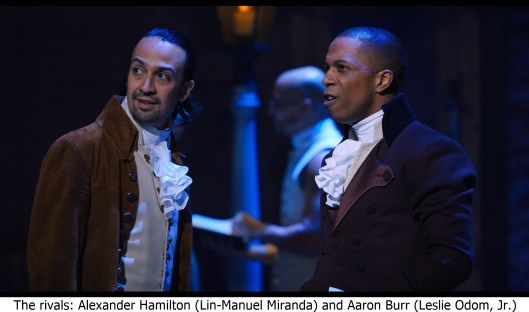 Theater geeks everywhere will rejoice and many who would consider themselves impervious to the charms of a Broadway musical will find themselves seduced as Hamilton drops on Disney+ on July 3. Filmed four years while the original cast was still intact, but not intended for a theatrical release until the fall of 2021, with COVID-19 putting pause to the Broadway and road companies, the decision to push the date up by over a year and put it on the streaming service is a welcome one. No doubt there is a business calculation involved. Disney+ can expect to gain X number of subscribers through this shrewd move. But ultimately, who cares about the company’s motivation? Hamilton is here.
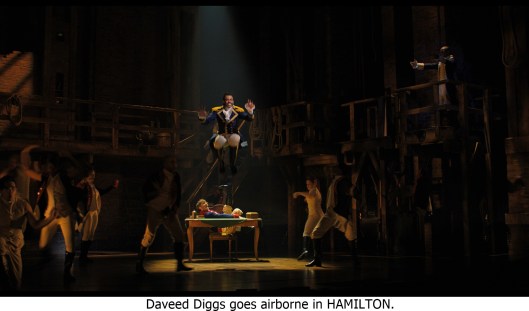 To adapt the play to the screen, director Thomas Kail filmed several actual live performances along with performances staged strictly for award-winning cinematographer Declan Quinn’s cameras, a set-up that included a Steadicam. This is not a Hamilton that even its most ardent fans have seen before. Close-ups reveal nuances to the performances lost to distance from the stage and provides a privileged vantage point from which to view Andy Blankenbuehler’s Tony-winning choreography. Jonah Moran’s editing injects a burst of new energy into an already adrenalin-fueled musical. Every performer, from Miranda and Odom to the ensemble, brings their A-game.
 Disney and Pixar’s SOUL is not scheduled for release Nov. 20, 2020, but there is a brand new sneak peek of the animated fantasy about a middle-school music teacher and pianist (Jamie Foxx) who gets the golden opportunity to play with a renowned jazz musician’s (Angela Bassett) quartet. But that plan goes awry when he finds himself in The Great Before – the place where souls go to get their, well, soul before they join their human hosts on Earth.
 In 1934, a 17-year-old girl with skinny legs and a stained dress ascended to the stage of Harlem’s Apollo Theater for Amateur Night. She wanted to be dancer, but as she watched Apollo stars the Edwards Sisters’ agile footwork during the pro part of the evening, she knew she could not follow that. So, she switched gears, opened her mouth to sing and Ella Fitzgerald began her legend. Leslie Woodhead, who began his documentary directing career in 1969 with The Stones in the Park and has made films on everything from the Polish Solidarity movement to the post-9/11 manhunt for Osama bin Laden to Princess Diana, pays glorious homage to the First Lady of Song with this spellbinding documentary.